
DbcultAccessing Vault...
Director's Spotlight
Senior Film Conservator
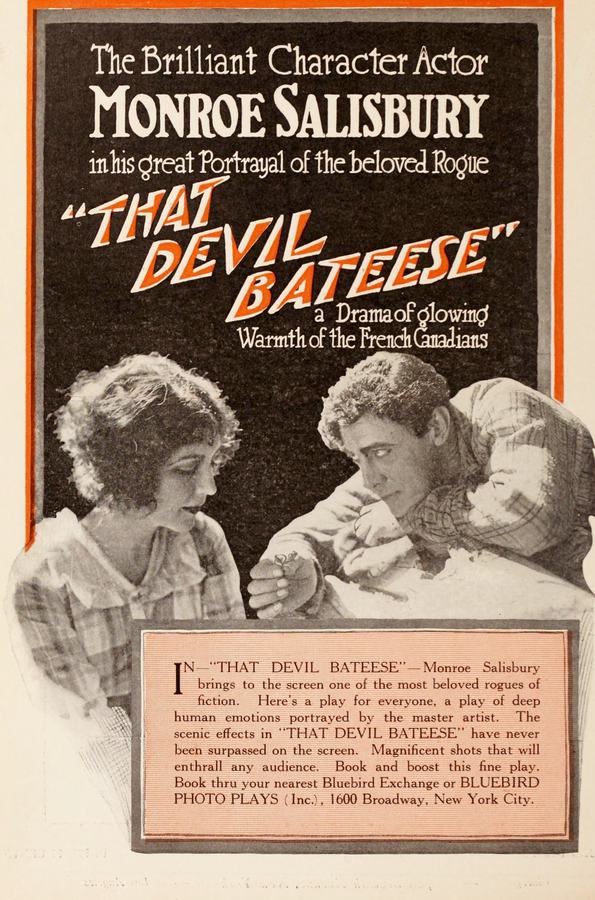
Director's Spotlight: United States
A Deep Dive into the 1918 Vision of William Wolbert
To understand the modern evolution of United States film, one must first look at That Devil, Bateese and the collaborative alchemy between William Wolbert and the 1918 creative team. Subverting the expectations of the typical 1918 audience, it remains a vital reference point for anyone studying the evolution of William Wolbert.
In That Devil, Bateese, William Wolbert pushes the boundaries of conventional narrative. The film's unique approach to its subject matter has sparked endless debates and interpretations among cinephiles and critics alike.
To fully appreciate That Devil, Bateese, one must consider the cinematic climate of 1918. During this period, United States was undergoing significant artistic shifts, and William Wolbert was at the forefront of this cult movement, often challenging established norms.
| Cinematography | Static |
| Soundtrack | Diegetic |
| Editing | Elliptical |
| Art Direction | Expressionist |
Visualizing the convergence of William Wolbert's style and the core cult narrative.
After her romance with Martin Stuart shatters, Kathleen St. John leaves Montreal for the little village of Montrouge, where she plans to teach school. Kathleen loses her way between the station and the village and is attacked in the woods by the town bully, Louis Courteau. Seeing a pretty woman in distress, Bateese Latour, a warmhearted lumberjack whose drunken temper tantrums have earned him the sobriquet "That devil, Bateese," beats off her attacker. A short time later, Bateese falls in love with Kathleen, and promising to abandon his drinking, he carries her off and marries her. When Martin comes to Montrouge, however, Bateese becomes convinced that Kathleen still loves her former sweetheart and paddles away in his canoe, intending to let the falls carry him to his death. Louis's sister, a pathetic creature who is still clad in the wedding dress she wore when her groom deserted her, recognizes Martin as her long-lost lover, whereupon Kathleen rushes out to find Bateese. Hurt, but still alive on the bank below the waterfall, Bateese returns home with his wife.
Decades after its release, That Devil, Bateese remains a vital piece of the cinematic puzzle. Its influence can be seen in countless modern works, solidifying William Wolbert's status as a master of the craft in United States and beyond.