
DbcultAccessing Vault...
Director's Spotlight
Senior Film Conservator
Director's Spotlight: United States
A Deep Dive into the 1918 Vision of William Wolbert
To understand the modern evolution of United States film, one must first look at The Wild Strain and the meticulous attention to detail that William Wolbert applied to every frame. Reflecting the political and social shifts of the 1918s, it showcases the power of cult as a tool for social commentary.
In The Wild Strain, William Wolbert pushes the boundaries of conventional narrative. The film's unique approach to its subject matter has sparked endless debates and interpretations among cinephiles and critics alike.
| Cinematography | High-Contrast |
| Soundtrack | Diegetic |
| Editing | Rhythmic |
| Art Direction | Naturalist |
Visualizing the convergence of William Wolbert's style and the core cult narrative.
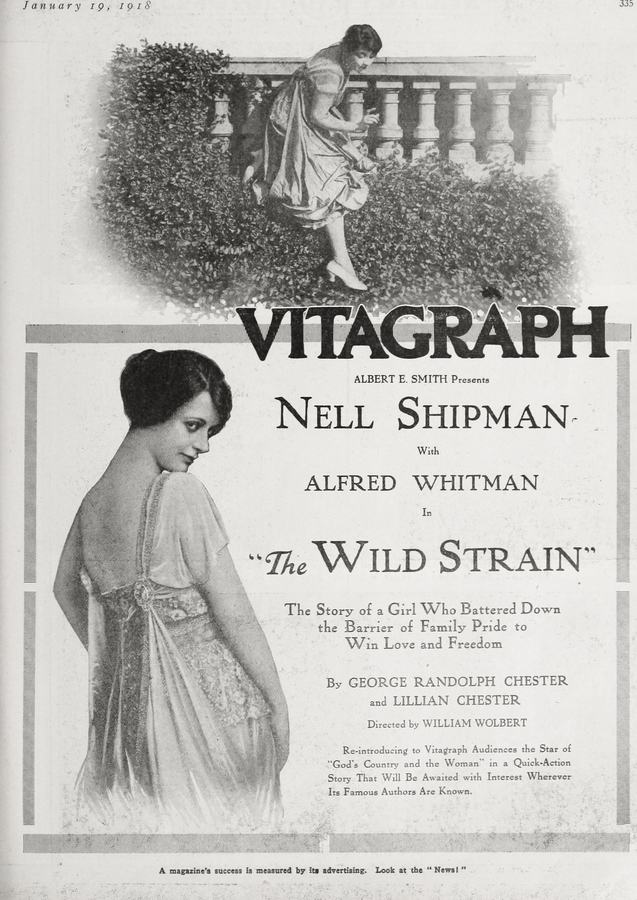
Although the prominent Hollywood family prides itself on its illustrious family tree, young Winifred Hollywood exhibits a fondness for wild adventures that greatly disturbs her parents. When Winifred becomes engaged to bank official Harold Burton, his equally snobbish parents visit the Hollywood home and are shocked by the young woman's spirited outbursts and mischievous tricks, and the engagement is broken after she decides to perform bareback feats with a traveling circus. On an evening ride, Winifred overhears two men planning to rob a bank, but when she attempts to phone for help, they make her their prisoner. In trying to rescue Winifred, Harold proves an able fighter, and with the aid of the circus crew, she is freed and the crooks apprehended. The Hollywoods then reveal that one of their ancestors was a bandit, while the Burtons admit that their line included a noted pugilist, and the young people are allowed to resume their romance.
Decades after its release, The Wild Strain remains a vital piece of the cinematic puzzle. Its influence can be seen in countless modern works, solidifying William Wolbert's status as a master of the craft in United States and beyond.