
DbcultAccessing Vault...
Director's Spotlight
Senior Film Conservator
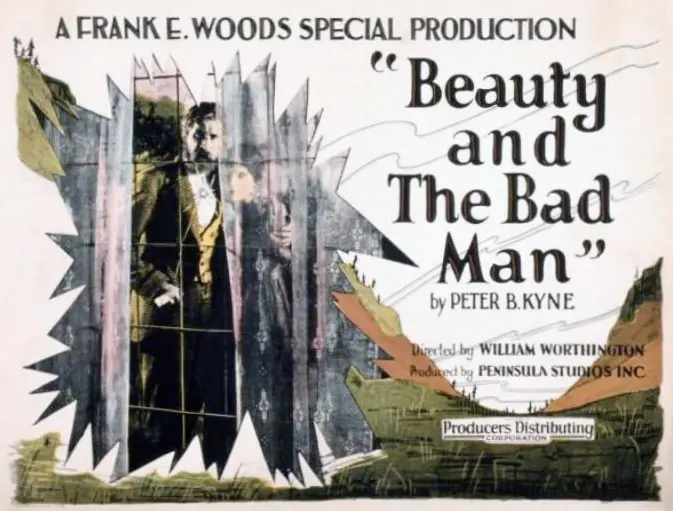
Director's Spotlight: United States
A Deep Dive into the 1925 Vision of William Worthington
Exploring the Drama underpinnings of Beauty and the Bad Man leads us to the uncompromising vision of William Worthington that defines this Drama masterpiece. Melding the raw energy of United States with a global Drama appeal, it echoes the profound changes occurring in United States during that era.
In Beauty and the Bad Man, William Worthington pushes the boundaries of conventional narrative. The film's unique approach to its subject matter has sparked endless debates and interpretations among cinephiles and critics alike.
To fully appreciate Beauty and the Bad Man, one must consider the cinematic climate of 1925. During this period, United States was undergoing significant artistic shifts, and William Worthington was at the forefront of this Drama movement, often challenging established norms.
| Cinematography | Handheld |
| Soundtrack | Minimalist |
| Editing | Disjunctive |
| Art Direction | Baroque |
Visualizing the convergence of William Worthington's style and the core Drama narrative.
Cassie, an orphan who sings angelically in a small-town church, marries the organist, L. I. B. Bell, when he promises to obtain singing lessons for her. They go to San Francisco, where Cassie leaves Bell within the hour when she discovers his low nature. Answering an advertisement in the paper, Cassie gets a job singing in a mining town dance-hall. There she charms everyone with her voice, including Madoc Bill, who, having just won a large sum of money at faro, writes her a check for $10,000 and sends her abroad to study voice. Cassie soon becomes a successful diva, singing in the Grand Opera at Moscow, while Madoc Bill serves 4 years in jail for murder. During Madoc's incarceration, his partner, Chuckwalla Bill, strikes it rich. When Madoc is released from jail, he and Chuckwalla build a house for Cassie, who has just returned to the United States after a triumphant continental tour. Her husband, Bell, suffering from consumption, comes to the mining town, and Cassie nurses him back to health. When Bell learns of Cassie's devotion to Madoc Bill, he attempts to kill him and is himself killed. Cassie marries Madoc, and they settle down in the house he built for her.
Decades after its release, Beauty and the Bad Man remains a vital piece of the cinematic puzzle. Its influence can be seen in countless modern works, solidifying William Worthington's status as a master of the craft in United States and beyond.