
DbcultAccessing Vault...
Director's Spotlight
Senior Film Conservator
Director's Spotlight: United States
A Deep Dive into the 1917 Vision of W.S. Van Dyke
The brilliance of Sadie Goes to Heaven (1917) is inseparable from the visionary mind of its creator, W.S. Van Dyke. Serving as a mirror to the anxieties of a changing world, it persists as a haunting reminder of our own cinematic history.
In Sadie Goes to Heaven, W.S. Van Dyke pushes the boundaries of conventional narrative. The film's unique approach to its subject matter has sparked endless debates and interpretations among cinephiles and critics alike.
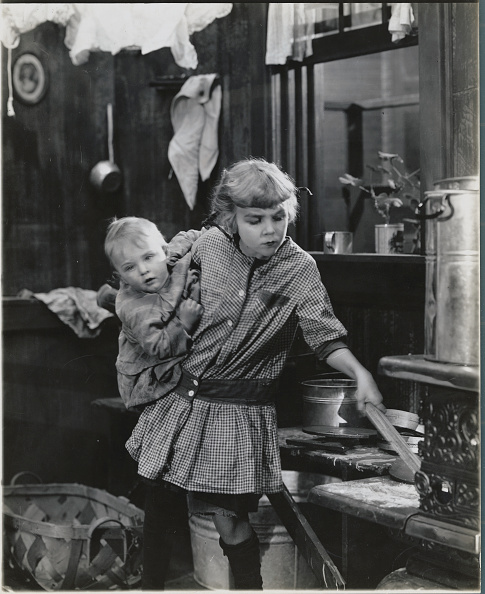
The visual language of Sadie Goes to Heaven is defined by its use of shadows and framing, a hallmark of W.S. Van Dyke's style. By utilizing a 1917-era palette, the film creates an immersive experience that perfectly complements its cult themes.
| Cinematography | Static |
| Soundtrack | Orchestral |
| Editing | Invisible |
| Art Direction | Kitsch |
Visualizing the convergence of W.S. Van Dyke's style and the core cult narrative.
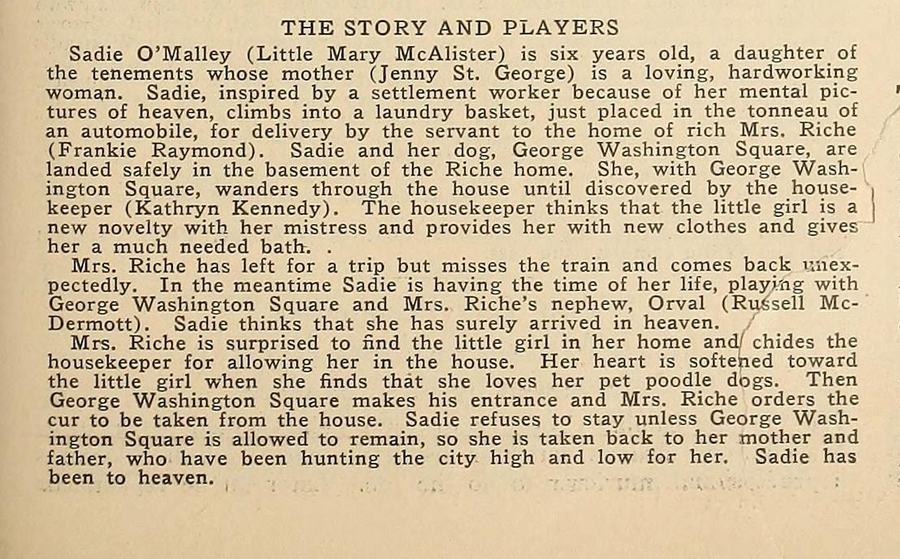
Little six-year-old Sadie O'Malley, a child of the tenement district, has a vision of heaven awakened within her by the teaching of a settlement worker, so when she sees a handsome limousine in front of the settlement laundry near her home she thinks it is a heavenly chariot, climbs into a clothes hamper in the interior of the car and is whisked away to the home of Mrs. Welland Riche. The latter has left earlier in the day on a trip, so when Sadie and. her dog, George Washington Square, who has been her companion in the hamper trip, are dumped down the clothes chute of the Riche home while concealed in the basket, they find easy access to the upper regions of the mansion and then, indeed, Sadie thinks she is in heaven. Sadie soon is discovered by the servants, but they believe she is just another of Mrs. Riche's fads when she tells them she is there to stay. Believing Mrs. Riche as desiring that the best of care be given the child, Sadie is dressed in rich garments and is much at home until Mrs. Riche returns. While the servants' explanations have been made, Mrs. Riche, in the meantime having been won over by the child's beauty and sweet manners, decides Sadie may remain. But the tenement child's happiness is short-lived when George Washington Square appears upon the scene. Mrs. Riche orders that the pup be removed and tells Sadie that, instead, she can play with the Riche collection of Poms. Not so for Sadie. She informs the wealthy matron that she wouldn't give up George Washington Square for all the heavens and that if G.W.S. cannot remain she will go. So hugging her doggie close to her she returns to her worried mother with the explanation, "I have been to heaven, but they sent me home because they didn't like my dog."
Decades after its release, Sadie Goes to Heaven remains a vital piece of the cinematic puzzle. Its influence can be seen in countless modern works, solidifying W.S. Van Dyke's status as a master of the craft in United States and beyond.