Summary
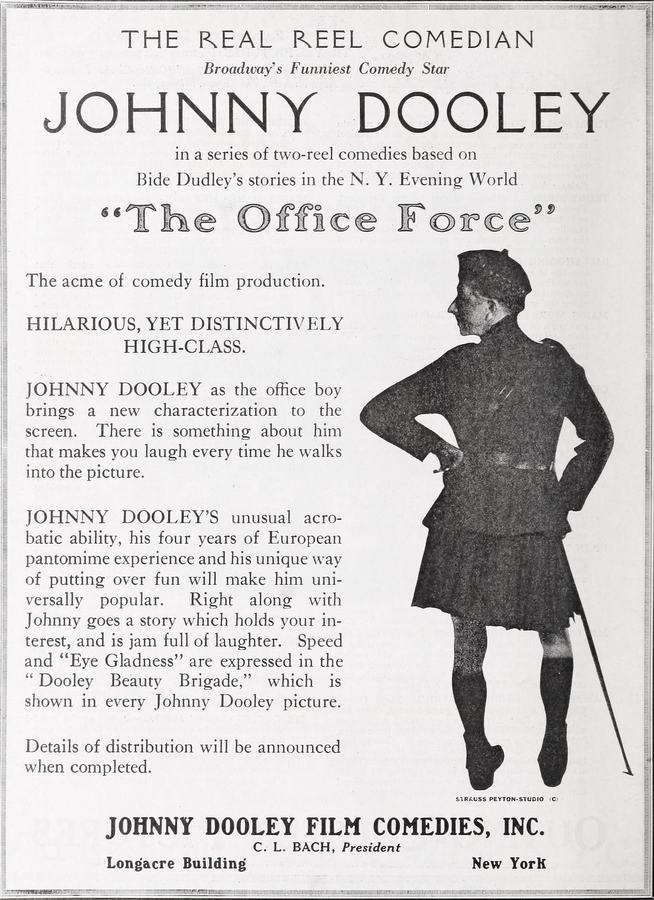
A staccato symphony of ink-stained elbows and pneumatic tubes, BIDE DUDLEY and TOM BRET’S one-reel curio pins its fragile narrative to the starched collar of BOBBY, a mailroom Icarus who dreams of corner-office constellations inside a Lower-Broadway skyscraper. From the first iris-in, the film treats Manhattan as a vertical labyrinth: mahogany doors slam like iron gates, elevator cages rattle like medieval portcullises, and the clatter of typewriters becomes a percussive warning that every rung on the corporate ladder is greased with invisible ink. Bobby—played by JOHNNY DOOLEY with the elastic eyebrows of a born pantomimist—navigates this maze armed only with a perky gait and a carnation that keeps wilting in the carbon-paper atmosphere. The plot, as slender as a pay-slip, follows the boy’s attempt to deliver an urgent contract to the 27th floor before the 5 p.m. whistle, a quest complicated by flirtatious stenographers, a kleptomaniacal bookkeeper, and a monocled vice-president who mistakes Bobby for a stock-touting prodigy. Intercut with pratfall montages and shadow-drenched corridor chases, the film blossoms into a pocket-sized meditation on class vertigo: the higher Bobby climbs, the steeper the social precipice yawns beneath him. When the clock strikes five, success hinges not on muscle or wit but on a single act of self-erasure—our hero literally vanishes into a ledger, becoming a rubber-stamped silhouette—leaving the viewer suspended between slapstick delight and a chill recognition that the American office devours its own.
Review Excerpt
"
I keep replaying the twelfth minute—Bobby’s pupils dilate to twin black tacks as the wall clock slams toward five—and every time the moment arrives I swear I hear the celluloid itself gasp.
That gasp is the hinge on which Bobby the Office Boy swings, a brittle, dazzling artifact from 1922 that most historians file under “program filler” but which, when watched under the right cracked neon sign, feels closer to Kafka dipped in vaudeville ink. Twelve minutes, zero intertitles, a thousand paper ..."