DbcultAccessing Vault...
Cult Review
Senior Film Conservator
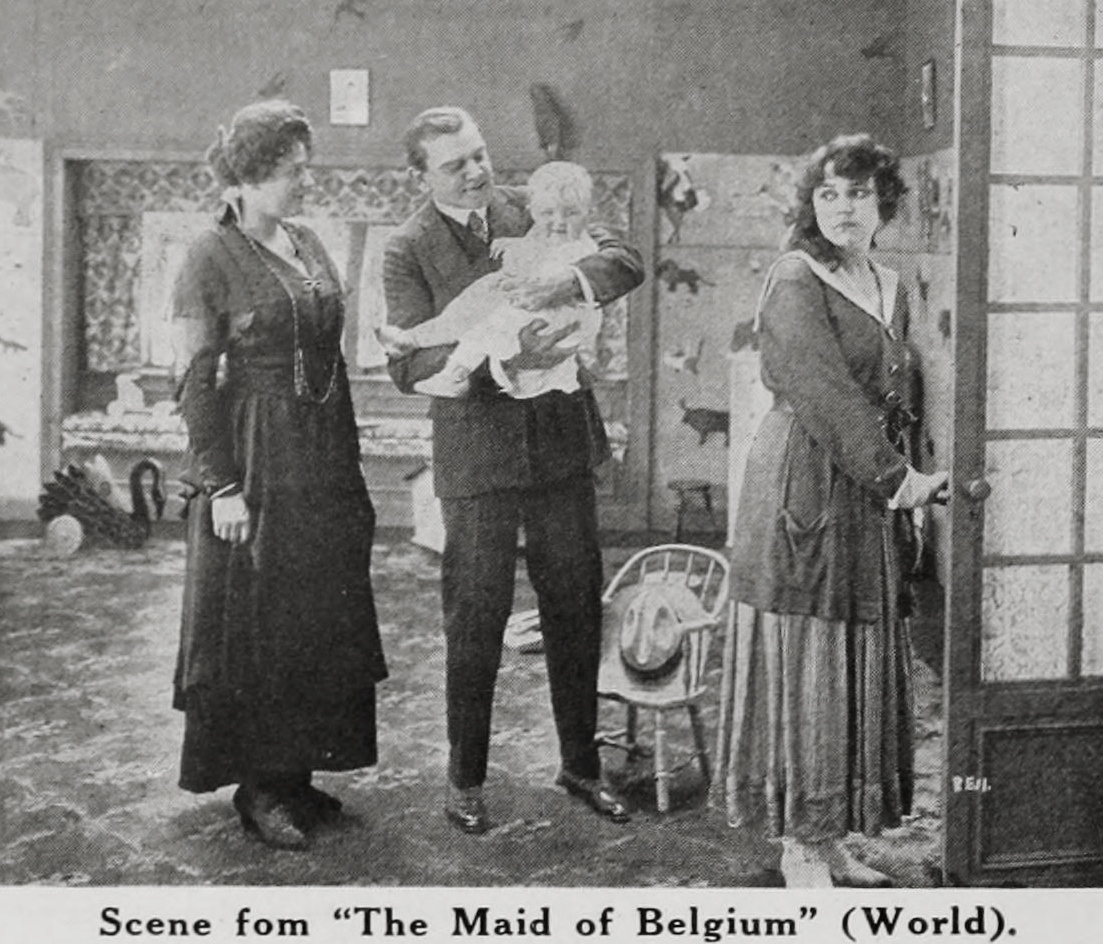
In the nascent years of the 20th century, as the Great War’s shadow still loomed large over Europe, cinema often served as both a mirror and a balm for a traumatized world. Adrian Gil-Spear's 1917 production, A Maid of Belgium, emerges from this crucible, a poignant, if at times overtly melodramatic, exploration of the human cost of conflict, not through battle scenes, but through the profound psychological scarring inflicted upon its victims. It's a film that demands attention, not just as a historical artifact, but as a testament to the silent era's capacity for emotional depth and complex narrative weaving.
Lotta Burnell, in the pivotal role of Adoree, delivers a performance that oscillates between fragile vulnerability and an almost primal resilience. Her portrayal of a young Belgian woman, rendered 'half-mad' and amnesiac by the horrors she has witnessed, is nothing short of captivating. Burnell navigates this treacherous emotional landscape with a subtlety that belies the often-broad strokes of silent film acting. We see in her not merely a victim, but a symbol of a nation's collective trauma, her lost memory a metaphor for the world's desperate need to forget, yet its inherent inability to do so. The initial scenes, depicting her discovery by the affluent Hudsons, are imbued with a quiet desperation, a sense of a soul adrift.
The narrative's swift pivot from war-torn Europe to the domestic tranquility of an American household underscores the stark contrast between two worlds, yet it's a tranquility soon to be shattered by its own brand of deception. The film doesn't shy away from uncomfortable truths, exploring how even in safety, the echoes of past trauma can lead to unforeseen complications. Adoree’s amnesia, a convenient plot device perhaps, serves a deeper purpose: it strips her of identity, making her a tabula rasa upon which the Hudsons, particularly Claire, attempt to impose their own desires. This dynamic, where vulnerability meets calculated manipulation, provides much of the film's dramatic tension.
Enter Alice Brady as Claire Hudson, a character whose moral compass seems to spin wildly off course. Brady's portrayal is fascinating; she's not a mustache-twirling villain, but a woman driven by a desperate desire for motherhood, willing to cross ethical lines to achieve it. Her decision to claim Adoree's child as her own, exploiting the young woman's amnesia and vulnerability, sets in motion a chain of events that is both shocking and, in the context of early cinema melodrama, perversely understandable. This act of appropriation highlights a darker side of human nature, a self-serving impulse that can flourish even amidst supposed benevolence. It's a stark contrast to the noble intentions often depicted in war-time narratives, grounding the film in a more complex moral landscape.
The deception itself is multilayered. Roger Hudson (Richard Clarke), called away to South America, remains blissfully unaware of the elaborate charade unfolding back home. The telegram from Dr. Thorn (George MacQuarrie) announcing the 'birth' is a masterstroke of dramatic irony, plunging the audience into a conspiracy from which they can only watch, helpless. This kind of narrative tension, built on secrets and impending revelations, was a hallmark of the era, and A Maid of Belgium executes it with considerable skill. One might draw parallels to films like The Trufflers, where hidden motives and social maneuvering drive the core conflict, albeit with a different set of stakes.
Despite Claire’s meticulous planning, the film posits an undeniable truth: the unbreakable bond between a mother and her child. Adoree, even without her memory, experiences a profound, visceral longing for the infant she was coerced into relinquishing. This primal connection transcends the artificial constructs of legal claim or social convention. Her desperate act of stealing the baby and disappearing is the emotional fulcrum of the entire narrative. It’s a moment of raw, unadulterated passion, showcasing Burnell's ability to convey powerful emotion without a single spoken word. This desperate flight, driven by instinct, resonates deeply, providing a counterpoint to the calculated deception that preceded it.
The subsequent search for Adoree and the baby culminates in one of the film's most dramatic, and perhaps most improbable, sequences. Roger Hudson, finding Adoree's coat near a lake, tragically assumes she has drowned and, in a fit of grief-stricken desperation, resorts to dynamiting the lake. This extreme measure, while stretching credulity, serves a crucial narrative function. It's a grand, almost operatic gesture that underscores the gravity of the situation and the depth of Roger's despair. Such dramatic climaxes were common in silent cinema, often employed to heighten emotional impact and drive the plot towards its inevitable resolution. One might recall similar high-stakes rescues or desperate gambits in films like The Escape or The Rescue, where protagonists face seemingly insurmountable odds.
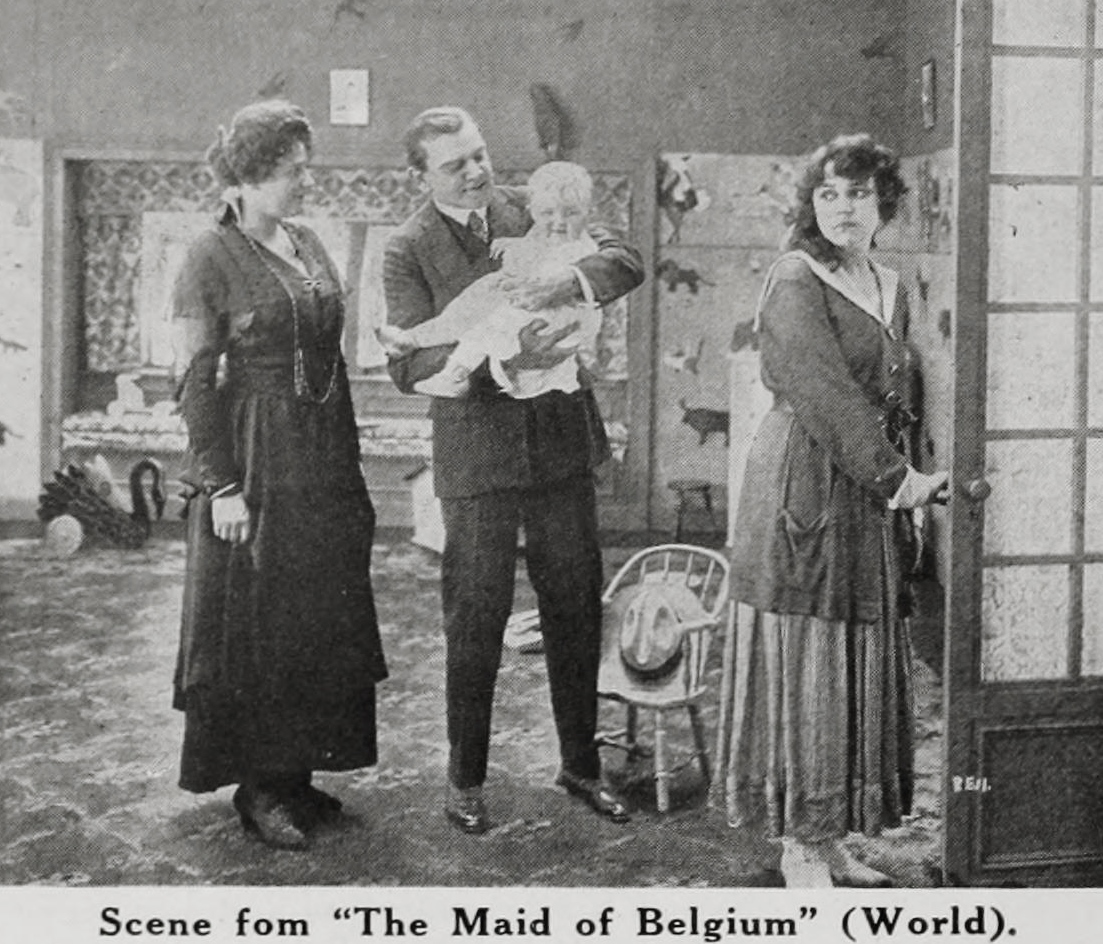
The narrative's most audacious twist arrives with the lake explosions. Far from confirming Adoree's demise, the concussive force paradoxically restores her memory, shattering the veil of amnesia that has shrouded her past. This moment, while scientifically dubious, is pure cinematic magic, a metaphorical resurrection of identity. Adoree recalls her true self: the Vicomtesse Jean de Michelet, wife of a noble Belgian. This sudden restoration of memory is a powerful device, allowing the film to pivot from domestic melodrama to a story of rediscovered identity and rightful heritage. It speaks to the resilience of the human spirit, suggesting that even the most profound traumas cannot entirely erase who we are.
The serendipitous fact that her husband, Vicomte Jean de Michelet (Tony Merlo), is conveniently in town raising funds for Belgian relief efforts adds another layer of dramatic convenience, but also provides a satisfying symmetry to the plot. It ties Adoree's personal trauma back to the larger national tragedy, reinforcing the film's initial premise about the far-reaching effects of war. The reunion of the Vicomte and Adoree is orchestrated with a sense of destiny, a final piece falling into place to complete the fractured puzzle of her life. This kind of fated encounter, where past and present collide to bring about a redemptive resolution, is a narrative trope found in many films of the era, echoing the themes of transformation and rediscovery seen in works like Redeeming Love.
Adrian Gil-Spear, as both writer and director, crafts a narrative that, despite its occasional excesses, maintains a compelling emotional core. The pacing is brisk, a necessary quality for silent features aiming to hold an audience's attention without dialogue. The visual storytelling relies heavily on the expressiveness of its cast, and they largely deliver. Lotta Burnell's Adoree is the emotional anchor, her wide, often haunted eyes conveying volumes of unarticulated pain and longing. Alice Brady, as Claire, successfully embodies the complex villainy of a woman driven by a desperate maternal yearning. Her performance provides a crucial foil to Burnell’s vulnerability, ensuring the moral ambiguities of the story are never entirely simplistic.
The supporting cast, including Richard Clarke as Roger Hudson and George MacQuarrie as Dr. Thorn, provide solid foundations for the central drama. Louise de Rigney and Tony Merlo, though perhaps with less screen time, contribute effectively to the film's emotional landscape. The film’s cinematography, while not groundbreaking by today’s standards, effectively captures the mood and intensity of the various scenes, from the quiet desperation of Adoree’s early days to the frantic energy of the search and the eventual joyous reunion. The use of close-ups to emphasize emotional states would have been particularly effective in conveying the nuanced performances of Burnell and Brady.
Beyond the melodrama, A Maid of Belgium delves into profound themes that remain relevant. The exploration of war trauma and its psychological aftermath, particularly amnesia, serves as a powerful commentary on the invisible wounds of conflict. Adoree's journey of lost and found identity resonates with a universal human struggle to understand one's place in the world, especially after experiencing profound dislocation. This theme of identity, fragmented and then pieced back together, finds echoes in other cinematic explorations of self-discovery, such as Mixed Blood, which also grapples with the complexities of personal heritage and belonging.
The film also examines the complex nature of maternal love, showcasing its strength even in the face of immense obstacles and manipulation. Adoree’s unwavering instinct to reclaim her child is arguably the most authentic and compelling aspect of her character. Furthermore, the narrative’s ultimate resolution, with the happy reunion of Adoree and her true family, offers a powerful message of hope and redemption. It suggests that even after experiencing the darkest aspects of humanity and the most profound personal losses, a path to healing and restoration is possible. The film ultimately champions the triumph of truth and love over deception and despair, a sentiment that would have undoubtedly resonated with audiences grappling with the aftermath of a global conflict.
While some of its plot devices might feel quaint or overly convenient to a modern viewer, it’s crucial to appreciate A Maid of Belgium within its historical context. It is a product of its time, reflecting the narrative conventions and emotional sensibilities of the silent film era. Yet, its core themes – the devastating impact of war, the fragility of memory, the tenacity of maternal love, and the enduring quest for identity – are timeless. Adrian Gil-Spear, with the performances of Lotta Burnell and Alice Brady, crafts a compelling human drama that speaks volumes without uttering a single word.
Watching it today, one is reminded of the powerful storytelling capabilities of early cinema, its ability to evoke strong emotions and tackle complex societal issues through visual artistry and expressive acting. A Maid of Belgium stands as a testament to the resilience of the human spirit and the enduring power of family, offering a compelling journey from the depths of trauma to the shores of rediscovered happiness. It’s a film that, despite its age, still has much to say about the human condition and the long, winding road to healing.
IMDb 5
1922
Community
Log in to comment.