DbcultAccessing Vault...
Cult Review
Senior Film Conservator
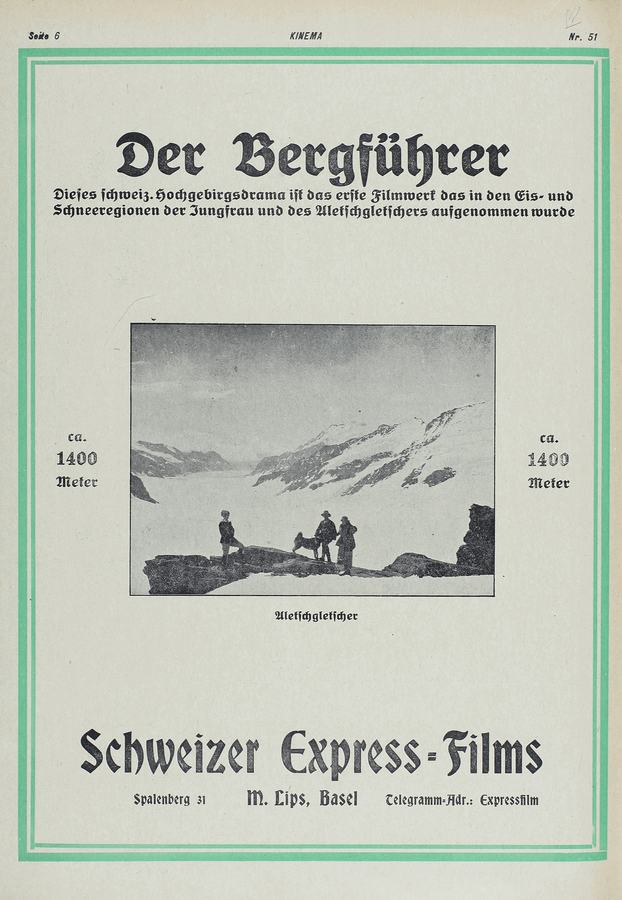
In the nascent years of European cinema, specifically within the neutral enclave of Switzerland during the tail end of the Great War, Der Bergführer (1918) emerged as a seminal text. Directed by and starring Eduard Bienz, this film is far more than a simple moralistic fable; it is a profound exploration of the conflict between the rugged, authentic existence of the mountain dweller and the perceived superficiality of the city-dweller. To watch this film today is to witness the birth of a genre—the mountain film—long before Leni Riefenstahl or Arnold Fanck codified its visual grammar. While American cinema of the same era was often preoccupied with the kinetic energy of the West, as seen in the works of Douglas Fairbanks like Wild and Woolly, Bienz’s work is steeped in a specifically European brand of existential dread and romanticism.
The film’s protagonist, Andreas, played with a weathered intensity by Bienz himself, represents the archetypal mountain man. His life is defined by the rhythm of the seasons and the perilous slopes of the Jungfraujoch. When Marie (Leny Bider), the hotelier’s daughter, becomes the object of affection for Alfred (Paul Nowakowsky), a guest from the city, the stage is set for a confrontation that is as much about class and culture as it is about romance. The rivalry here isn't the playful competition one might find in Nearly a Lady; it is a dark, simmering resentment that threatens to boil over into violence.
Technically, Der Bergführer is a marvel of location shooting. In an era when many productions were retreating into the controlled environments of studios—think of the atmospheric interiors in The Vampires: Hypnotic Eyes—Bienz took his cameras to the actual heights of the Swiss Alps. This commitment to verisimilitude imbues the film with an awe-inspiring quality. The Jungfraujoch is not merely a backdrop; it is a character that dictates the pace and the stakes of the drama. The cinematography captures the blinding whites of the snowfields and the deep, abyssal blacks of the crevasses, creating a high-contrast visual palette that mirrors the moral quandaries of the characters.
The pivotal climbing sequence is a masterclass in suspense. As the weather deteriorates, we see the stark difference between the guide’s wisdom and the tourist’s arrogance. Alfred’s determination to reach the summit, despite Andreas’s warnings, is a classic hubristic folly. Unlike the more fantastical dangers found in The Smugglers, the threat here is terrifyingly real. The blizzard is not a set piece; it is a force of nature that consumes Alfred, leaving Andreas to face the consequences alone. The isolation of the mountain is replaced by the isolation of the prison cell, a transition that Bienz handles with a poignant, almost ascetic directorial style.
"The glacier does not lie; it merely waits. In the frozen silence of the Jungfrau, truth is not a fleeting moment, but a geological inevitability."
The second act of the film shifts from the vertical world of the peaks to the horizontal, claustrophobic world of the village and the courtroom. Marie’s accusation is a gut-punch, a betrayal that stings more than the alpine wind. The film explores the fallibility of human justice, a theme echoed in other contemporary dramas like The Half Million Bribe or the vengeful narratives of Vendetta. Andreas is sentenced to ten years, a decade of his life vanished into the maw of a legal system that cannot comprehend the reality of the mountain.
The passage of time is handled with a subtle grace. We see the toll incarceration takes on Andreas, contrasting with the unchanged, eternal nature of the peaks he once roamed. This is not the melodramatic suffering of Charity or the social upheaval of The Woman in 47; it is a quiet, dignified endurance. The eventual discovery of Alfred’s body, preserved perfectly by the ice, is one of the most haunting images in early silent cinema. It brings to mind the tragic beauty of Black Orchids, where beauty and death are inextricably linked.
Eduard Bienz’s screenplay is remarkably tight for the period. While some silents of 1918, like Judy Forgot, relied on broad physical comedy, Der Bergführer leans into the psychological. The note found on Alfred’s body—a confession of his own stubbornness and an exoneration of Andreas—serves as a literal deus ex machina, yet it feels earned because of the mountain’s established role as a repository of truth. The performances are restrained, avoiding the wild gesticulations common in films like Søstrene Morelli.
Leny Bider provides a complex performance as Marie. Her transition from a woman in love to a vengeful accuser, and finally to a figure of immense regret, is the emotional anchor of the film's final third. Her arc reminds one of the intensity found in A Branded Soul, where the weight of a single decision defines a lifetime. The chemistry between Bider and Bienz is palpable, making the ultimate reconciliation all the more moving. Unlike the more adventurous romance of The Eagle's Mate or the nomadic spirit of Runaway Romany, the love in Der Bergführer is heavy with the burden of shared history and mutual pain.
Der Bergführer is a testament to the power of visual storytelling. It captures a world that was rapidly changing—where the ancient traditions of the Alps were beginning to clash with the burgeoning tourism industry. It lacks the cynicism of The Outlaw's Revenge, opting instead for a spiritual, almost pantheistic view of the natural world. For any serious student of cinema, this film is an essential bridge between the primitive shorts of the early 1900s and the sophisticated feature-length dramas of the 1920s.
In the end, the film leaves us with the image of the mountains—impassive, cold, and beautiful. They are the ultimate arbiters of human fate. While the characters have aged and suffered, the Jungfrau remains, a silent witness to the folly and the nobility of the human spirit. It is a haunting conclusion to a film that deserves a place in the pantheon of early cinematic achievements. If you seek a narrative that combines the visceral thrill of an alpine expedition with the emotional depth of a Greek tragedy, look no further than this Swiss relic.
Rating: A Masterpiece of Early European Realism
IMDb —
1918
Community
Log in to comment.