Summary
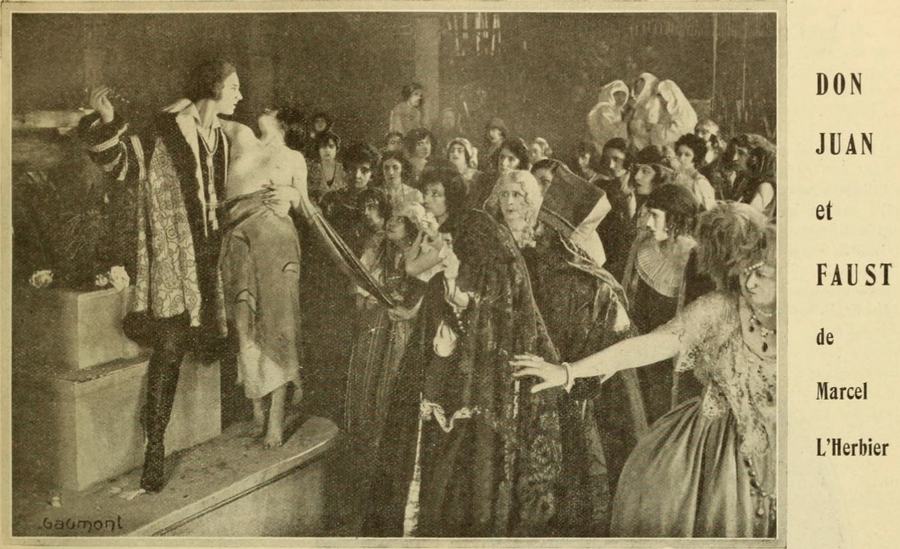
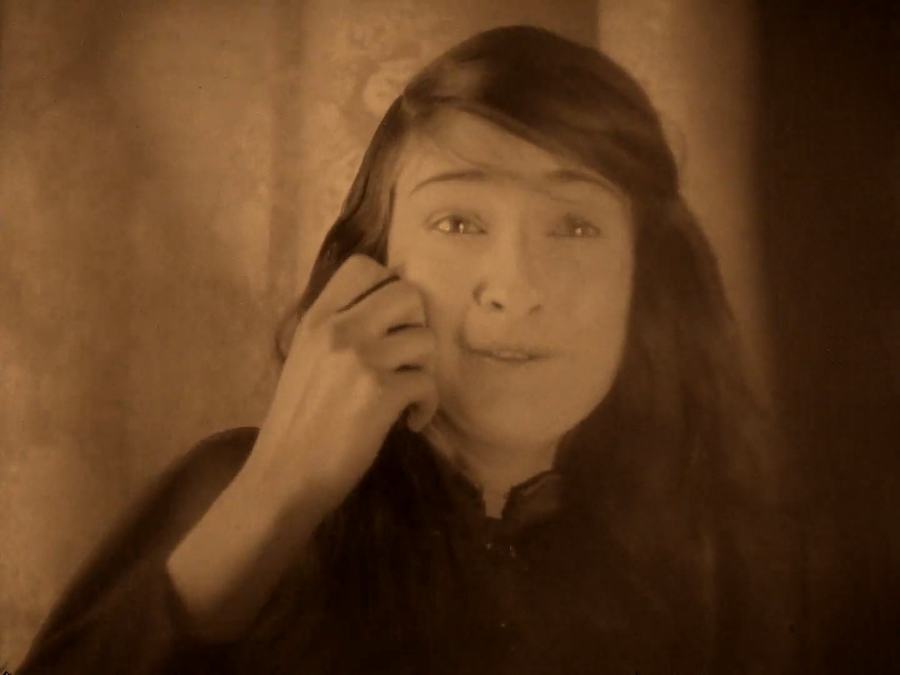
Lenau’s tormented verse and Grabbe’s baroque stage whispers coalesce into a fever-dream diptych: on one panel, Don Juan—played with razor-sharp arrogance by Jaque Catelain—glides through candle-dripped Venetian corridors, his silhouette a black scythe against gold leaf, seducing duchesses and nuns with equal disdain until a marble statue bleeds and drags him into a catacomb of echoing hoofbeats; on the other, Georges Deneubourg’s Faust, grey at the temples yet boyish in the eyes, pores over worm-eaten grimoires in a gabled study where dust motes swirl like galaxies, signs his crimson pact in a mirror that later shatters to reveal Madeleine Geoffroy’s Gretchen—here called Marguerite—whose braid unspools into a river of phosphorescent hair as she drowns her illegitimate child beneath a moon that looks suspiciously like a skull. Marcel L’Herbier cross-cuts between both myths with stroboscopic title cards, superimposing Catelain’s laughing mask over Deneubourg’s anguished brow until the two legends fuse in a climactic masquerade where Faust, now wearing the Don’s plumed hat, waltzes with a masked Death (Danielle Verna) while hell-mouth curtains embroidered by Paul Poiret billow open to reveal a revolving discotheque of 19th-century literary extras—Byron, Lermontov, even young Baudelaire—applauding as the two anti-heroes are sewn together at the spine by Mephistopheles (Vanni Marcoux in kabuki maquillage) and hoisted like a bifurcated marionette above a Paris that flickers between 1835 and 1924, gaslights morphing into neon, cobblestones into cinema screens, until the film itself seems to combust, the final frames bubbling like nitrate in a projector’s gate, leaving only the after-image of a woman’s hand—perhaps Irene Derjane’s abandoned Elvira—still clutching a white carnation that refuses to wilt.
Review Excerpt
"
Imagine, if you dare, a film that refuses to stay politely inside its own century. One moment you’re inhaling the talcum-and-tallow whiff of 1830s Romanticism; the next, the projector’s hot breath blasts you into jazz-age Montparnasse where absinthe is iced by electric fans. That vertiginous time-warp is the very bloodstream of Don Juan et Faust, Marcel L’Herbier’s 1924 phantasmagoria that stitches Lenau’s brooding Don Juan poem to Grabbe’s fragmentary Faust tragedy with cat-gut and gold threa..."