DbcultAccessing Vault...
8/10
Senior Film Conservator
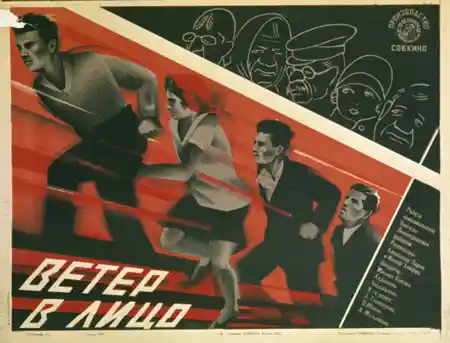
A definitive 8/10 rating for a film that redefined the boundaries of cult cinema. Veter v litso remains a cornerstone of transgressive art.
Alright, so we’re talking about **Veter v litso** here, a film from 1930. Is it worth tracking down today? Look, if you’re into early cinema, especially Soviet stuff, or just curious about how stories were told way back when, absolutely. But if you're looking for slick modern pacing or anything resembling a blockbuster, you'll probably bounce off this hard. It’s a niche watch, for sure, but a rewarding one for the right kind of film nut. 🧐
The film tosses us right into this busy Soviet world, all about industry and building things up. Our main guy, Boris (Oleg Zhakov), he’s an engineer, all earnest and focused on his work. Lida (Nina Gleizarova) is also an engineer, and their relationship is sort of the heart of it, but it’s a very *Soviet* kind of heart – tied up with their work and collective ideals.
What struck me first was just how *different* the acting feels. Oleg Zhakov has this really intense, almost pained expression a lot of the time. Like, you can practically see the weight of the nation’s future on his brow. It’s not subtle. There’s a scene where he’s just staring into the middle distance, contemplating something, and it goes on for what feels like an eternity. But it’s effective, in its own way.
Nina Gleizarova, as Lida, brings a certain quiet strength. She’s not just there as the love interest; her character has her own struggles with loyalty and ambition. You almost feel the movie trying to convince you her emotional arcs matter just as much as the steel being forged.
The black and white cinematography is often quite striking. There are these wide shots of factories, all smoke and machinery, that are genuinely impressive for the time. They really wanted to show off the scale of industrial progress. The camera movements are not what we’d call dynamic today, but they get the job done, framing these big, almost monumental images.
The editing, though, sometimes feels a little… abrupt. You’ll be in one scene, and then suddenly, *boom*, you’re somewhere completely different. It keeps you on your toes, I guess. Or maybe they just ran out of film for transitions. Who knows? 🤔
There's a particular sequence, fairly early on, where they’re showing the workers, all focused and sweating. The director, Iosif Berkhin, really emphasizes the collective effort. It’s less about individual heroism and more about the symphony of the working class. It almost feels like a documentary at points, then snaps back to the personal drama.
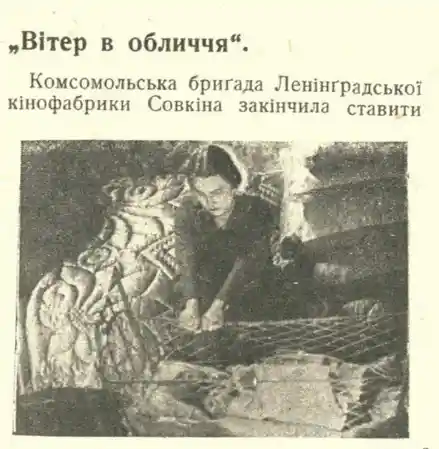
You can tell this film is steeped in its time. The themes of dedication to the party, the struggle against saboteurs (or perceived ones), the sheer optimism for the future – it’s all there, front and center. It’s fascinating to watch not just for the story, but as a historical document of what cinema was trying to say then.
One small detail: the outfits. Everyone looks so *serious* and buttoned-up. Even when they're supposed to be relaxed, there's this formality. It makes you wonder how much was genuine character choice versus just how people dressed then, especially in a film trying to project a certain image.
The pacing can be a bit of a grind. There are moments that drag, where you wish they'd just get on with it. But then something will happen, a small argument, a meaningful look between Boris and Lida, that pulls you back in. It’s a very **stop-and-start** rhythm.
There's a quiet scene where Lida is looking out a window, seemingly lost in thought. No dialogue, just her expression. That kind of negative space, letting the audience fill in the blanks, felt surprisingly modern, even for 1930. It’s a blink-and-you-miss-it moment, but it stuck with me.
The story itself, about a young engineer getting caught up in a project, facing accusations, and having his loyalty tested, is pretty standard stuff for the era. But it's the specific performances, especially Zhakov's earnest intensity, that make it feel a bit more than just a typical socialist realist narrative. He really sells the internal conflict, even if it's mostly through furrowed brows and dramatic pauses.
It's not a film that's going to blow your mind with twists or turns. But it offers a window into a particular time and place, showing how personal lives were intertwined with grander national narratives. It’s a film that asks you to be patient, to lean in a little, and just observe. 🕰️
So, yeah, if you've got a Saturday afternoon and an itch for something truly different, give **Veter v litso** a shot. Just don’t expect a popcorn flick. Expect history, some deeply serious faces, and a fascinating, if sometimes slow, journey.
IMDb 6.8
1929
Community
Log in to comment.