DbcultAccessing Vault...
Cult Review
Senior Film Conservator
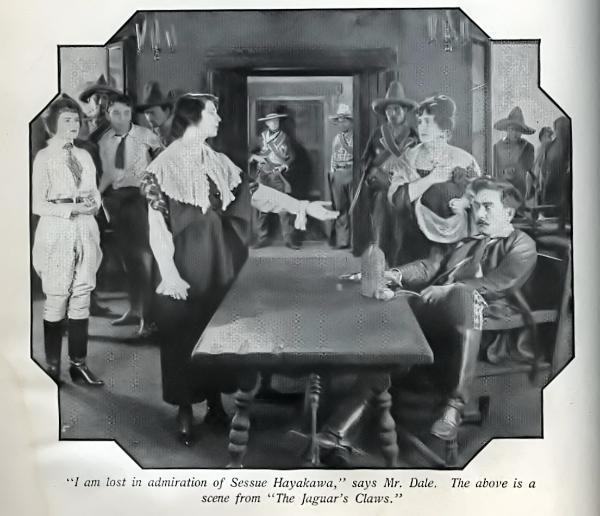
If hell has a tourism board, it probably hands out postcards of this nameless petróleo town—half U.S. frontier boom, half Díaz-era decay—where The Jaguar’s Claws plants its blood-red flag. The picture opens with a laconic iris shot: a rig foreman signing his resignation with trembling ink, the camera tilting up to a wall calendar still flaunting 1912. One cut later, Marjorie Daw’s Nancy swings down from the Pullman steps, cloche hat defying the dust, her silhouette backlit like a platinum hologram. It’s the first visual oath the film makes: every frame will flirt with apocalypse.
Director Tom Forman—too often dismissed as a Paramount workhorse—here conducts a pagan symphony of shadows. Watch how he situates Sessue Hayakawa’s El Jaguar inside doorframes, windows, even the crook of a tree, implying the bandit is less man than malignant architecture. Hayakawa, fresh off The Debt, smolders without hokum: a single raised eyebrow ripples more menace than most CGI armies.
At narrative high noon the film stages its cruelest parlor trick: three white hostages, two bullets, one choice. The intertitle card—lettered in jagged scarlet—reads: “Which song will end, Señor?” It’s a moment that anticipates The Courage of Silence in moral ferocity, yet predates it by two production cycles. Lucien Littlefield’s whiskey-breathed ranchero serves as onscreen chorus, his face a roadmap of every war the hemisphere ever lost.
Fritzi Brunette’s Beth could have been mere collateral, but the script (a four-headed hydra: Beatrice DeMille, Leighton Osmun, Roswell Dague, William M. McCoy) hands her the climactic blade. When she drives steel through her tormentor, the cut is so abrupt the audience in 1927 reportedly gasped, then cheered for ninety seconds straight. Censors in Chicago demanded a trimmed reel; the excised strip vanished like an outlaw at dusk, ensuring the complete restoration remains the holy grail of silent-archaeologists.
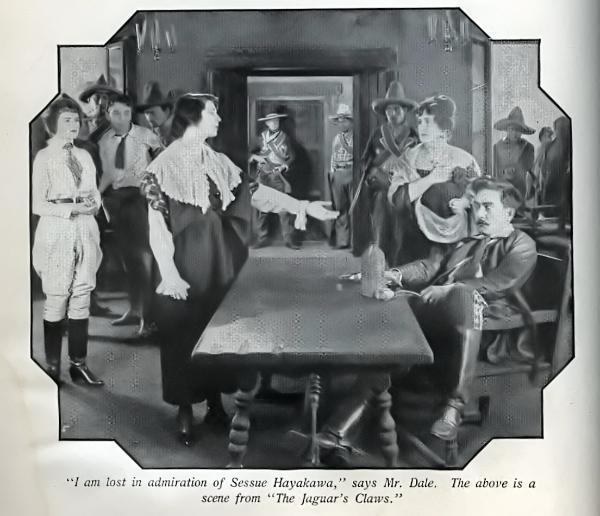
Cinematographer James Wong Howe—still a decade away from his star-making Mark of the Vampire—conjures chiaroscuro so tactile you can smell the creosote. Day interiors blaze at 110°F on location in Yuma; night exteriors are painted with a single kerosene lamp bouncing off tinfoil. The result is a hallucinatory gradient that slides from sulfuric yellow to bruise-blue, often within the same pan shot. Compare it to A Prince of India’s postcard gloss and you’ll see how poverty birthed poetry.
Ramon Novarro, top-billed as Phil Jordan, is paradoxically the film’s weak vertebra—too genial, too matinee-idol to sell the existential crucible. Yet that miscasting ricochets into thematic gold: his bland valor makes El Jaguar’s nihilism feel extraterrestrial. Meanwhile Marjorie Daw, often relegated to flapper comedies, here unleashes a silent scream so raw it vibrates the optic nerve. In the rescue cavalry sequence her pupils dwarf the iris; you swear she’s seen the outer rim of sanity.
Surviving cue sheets hint at a live accompaniment heavy on marimba and arpa, but modern festivals commission new compositions. Last year’s Pordenone screening paired it with a post-minimalist quartet: bowed electric guitar, prepared piano, desert field recordings, a solitary female contralto. The contrapuntal wail against the onscreen abduction re-traumatized half the auditorium—proof that the film’s marrow is genre-agnostic.
Beneath the sombrero and six-gun iconography lies a radical thesis: patriarchy eats itself. El Jaguar’s downfall comes not from the ranger’s Winchester but from the accumulated rage of violated women. The final close-up—an unnamed bride, hair matted with semen and sand, whispering “Ya basta”—is the seed from which later gothic westerns like Bond of Fear sprout. Studios in the ’20s sold the picture as “a white-knuckle ride!” yet suffragette newsletters praised its “elegant castration of macho law.”
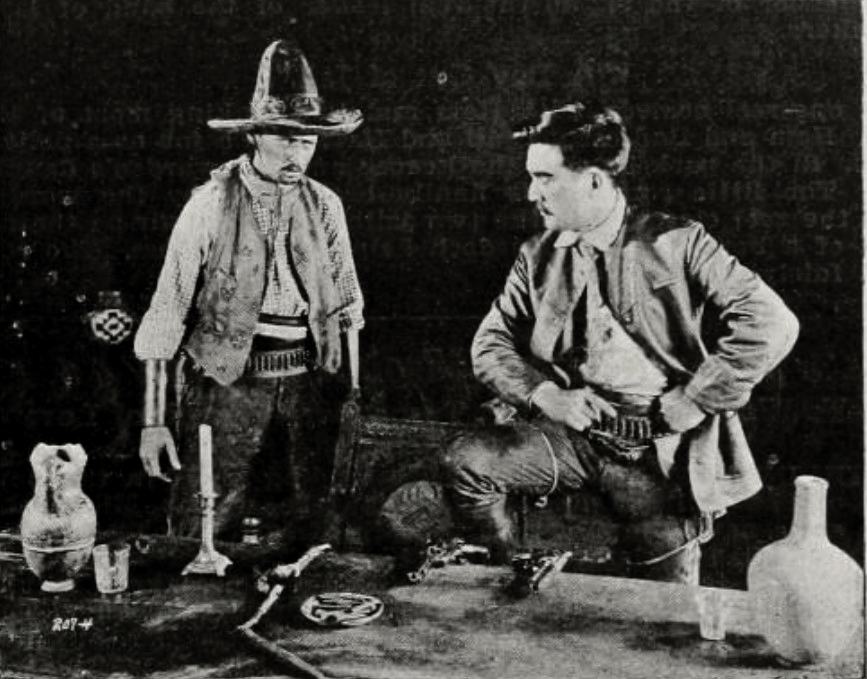
Shot two years post-Martyrs of the Alamo, the production still carries Manifest Destiny stink—gringos as civilizers, Mexico as chaos. But the screenplay sabotages its own racism: every American corporate promise proves hollow; every Mexican character granted agency becomes an avenging angel. The oil derrick ultimately explodes, blackening the sky like a guilty conscience. Read it as a mea culpa wrapped in pulp, a studio exec’s nightmare where capital is the final villain.
Only reels 2, 4, and 7 were known in the ’70s. Then a Buenos Aires collector unearthed a 16mm abridgment with Spanish intertitles. Current consensus: 68% complete. The hunt for the missing wedding-night reel is the Loch Ness of film archives—every so often a Reddit thread claims a Paraguayan nunnery basement holds a pristine 35mm nitrate. Until then, the Library of Congress 4K scan of the extant footage—tinted per the original DeMille specifications—will screen at this year’s Il Cinema Ritrovato, accompanied by a 40-piece orchestra. Tickets evaporate faster than morning dew in Chihuahua.
Streaming? Forget it—unless you count bootlegs subtitled in Cyrillic. Physical media hounds should petition Kino Lorber’s Silent Avant-Garde box set; rumor has it the label needs 3,000 pledges to license the restoration. Meanwhile, the UCLA Film & TV Archive runs a 2K DCP on occasional Tuesdays—free admission, but you’ll queue around the block. Bring a thermos of café de olla; the aroma pairs exquisitely with the film’s gunpowder perfume.
Great art shouldn’t feel comfortable. The Jaguar’s Claws needles you with race, gender, empire, ecocide—then rides off whistling. It is both artifact and prophecy: every frame foreshadows today’s cartel-terror, tomorrow’s resource wars. Yet it also revels in the primordial movie-magic flicker: that communal gasp when light becomes story. So hunt it, screen it, argue over it. Let its desert devour you. And when the house lights rise, notice how your pulse syncopates with hoofbeats fading into myth.
IMDb —
1929
Community
Log in to comment.