DbcultAccessing Vault...
Cult Review
Senior Film Conservator
If celluloid could perspire, Nedra would drip brine and gardenia nectar. The film arrives like a postcard that has been forwarded through seven ports, edges singed by equatorial sun, ink blurred by salt spray. You can almost smell the nitrate feverishly decomposing, as though the reels themselves are impatient to return to the jungle from which their story sprang.
Most 1921 romances treat elopement as a single pistol shot—here, it is a carousel loaded with live ammunition. McCutcheon and Seitz begin in a chandeliered drawing room where Grace’s engagement tea has metastasized into a twelve-course spectacle of social hemorrhage. The camera, restless as a mosquito, tracks past towers of éclairs and dowagers whose laughter sounds like ice cracking. When the lovers bolt, the film swaps marble for moon-mud, top-hats for constables’ helmets, and suddenly we are inside a Keystone chase that has been bled of slapstick and injected with existential dread.
Aboard the liner Calyx—a floating art-deco sarcophagus—desire performs a slow quadrille. Henry Veath, all profile and no conscience, drifts through smoking rooms like cigarette haze himself; Lady Tenny, veiled in jet beads, watches Hugh with the predatory patience of a heron. The directors frame these triangles inside mirrored corridors so that every stolen glance spawns infinite regressions. Love, it seems, is not a matter of hearts but of optics.
Then the sky tears open. Forget polite squalls of later melodramas; this is a weather-event that seems personally offended by human affection. Barometers spin like roulette wheels; waves become glass shards hurled upward. Cinematographer Alvin K. Blystone tilts his camera into the storm until decks turn vertiginous—viewers in 1921 reportedly gripped their chairs to keep from sliding onto the orchestra pit. In the chaos Hugh saves someone; identity is a casualty of the night. By dawn, only the island remains, rising like a blackened tooth from the foam.
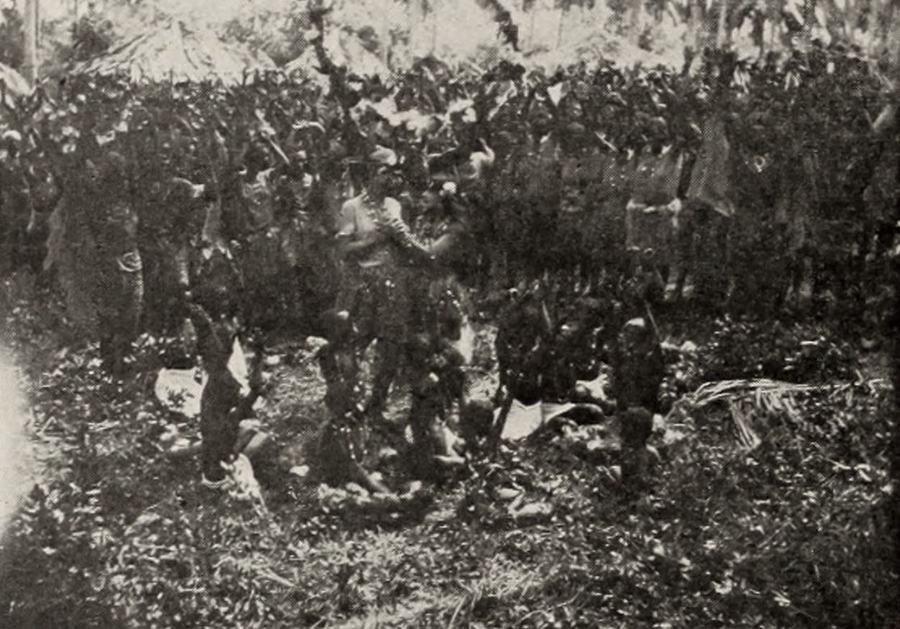
Nedra itself is a geographic plot-twist: a volcanic comma that pauses the narrative and rewrites grammar. Palms sway with the syncopation of Charleston dancers; parrots scream lines from Hamlet. The indigenous tribe—half Polynesian, half backstage chorus—welcomes the white gods with a ceremony part sacrament, part vaudeville. Hugh and Lady Tenny, draped in feathered trains, become living postcards of empire anxiety: colonizers colonized by their own mythology.
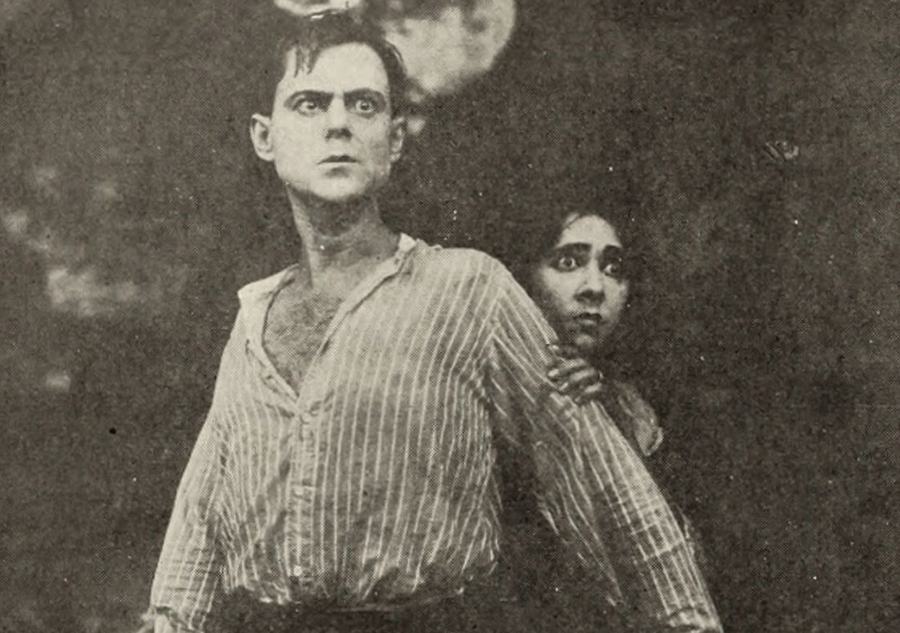
Just as tribal drums crescendo toward a forced nuptial, a U.S. gunboat slices the reef, ironclad reality rescuing fantasy. The camera lingers on Grace—now aboard the rescue ship—scanning survivors, her face a palimpsest of relief and bereavement. But Hugh’s gaze has already slipped its anchor; he boards the return steamer only to discover Manhattan’s grid indifferent to his inner cartography. Grace’s marriage to Veath is a footnote scribbled across society pages that flutter like wounded gulls.
What astonishes is the film’s cavalier attitude toward its own triangle. Hugh learns of Grace’s betrayal inside a brownstone parlour where sunlight falls through lace like attenuated guilt. Close-up on Probert: a half-smile, not of resignation but of recognition—Oh, was that all?—then a cut to stock-exchange ticker tape, its chatter louder than any broken heart. The film posits love as an island you may circumnavigate but never possess; the map is always more seductive than the shore.
Hugh’s final voyage back to Nedra is shot as a reverse exodus: silhouettes against vermilion skies, smoke stacks dwindling into ember. Lady Tenny awaits beneath a breadfruit tree whose leaves have been braided into the shape of a question mark. Their embrace is chaste yet seismic, a refusal of the transactional kisses proffered in drawing rooms. Fade-out on waves licking the frame—an admission that every love story is only the prologue to a larger, unspoken myth.
Fania Marinoff—better known for her Greenwich-Edge bohemianism—plays Grace with the brittle radiance of a chandelier swaying above a dance floor. Watch her eyes in the typhoon sequence: panic flickers, yet beneath it lurks a voluptuous curiosity, as though the storm were merely another suitor. She exits the film two-thirds through, yet her absence haunts like a perfume that refuses to evaporate.
George Probert’s Hugh is less a hero than a cartographer of his own bewilderment. His body language migrates from stiff Ivy-Club decorum to a languid torso-forward gait acquired beneath island suns. Notice how, in the final reel, he no longer buttons the top of his shirt: a sartorial revolution more eloquent than any intertitle.
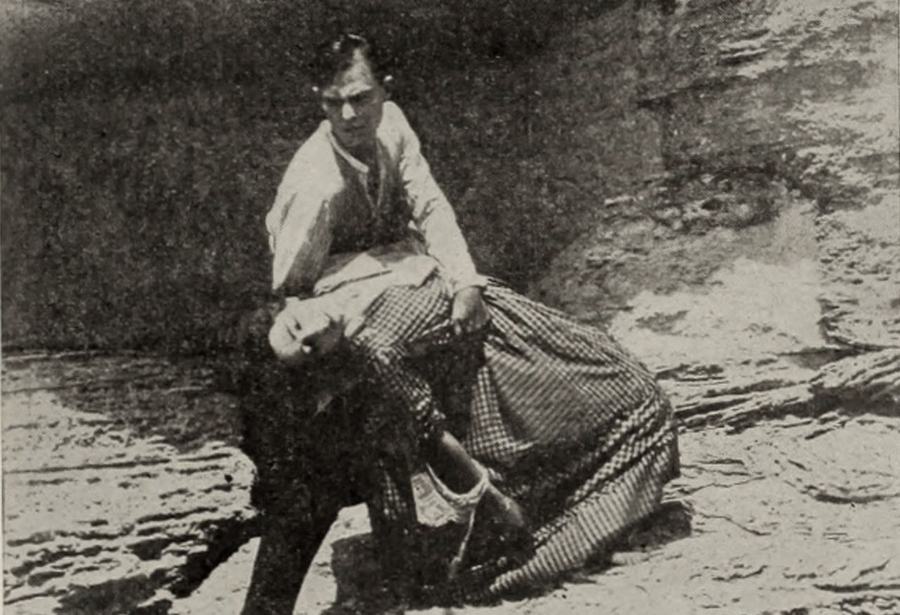
Margaret Greene infuses Lady Tenny with a neurasthenic glow; she suggests a woman who has already read the last page of every book and decided to write a new one. Her chemistry with Probert crackles in glances rather than clinches—when she offers Hugh a slice of breadfruit, the gesture carries the erotic charge of a kiss.
Blystone’s cinematography deserves resurrection in film-studies curricula. Interior scenes employ pools of tungsten that carve faces into cubist planes; exterior island sequences exploit ultraviolet over-exposure so that white linen glows like halos while skin attains the sheen of wet terra-cotta. The typhoon itself—achieved with miniature ships in a horse-trough and fans hurling bucketfuls of seawater—anticipates the elemental sadism of The World, the Flesh and the Devil (1914).
Surviving prints display a daring tinting schema: amber for Manhattan salons suggesting congealed champagne; viridian for shipboard nights; magenta for Nedra’s jungle, as though the island were perpetually flushed with fever. These hues are not mere decoration but narrative syntax: each chromatic leap signals a shift in emotional tectonics.
Nedra shares DNA with Moondyne’s outlaw arcadias, yet where the latter relishes masculine escape, here the island is a crucible for desire’s renegotiation. Its triangle anticipates the erotic geometry of La Belle Russe (1919), but replaces that film’s cynicism with a languid, almost pagan acceptance of flux.
The motif of mistaken identity during catastrophe resurfaces in Breaking the News (1917), yet Nedra complicates rescue: salvation arrives not as moral reckoning but as further displacement—a gunboat that ferries you back to the very life you no longer fit.
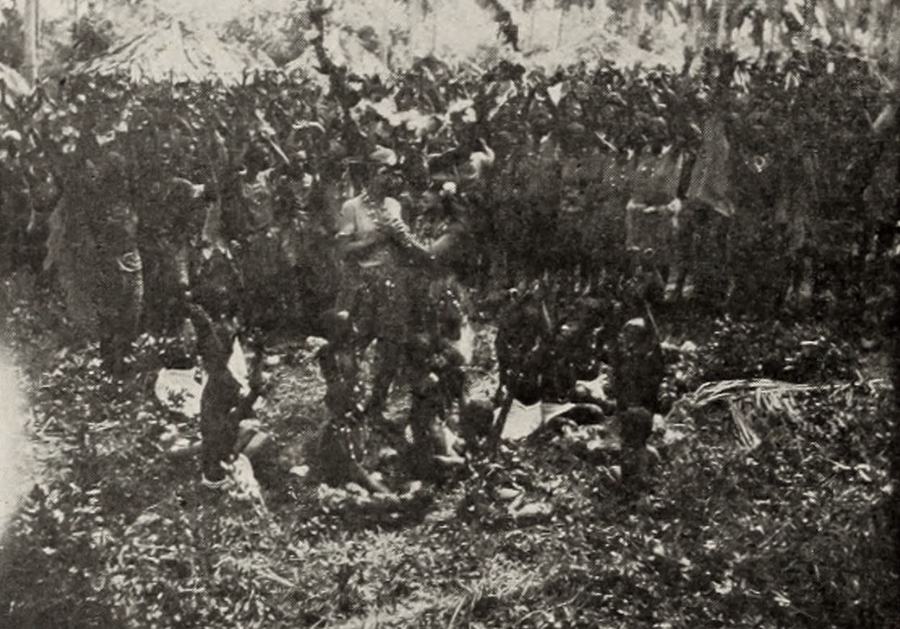
Released months after the Tulsa conflagration and during the first women’s suffrage elections, Nedra channels collective vertigo. Grace’s autonomy—she chooses Veath after surviving calamity—reads as a sly critique of marriage-as-social-contract. Meanwhile, the island natives, though filtered through colonial gaze, are granted a dignity absent from contemporaneous jungle potboilers: their chant sequences were choreographed by Maude Allan, the notorious “Salomé” dancer, infusing ritual with modernist abstraction.
Only fragments survive: a 38-minute 16mm reduction print at MoMA, a single decomposing nitrate reel in a Slovenian monastery, and a French Pathé folder of stills whose captions read like Surrealist haiku. Yet these shards vibrate with enough voltage to electrify conjecture. Digital reconstructions—AI-interpolated frames, tinting restored via spectrographic analysis—hint at a film whose wholeness might have rivaled In Search of the Castaways for sheer narrative voracity.
Contemporary exhibitors paired the film with live ensembles performing a pastiche of Coleridge-Taylor and Hawaiian slide guitar; surviving cue sheets indicate a leitmotif for Lady Tenny built on a descending chromatic figure that seeps like unspoken longing. Modern audiences, deprived of such accompaniment, should cue Debussy’s “L’Isle Joyeuse” on headphones—its arpeggios map neatly onto the film’s tidal rhythm.
Nedra is less a story than a weather pattern that happens to characters, a dream whose grammar dissolves upon waking yet leaves salt on the skin. It proposes that love is not a destination but a series of departures, each one more audacious than the last. To watch what remains is to stand at the shoreline where cinema’s ocean licks the feet of myth, tempting us to abandon the map and swim.
—review cinephile © 2024
IMDb —
1917
Community
Log in to comment.