DbcultAccessing Vault...
Cult Review
Senior Film Conservator
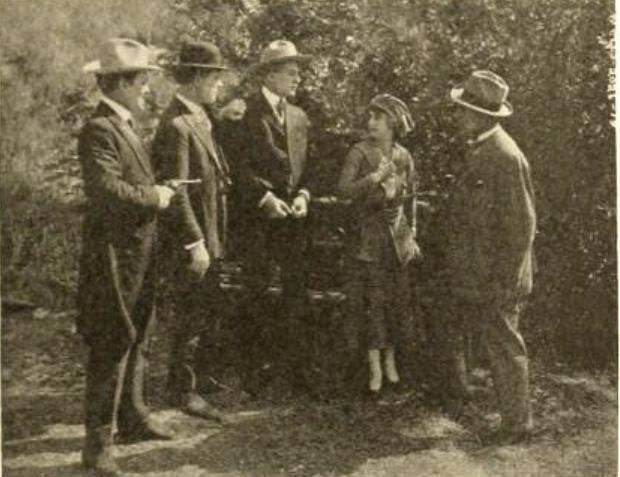
In the annals of early cinema, where narratives often cleaved rigidly to unambiguous heroes and villains, Kinkaid, Gambler emerges as a surprisingly nuanced and morally complex offering. This film, a testament to the burgeoning sophistication of storytelling during the silent era, defies simplistic categorization, inviting its audience into a labyrinthine exploration of justice, legality, and the often-blurred lines between them. It presents a world where the ostensible criminal might be the true arbiter of equity, and the forces of law and order, unwitting pawns in a larger game of societal mendacity. The very title, with its juxtaposition of a name and an occupation often associated with risk and transgression, hints at the unconventional journey awaiting the viewer.
Our introduction to Jim Kinkaid, portrayed with a compelling gravitas that transcends the limitations of silent performance, is through the lens of accusation. He is branded a thief, a man who has brazenly relieved George Arnold, the head of the Paradise Valley Land Company—a name itself dripping with ironic promise—of a substantial sum. Kinkaid's subsequent flight to the sun-drenched, border-straddling world of Mexico, where he presides over a bustling gambling house, only solidifies his outlaw image. Yet, even in these initial moments, there's a subtle undercurrent, a certain magnetism that suggests more than mere villainy. His domain, a place of chance and fleeting fortunes, seems to mirror the precariousness of justice itself. He is a figure of authority within his own sphere, commanding loyalty, albeit one that is initially tested. The film cleverly leverages this initial perception, building Kinkaid as a character of formidable presence, whose very existence challenges the conventional binaries of good and evil. His actions, initially framed as criminal, are later revealed as a desperate, yet principled, reclamation. This inversion of expectation is a hallmark of the film's narrative ambition, compelling the audience to question their preconceived notions about morality and the mechanisms of retribution.
The narrative's true heart, arguably, lies with Nellie, the intrepid detective dispatched by the Burton Detective Agency. Her mission is clear: infiltrate Kinkaid's world, gain his trust, and ultimately, betray him. This is a classic setup, reminiscent of numerous espionage thrillers, but Kinkaid, Gambler imbues it with profound psychological depth. Nellie's initial foray into the gambling den is marked by a raw naiveté, her ignorance of the games nearly exposing her. This vulnerability, however, paradoxically makes her more human, more relatable. As she navigates the treacherous currents of Kinkaid's establishment, she becomes an unwilling observer of his character. Her professional detachment begins to erode under the weight of Kinkaid's unexpected goodness. The film meticulously charts her internal struggle, a poignant battle between duty and conscience. She is forced to confront the uncomfortable truth that the man she is tasked to apprehend might be more honorable than the man who hired her. This moral tightrope walk is rendered with a subtlety that speaks volumes, reflecting the era's reliance on visual storytelling and the expressive capabilities of its actors. Nellie's journey from resolute operative to conflicted soul is a powerful arc, echoing the intricate character development seen in films like The Land of Promise, which also delves into the complexities of human agency against societal backdrops. Her eventual decision to betray Kinkaid, born of professional obligation, is clearly depicted as a wrenching act, a testament to her dawning empathy.
No tale of a charismatic leader is complete without a loyal, yet discerning, lieutenant, and Romero Valdez fulfills this role with understated brilliance. From the outset, Romero harbors a deep suspicion of Nellie. His instincts, honed by years in the shadowy world of Kinkaid's operations, tell him that 'everything is not on the square' with this new arrival. He is the pragmatic counterpoint to Kinkaid's burgeoning affection, a voice of caution that Kinkaid, blinded by blossoming sentiment, initially dismisses. Romero’s unwavering loyalty to Kinkaid is a foundational element, but it is not blind. His distrust of Nellie is a logical extension of his protective instincts, and his subsequent actions, even when seemingly misguided, are always rooted in his concern for his boss. The narrative smartly uses Romero's journey to underscore the film's themes of perception and reality. His initial antagonism toward Nellie gradually transforms into a grudging respect, then eventual camaraderie, as he witnesses Kinkaid's integrity and Nellie's ultimate choice. This evolution of a secondary character adds considerable texture to the film, showcasing how even hardened individuals can have their perspectives reshaped by unfolding events and genuine human connection. His desertion by his followers at a critical juncture, a stark moment of betrayal, only serves to highlight the precariousness of loyalty in a world governed by self-interest, a theme explored with equal intensity in narratives such as The Devil's Wheel, where moral compromises often lead to isolation.
The film's pivotal moment arrives not with an explosive confrontation, but with a quiet, yet utterly devastating, confession. Letty Frank, a vengeful convict, escapes and exposes Nellie to Kinkaid, shattering the carefully constructed illusion. Yet, Kinkaid's reaction is not one of immediate fury or violent reprisal. Instead, during their accustomed evening walk, he unveils the true impetus behind his actions. This scene is a masterclass in narrative subversion. The audience, like Nellie, is led to believe Kinkaid is a common criminal, only to discover he is a righteous avenger. He recounts encountering a group of destitute foreigners, stripped of their life's savings by Arnold through a 'perfectly legal' but morally reprehensible real estate scam. Arnold, when confronted, scoffed at Kinkaid's pleas for restitution, hiding behind the letter of the law. It was then that Kinkaid, recognizing the profound injustice, took matters into his own hands, reclaiming the stolen funds by force and returning them to the rightful, wronged immigrants. This revelation utterly recontextualizes the entire narrative. Kinkaid transforms from a bandit into a vigilante, a man driven by a fierce sense of justice that transcends the formal legal framework. He embodies the spirit of an anti-hero, a figure willing to break the law to uphold a higher moral code. This profound twist elevates Kinkaid, Gambler beyond a mere crime drama, positioning it as a potent commentary on systemic exploitation and the inadequacy of legal recourse for the marginalized. It forces the audience to grapple with uncomfortable questions about who truly constitutes a 'criminal' and where true morality resides, echoing the societal critiques often subtly woven into films like Qristine or The Clarion.
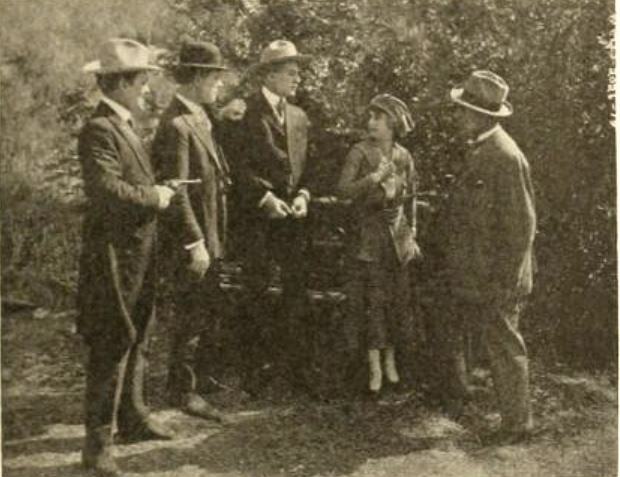
The arrival of New York detectives, orchestrated by Nellie's earlier wire, sets the stage for the film's tense climax. Nellie, now fully aware of Kinkaid's true motives, asks him for one last walk, a poignant gesture fraught with unspoken regret. Romero, ever vigilant, follows with two Mexican compatriots, a testament to his enduring, if tested, loyalty. The arrest, swift and brutal, sees Kinkaid apprehended by Arnold and the lawmen. Romero, attempting to intervene, finds himself abandoned by his own men, a stark portrayal of self-preservation trumping allegiance in the face of overwhelming odds. He too is arrested, sharing Kinkaid's fate. This moment of shared incarceration, however, paradoxically solidifies their bond. In the stark confines of the jail, old animosities dissolve, replaced by a mutual understanding and respect. It is here that Kinkaid, with an almost reckless confidence, wagers his entire possessions on Nellie's inherent goodness, on her capacity to 'run true to form.' This wager is not merely about material wealth; it is a profound declaration of faith in human decency, a belief that love and empathy can ultimately triumph over professional obligation and societal expectations. It is a moment of profound vulnerability and strength, highlighting Kinkaid's remarkable character and his unerring judgment of Nellie's true heart. This dramatic turn, where trust is placed above all else, imbues the subsequent events with immense emotional weight.
Nellie, grappling with the moral morass of her situation, finds a path to redemption, not through legal channels, but through a courageous act of defiance. Recognizing the profound injustice of Kinkaid's imprisonment and the purity of his intentions, she takes matters into her own hands. In a sequence of understated tension, she steals the jail keys from the sheriff, a quiet act of rebellion that speaks volumes about her transformed allegiance. The subsequent liberation of Kinkaid and Romero is not merely an escape; it is a symbolic act of justice, a rectification of the wrong she inadvertently participated in. This final, decisive action solidifies her transformation from a dutiful detective to a woman guided by a higher moral compass, proving Kinkaid's faith in her was not misplaced. The dawn entry into town from the desert, Kinkaid, Nellie, and Romero emerging together, is a powerful visual metaphor. They are not fleeing; they are returning, not as fugitives, but as champions of a truer form of justice, met by an ovation from a community that understands their plight. This communal embrace underscores the film's message: that true heroism is often recognized not by the institutions of power, but by the hearts of the people it serves. This resolution, deeply satisfying, resonates with the thematic triumph of integrity over systemic corruption, a narrative thread that can be seen, albeit in different contexts, in films like The Girl in His House, where personal morality often clashes with external pressures.
The film's denouement is one of profound satisfaction and hopeful new beginnings. Kinkaid, having achieved his singular goal of returning the stolen money to the immigrants and now exonerated in the eyes of the community, makes a decisive break from his former life. He bestows the gambling house and all its trappings upon Romero, a gesture that not only cements their renewed friendship but also recognizes Romero's unwavering loyalty and capability. This act signifies Kinkaid's complete spiritual transformation; the 'gambler' persona, born of necessity and a quest for justice, is shed. His future, he realizes, lies with Nellie, away from the shadows and moral ambiguities of his past. Their union represents a triumph of love, understanding, and shared values. It is a future built on genuine connection and a commitment to a life lived with integrity, free from the entanglements of the law's shortcomings. The final image of Kinkaid and Nellie, poised to forge a new destiny together, speaks to the enduring power of personal choice and the possibility of redemption, not just for the individual, but for the very concept of justice. This heartwarming conclusion, where the 'outlaw' finds peace and the 'detective' finds love, offers a poignant and memorable capstone to a narrative rich with moral inquiry and human drama. It’s a testament to the fact that even in early cinema, complex character arcs and thematic depth were not only possible but masterfully executed, leaving audiences with much to ponder long after the final fade to black.
Fred Myton, the writer behind this compelling narrative, crafted a story that transcends its era, offering insights into human nature and societal structures that remain relevant today. While the film's specific historical context—the plight of immigrants, crooked land deals—might seem dated, the underlying themes of justice, moral ambiguity, and personal redemption are timeless. The performances by Cleo Loring as Nellie, Jean Hersholt as Kinkaid, and Raymond Whitaker as Romero, among others, despite the conventions of silent acting, convey a profound emotional resonance that carries the story's weight. The film's narrative structure, with its initial misdirection and subsequent revelatory twist, is remarkably sophisticated for its time, demonstrating an astute understanding of audience engagement and thematic development. It challenges viewers to look beyond superficial appearances, to question authority, and to champion those who fight for justice, even if their methods are unconventional. In an era where cinema was still finding its voice, Kinkaid, Gambler stands as a bold declaration of its potential for moral discourse and complex character studies. It serves as a vital reminder that the silent screen was far from silent in its capacity to provoke thought and stir the human heart, solidifying its place as a significant, albeit perhaps underappreciated, piece of cinematic heritage. Its exploration of moral grey areas positions it alongside other thought-provoking narratives of its time, providing a rich tapestry of early filmmaking that continues to fascinate and inform contemporary audiences about the enduring power of storytelling.
IMDb —
1922
Community
Log in to comment.