DbcultAccessing Vault...
7.1/10
Senior Film Conservator
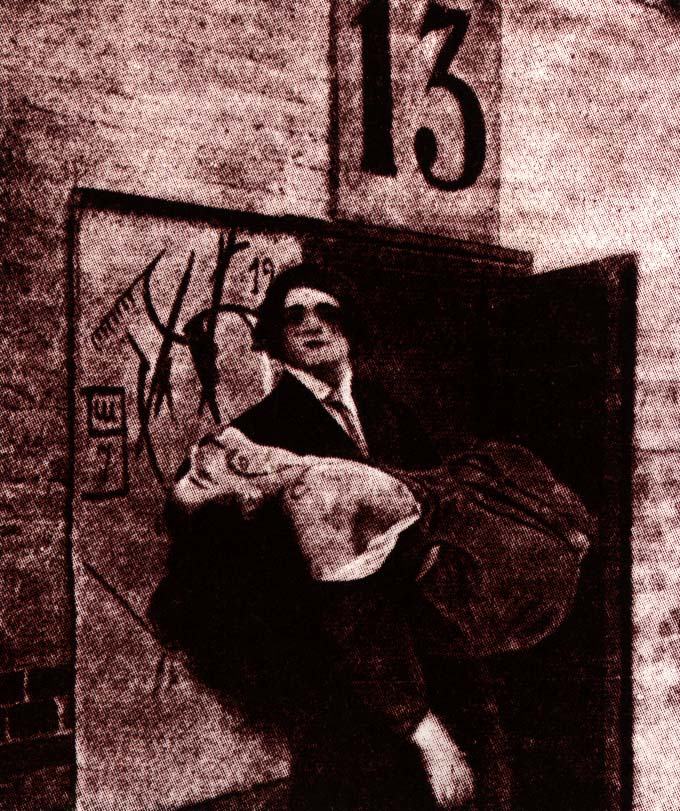
A definitive 7.1/10 rating for a film that redefined the boundaries of cult cinema. Drama v kabare futuristov No. 13 remains a cornerstone of transgressive art.
Stepping into the spectral glow of Drama v kabare futuristov No. 13 is less an act of viewing a film and more an immersion into a kinetic, historical artifact. This isn't merely a silent picture; it’s a time capsule, pulsating with the defiant energy of Russian Futurism, a movement that sought to shatter the shackles of tradition and propel art into the dizzying, exhilarating velocity of the modern age. To dissect this cinematic fragment is to excavate the very foundations of avant-garde expression, a rare glimpse into a moment when the boundaries of artistic possibility were not just being pushed, but being violently, joyously obliterated.
The film, a veritable performance document featuring the titans of the movement – Vladimir Mayakovsky, Vladimir Burlyuk, David Burlyuk, Michael Larionov, and Natalia Goncharova – transcends conventional storytelling. It is a raw, unvarnished spectacle, an ideological clash rendered in stark, monochromatic tones. The setting, a dimly lit 'Cabaret No. 13,' functions not merely as a backdrop, but as a crucible where the old aesthetic order is ritually immolated. The air, even through the grainy lens of historical footage, feels thick with an almost palpable tension, a sense of impending rupture.
The arrival of the 'Critic' acts as the immediate catalyst for the titular 'drama.' This figure, impeccably attired and rigidly composed, embodies the entrenched conservatism against which Futurism so vehemently rebelled. His very posture, a static monument amidst a whirlwind of creative chaos, articulates the generational and philosophical chasm separating him from the artists. This isn't a nuanced character study; it's a symbolic confrontation, a theatricalized manifestation of the Futurist manifesto's call to 'throw Pushkin, Dostoevsky, Tolstoy, etc., etc. overboard from the Steamship of Modernity.'
Then, the performance explodes. Mayakovsky, with his imposing stature and electrifying presence, dominates the frame as the 'Poet.' While we are denied the auditory experience of his thunderous verse, his every gesture – the wide, sweeping arm movements, the intense gaze, the contorted facial expressions – conveys a powerful, almost physical assault on traditional poetic sensibilities. He is not merely reciting; he is enacting a revolution, his body a conduit for the raw, unbridled energy of language unchained. This performance, even in its silent translation, carries the weight of his real-life stage presence, known for its magnetism and confrontational power. It's a stark contrast to the more conventional dramatic stylings one might find in a film like The Ghost Breaker, where performance aims for narrative clarity and character development rather than ideological upheaval.
The 'Painters' – the Burlyuk brothers, Larionov, and Goncharova – are equally compelling. They do not merely display their art; they perform its creation. Their actions are swift, almost aggressive, mirroring the Futurist obsession with speed, machinery, and urban dynamism. The fleeting glimpses of their canvases, abstract and jarring, are visual manifestos. Goncharova, a pioneering female avant-garde artist, brings a particular intensity to her role, whether painting or embodying the 'Dancer' with her angular, machine-like movements. Her contribution underscores the movement's radical inclusivity, breaking from the patriarchal norms of the traditional art world. This kinetic painting process is a far cry from the static contemplation of art, transforming the act of creation into a performative art form itself, a living, breathing sculpture of protest.
The film's visual language is as revolutionary as its subject matter. The editing is fragmented, often disorienting, eschewing smooth transitions for abrupt cuts that mirror the Futurist embrace of simultaneity and rupture. The cinematography, while rudimentary by later standards, is employed with a conscious intent to convey dynamism. Close-ups emphasize the artists' defiant expressions and the Critic's mounting discomfort, building a tension that is almost unbearable. This deliberate stylistic choice sets it apart from the more linear, observational documentary style that might characterize a film like A Vida do Barão do Rio Branco, which aimed for historical record rather than aesthetic provocation.
The 'drama' culminates in a symbolic triumph. The artists, united in their audacious vision, encircle and overwhelm the 'Critic.' It’s not a physical assault in the conventional sense, but a visual metaphor for the obsolescence of his worldview. He is literally swept away by the tide of Futurist energy, his rigid composure crumbling under the weight of their collective defiance. The film ends not with a neat resolution, but with the artists bathed in a new, almost blinding light, a visual proclamation of their victory and the dawn of a new aesthetic era. This allegorical ending is far more potent than any explicit narrative, leaving the audience with a profound sense of having witnessed a pivotal cultural shift.
In its brevity, Drama v kabare futuristov No. 13 achieves an astonishing density of meaning. It’s a snapshot of a cultural earthquake, a testament to the power of artistic rebellion. It reminds us that cinema, even in its infancy, was not merely a tool for escapism or narrative exposition, but a potent medium for ideological combat and aesthetic experimentation. While films like Traffic in Souls or Unjustly Accused were exploring social realism and dramatic narratives, this film was charting entirely different, more abstract territories.
The performances, particularly Mayakovsky's, are less about character portrayal and more about embodying an ideal. He is the personification of the Futurist poet – bold, confrontational, and utterly convinced of the necessity of radical change. The collective energy of the artists feels genuine, a reflection of their real-life camaraderie and shared artistic mission. One can almost hear the manifestos being shouted, the traditionalists being derided, the future being sung into existence.
The historical significance of this film cannot be overstated. It serves as a crucial document for understanding the intersection of early cinema and the avant-garde movements of the early 20th century. It demonstrates how artists, unburdened by commercial constraints, could leverage a nascent medium to further their aesthetic and political agendas. While it may lack the polished narrative arcs of a Joan of Arc (even in its silent iterations) or the clear dramatic tension of C.O.D., its power lies in its unadulterated commitment to its own radical vision. It's a film that demands to be seen not just as entertainment, but as a historical declaration, a primal scream against the 'good taste' of the past.
Comparing it to other experimental works of its era, one might draw parallels with the audacity, if not the specific aesthetic, of early Dadaist or Surrealist shorts, though Futurism’s focus on technology and dynamism gives it a unique flavor. It’s a testament to the fact that even before sound, before elaborate special effects, cinema possessed an unparalleled capacity for abstraction and symbolic representation. This film, in its rawness, encapsulates the very spirit of an era characterized by upheaval and revolutionary fervor, both artistic and political. It’s a vital piece of the cinematic puzzle, showcasing how early filmmakers, particularly those aligned with avant-garde movements, pushed the medium’s boundaries far beyond mere storytelling, transforming it into a vehicle for profound philosophical and aesthetic discourse.
The very existence of Drama v kabare futuristov No. 13 is a miracle, a surviving echo of a moment when the future felt boundless and art was a weapon against stagnation. It challenges contemporary viewers to look beyond conventional cinematic grammar and appreciate the sheer audacity of its creators. It’s a film that doesn't just show you a story; it shows you a revolution. Its raw energy and uncompromising vision make it an indispensable artifact for anyone seeking to understand the origins of modern art and its entanglement with the nascent world of moving images. It's a foundational text, a defiant roar from the past, still reverberating with relevance today, urging us to question, to create, and to always look forward, much like the futurists themselves did, rejecting the stagnation of the past for the thrilling, uncertain promise of tomorrow. Unlike the narrative escapism offered by films such as Zudora or The Reincarnation of Karma, this is a film that demands intellectual engagement, a confrontation with the very nature of art itself.
Ultimately, Drama v kabare futuristov No. 13 is more than a historical curiosity; it is a living, breathing testament to the power of artistic conviction. It’s a reminder that true innovation often springs from defiance, from the willingness to challenge established norms and embrace the chaos of creation. The film’s lasting impact lies not just in its historical value, but in its ability to still provoke, to still inspire, and to still remind us that art, at its most potent, is a conversation, a confrontation, and ultimately, a transformation. It stands as a vibrant counterpoint to the more overtly comedic or entertaining spectacles like The Flying Circus, demonstrating the breadth and depth of early cinematic ambition. It’s a film that demands to be experienced, to be felt, to be wrestled with, long after its final frames have faded from the screen.
IMDb —
1927
Community
Log in to comment.