Summary
Longfellow’s hexameter prophecy materializes as a silent idyll that begins in honeyed Acadian lamplight—two children parsing Latin verbs beneath a crucifix whose cedar still bleeds resin—then combusts into imperial cartography: red-coated geometry confiscating orchards, cattle, memories, futures. Between the forge’s incandescent petals and the spinning wheel’s hypnotic halo, Evangeline and Gabriel ripen into one another, their betrothal contract trembling like a moth above parchment still warm from the notary’s seal. Before the cider-sweet night can swallow their laughter, the King’s drummers stride into the sanctuary, transubstantiating psalms into eviction orders; men are padlocked inside God’s house while women drag heirloom armoires across frostbitten furrows toward a fleet of leviathan hulls. Fire blooms where Grand-Pré once stood, its reflection a second sun on the Fundy tides; Benedict’s heart ruptures at the spectacle, his soul stepping out of his body like a tired tenant. What follows is not linear pursuit but spiral pilgrimage: Evangeline—now a cartographer of absence—trails Gabriel through bayou mists, prairie halos, and pestilential shanties, each horizon another door slammed by an unseen hand. She nurses the lepers of Philadelphia, cadences of Vespers braided with the groans of the dying, until at last she cradles the wasted Gabriel in an almshouse ward, his final exhalation a belated epithalamium. Two unmarked graves, side by side, become the film’s sole act of restitution; the forest primeval murmurs on, indifferent, while village girls rehearse her legend in flickering firelight.
Synopsis
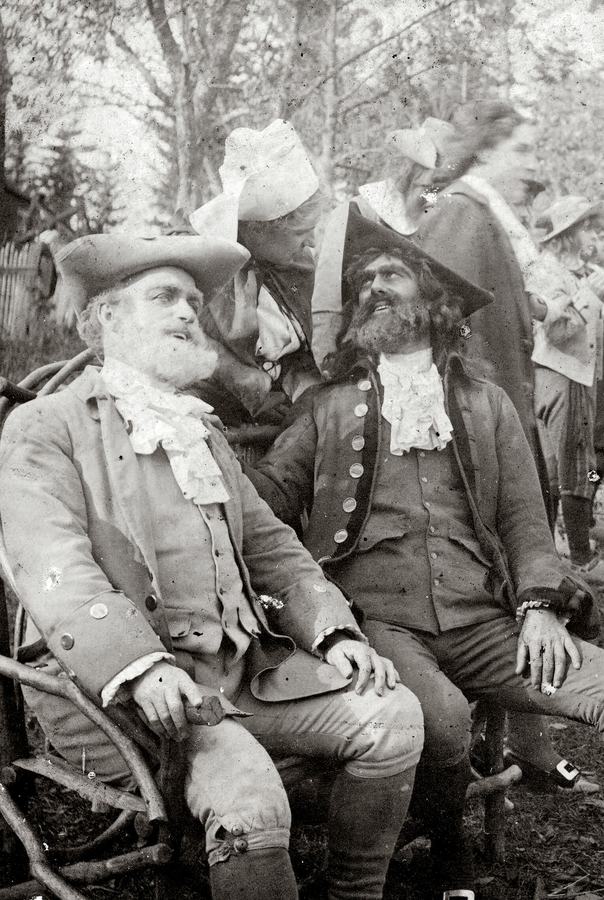
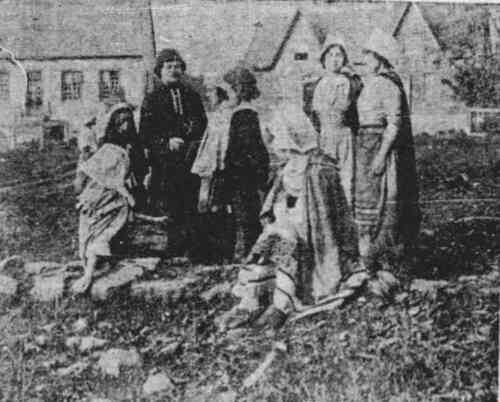
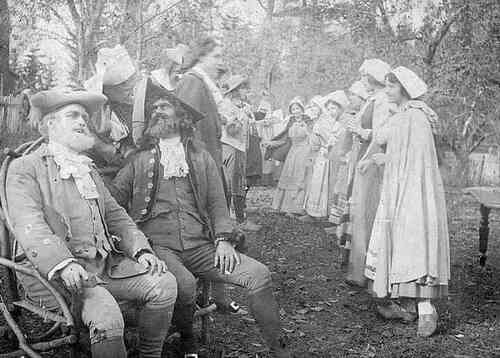
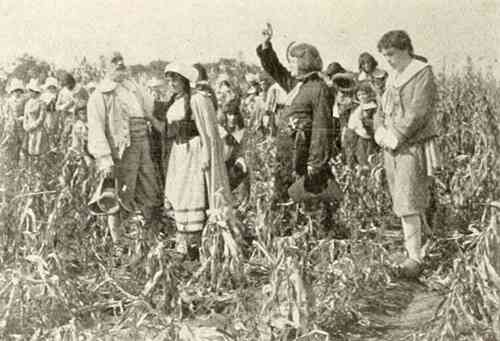
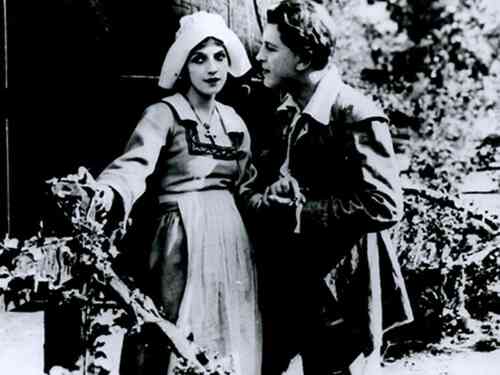
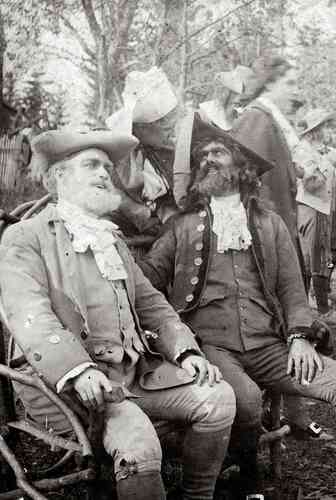
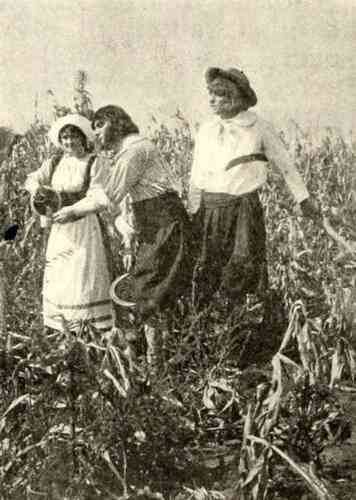
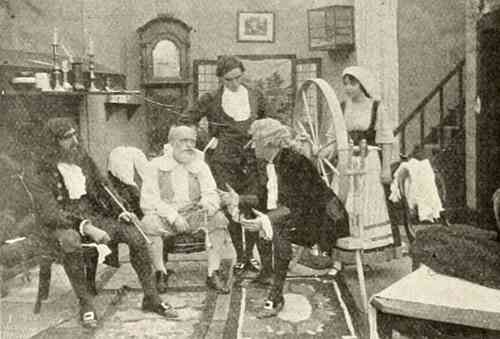
PART I: Evangeline and Gabriel as children are being taught their lessons by Father Felician, priest and pedagogue. After their lessons they hurry to the forge of Basil, the blacksmith, to watch him at his work. Thus passed a few swift years and they no longer were children. Gabriel, a "valiant youth," helps his father, Basil, at the forge; Evangeline keeps house for Benedict, her father. We see Evangeline carrying a flagon of home-brewed ale to the reapers in the fields at noontide. We see the prayerful attitude of the reapers and Father Felician as they bear the Angelus. At eve the flocks return from pastures and "the cows patiently yield their udders unto the milkmaid's hand." "Thus at peace with God and the world, the farmer of Grand-Pre lived on his sunny farm." PART II: In part two the Arcadians are still enjoying their happy, peaceful life, but a shadow of gloom is thrown over them at times by the advent of English troops with a proclamation from Governor Lawrence commanding all the men to appear at church to hear the reading of His Majesty's wishes. Basil believes it threatens disaster. Benedict, however advises patience. "Now has the season returned when the nights grow colder and longer." We see Benedict by the wide-mouthed fire place and Evangeline at her spinning wheel. A knock at the door and Basil and Gabriel enter, followed soon by the Notary, who draws the betrothal contract. We next see harvests gathered in. the peasants working on the dikes, and then the betrothal feast spread "under the open sky. In the odorous air of the orchard." After the feast they dance under the orchard trees. PART III: "And lo, with a summons sonorous," while they were merrily dancing, "Sounded the bell from its tower" bidding them to come to the church to bear the King's Mandate. "Thronged ere long was the church with men. Without, in the church-yard, waited the women." The English soldiers marched on, and demanding admittance in the King's name, "enter the sacred portal." Colonel Winslow, in front of the chancel, reads the King's Mandate, that inside of five days they must be driven from their homes and their lands be confiscated by the State. Their wives may gather such of their household goods as they can carry with them. The men will be kept prisoners in the church until the day of embarking. After hearing the mandate all is uproar and confusion. High above the others rises Basil's voice crying, "Down with the tyrants." In the midst of the confusion Father Felician enters the door of the chancel and with a gesture, quiets them. Pointing to the figure of the crucified Christ he leads them to repeat His prayer, "O Father, forgive them." Meanwhile, Evangeline listens at the door and window, but in vain. Then, all forgetful of self, she wanders into the village, "cheering with looks and words the mournful hearts of the women." PART IV: On the fifth day the women and children are seen carrying their household goods to the seashore, urging on the oxen and looking back sadly at their homes that they may never see again. Late in the afternoon the church doors are opened and the soldiers lead forth the patient Arcadian men. When they reach the shore they find their goods piled in confusion and disorder. "So unto separate ships were Basil and Gabriel carried, while in despair on the shore, Evangeline stood with her father." They lighted fires on the shore and the priest wandered from fire to fire, cheering and consoling, until he approached Evangeline and Benedict. Vainly Evangeline tried to cheer her father. Suddenly there is seen a light, which grows broader and higher and redder. The crowd cry aloud in their anguish, "We shall behold no more our homes in the village of Grand-Pre!" Overwhelmed with the sight the priest and maiden gaze in horror. As they turn to speak to Benedict they find he has fallen, and lies motionless on the ground, his soul departed. Evangeline kneels at her father's side and wails aloud in her sorrow, "Let us bury him here." and the priest said, "Lo, with a mournful sound like the voice of a vast congregation solemnly answered the sea." PART V: "Many a weary year has passed since the burning of Grand-Pre." Evangeline commences her endless search for Gabriel, cheered by the faithful Father Felician. Hearing that he is with Basil in the South, they start southward with a few Arcadian boatmen. Evangeline, cheered by a vision of Gabriel beckoning her onward, falls peacefully asleep. "While all are slumbering, through the darkness a light, swift boat draws near and passes on the other shore." it was Gabriel, who goes to the western wilds seeking, "oblivion of self and of sorrow." When they reach Basil's home they find him a prosperous herdsman. Basil goes with Evangeline to pursue Gabriel, leaving Father Felician to rest. Gabriel is always ahead; sometimes they find the ashes of his camp-fire. A Shawnee Indian woman leads them to the Mission of the Black Robe Chief, who tells them Gabriel was there six days before and will return again in the spring. Evangeline remains to wait, while Basil goes back to his home. Gabriel does not return, and at length, discouraged, Evangeline gives up the search, and becomes a Sister of Mercy. "Fair was she, and young, when in hope began the long journey. Faded was she and old, when in disappointment it ended." After many years a pestilence falls on the city, and Evangeline, in a hospital ward of an alms house, finds Gabriel, who dies in her arms. "All was ended now, the hope, and the fear, and the sorrow." Meekly she bowed her head and murmured, "Father, I thank thee!" In an old graveyard are seen two nameless graves, in which the lovers are sleeping, side by side. "Still stands the forest primeval. Maidens still wear their Norman caps and kirtles of homespun, and by the evening's fire repeat Evangeline's story. While from its rocky caverns the deep-voiced, neighboring ocean speaks, and in accents disconsolate answers the wail of the forest."
Review Excerpt
"
The first time we see Evangeline she is handing a foaming flagon to reapers whose scythes catch the noon-light like guillotines of gold; the camera, drunk on orthochromatic shimmer, cannot decide whether to worship her lashes or the ale’s amber crest. In that tremor of indecision lies the film’s genetic code: every frame wants to genuflect, yet history keeps barging through the door with mud on its boots.
Director Marguerite Marquis, adapting Longfellow’s cantoed lament, compresses an epic int..."