DbcultAccessing Vault...
4.5/10
Senior Film Conservator
A definitive 4.5/10 rating for a film that redefined the boundaries of cult cinema. The Rajah remains a cornerstone of transgressive art.
The year 1919 stands as a pivotal meridian in the evolution of American silent comedy, a temporal bridge where the crude, visceral energy of early slapstick began to coalesce into the sophisticated character-driven narratives that would define the Roaring Twenties. At the epicenter of this transformation was Harold Lloyd, an actor whose 'Glasses' character provided a relatable, optimistic vessel for the anxieties of a modernizing world. In The Rajah, we witness a fascinating intersection of this burgeoning refinement and the unbridled chaos of animal-driven comedy.
While many contemporary films like The Road Through the Dark were exploring the somber depths of dramatic tension, Lloyd was busy perfecting the mechanics of the 'slow burn.' The Rajah is not merely a collection of falls and collisions; it is an architectural study in how one small, external variable—in this case, a monkey—can systematically dismantle a human's social facade. The plot is deceptively minimalist: Harold wants to relax. This simple desire for stasis is the perfect foil for the primate's perpetual motion. Unlike the high-stakes peril found in The Strangler's Grip, the stakes here are purely psychological and social, making the eventual explosion of physical comedy all the more resonant.
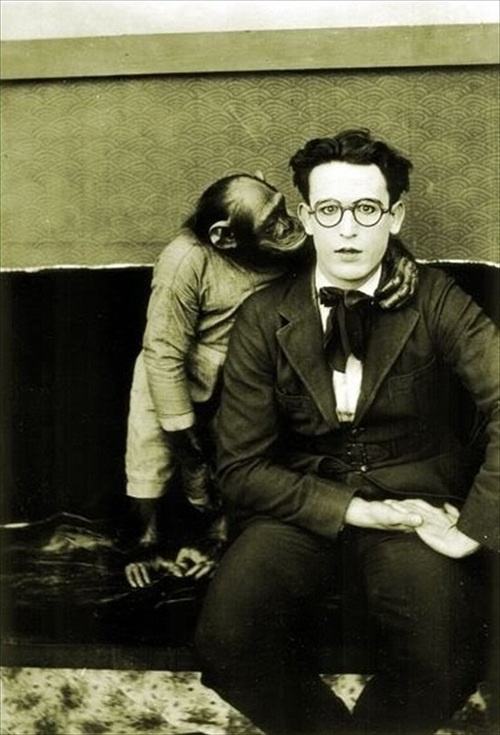
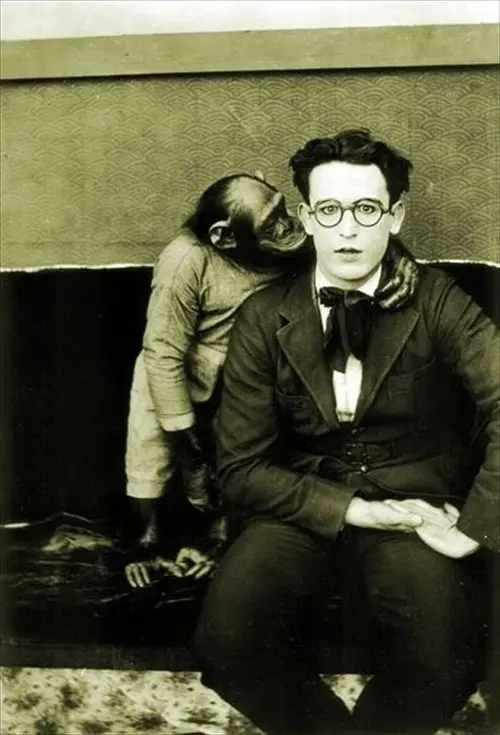
The interaction between Lloyd and Snooky (the monkey) is a marvel of early cinema choreography. There is a palpable sense of genuine unpredictability. While Lloyd’s movements are calculated and precise—every flinch and double-take honed through years of Vaudeville and Roach studio experience—the monkey provides a raw, organic counterpoint. This duality creates a tension that is rarely found in the purely human ensembles of the era. One can see the seeds of the 'thrill comedy' that would later define Lloyd’s career in the way he navigates the physical space of the set, treating the furniture and the monkey as obstacles in a grand, absurd obstacle course.
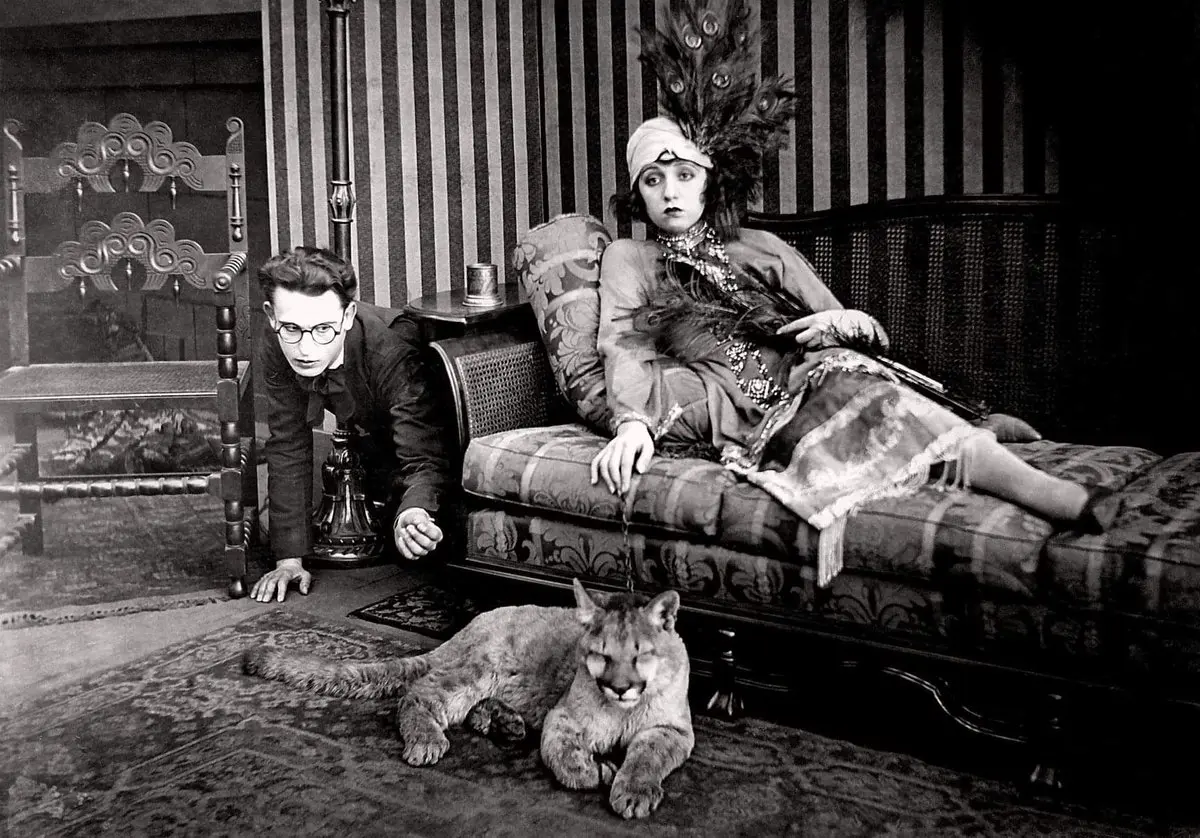
No discussion of The Rajah is complete without acknowledging the formidable ensemble surrounding Lloyd. Bebe Daniels, the 'Girl' of Lloyd’s early films, brings a luminous presence that balances the frantic energy of the gags. Her departure for Cecil B. DeMille’s more dramatic fare shortly after this period was a loss for comedy, but here, she remains the perfect anchor. Her chemistry with Lloyd is grounded in a mutual understanding of comedic timing that rivals the dramatic intensity of Sapho.
Then there is 'Snub' Pollard, whose eccentric mustache and bizarre physicality provide a surreal edge to the proceedings. Pollard represents the more anarchic side of the Hal Roach studio, a remnant of the Sennett style that was beginning to fade in favor of Lloyd’s more grounded approach. In The Rajah, Pollard acts as a secondary chaotic element, often amplifying the monkey's disruptions rather than mitigating them. This creates a multi-layered comedic structure: Harold vs. The Monkey, Harold vs. Snub, and ultimately, Harold vs. The Universe.
The visual language of The Rajah is surprisingly sophisticated for a one-reel short. Director Fred C. Newmeyer, who would go on to co-direct Safety Last!, demonstrates a keen eye for framing. The use of depth is particularly noteworthy; often, the monkey is visible in the background, preparing a new catastrophe while Harold is occupied in the foreground. This use of deep focus—long before it was popularized as a 'revolutionary' technique in the 1940s—allows the audience to participate in the irony of Harold’s ignorance. It builds a sense of dread that is the comedic equivalent of the suspense found in Behind the Mask.
The pacing of the film is relentless. In an era where many films like The Pulse of Life relied on heavy intertitles to convey narrative progression, The Rajah relies almost entirely on visual storytelling. The gags are not isolated incidents but are linked through a chain of causality. A spilled drink leads to a slippery floor, which leads to a precarious balancing act, which eventually involves the monkey in a way that feels both surprising and inevitable. This 'logic of the absurd' is what separates Lloyd from his contemporaries.
To truly appreciate The Rajah, one must look at it within the broader cinematic context of its time. While Lloyd was refining the art of the gag, other filmmakers were pushing the boundaries of genre. For instance, Flirting with Death offered a different kind of thrill, one rooted in high-stakes adventure rather than domestic disturbance. Similarly, Satan Sanderson explored themes of redemption and morality that seem light-years away from the simian-induced panic of The Rajah.
However, there is a shared DNA between these disparate works. All of them were experimenting with the limits of the medium. The kinetic energy of Lloyd’s comedy is not so different from the propulsive action of The Call of the Cumberlands. Both require a mastery of editing and a deep understanding of audience psychology. In The Rajah, the 'action' is centered on a man trying to keep his hat on his head, but the technical execution is as rigorous as any war epic like Battaglia dall'Astico al Piave.
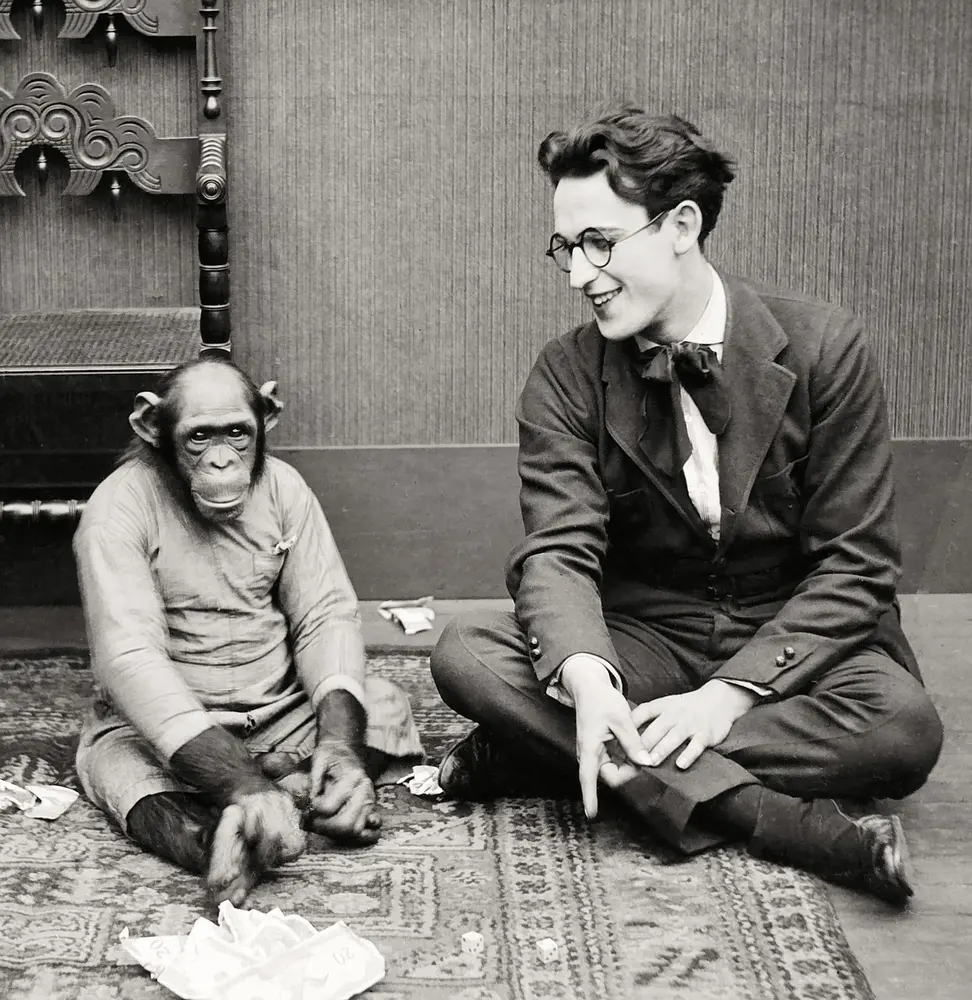
The inclusion of a monkey in a 1919 comedy was more than just a gimmick; it was a trope that spoke to the era's fascination with the 'primitive' interrupting the 'civilized.' Lloyd’s character is a man of the city, defined by his glasses, his suit, and his adherence to social norms. The monkey is the antithesis of this. By introducing this element of pure, unadulterated nature, the film strips away Harold’s pretenses. We see the man beneath the glasses—a man who is just as capable of frantic, animalistic movement as the creature tormenting him. This theme of social deconstruction is also present in A Little Sister of Everybody, albeit through a much more sentimental lens.
The physical comedy in The Rajah also highlights the incredible athleticism of Harold Lloyd. Often overshadowed by the stunts of Buster Keaton, Lloyd’s ability to move his body with such precision while maintaining a character of 'clumsy effort' is a feat of immense skill. Watch the way he reacts to the monkey’s touch; it is a full-body experience. His legs seem to have a life of their own, twitching and flailing in a rhythmic counterpoint to the monkey's leaps. It is a dance of desperation, as intricate as any sequence in Leoni Leo.
It is a tragedy of cinema history that so many films from this era, like The Golden West or The Stormy Petrel, have become difficult to access or have been lost to the ravages of nitrate decay. The Rajah survives as a precious window into a time when the language of film was being written in real-time. It reminds us that comedy, at its best, is universal. A man being bothered by a monkey is a joke that requires no translation, yet Lloyd elevates it through his specific brand of 'everyman' vulnerability.
In the broader spectrum of Lloyd’s filmography, The Rajah might be viewed by some as a minor work compared to The Kid Brother or The Freshman. However, to overlook it is to miss the foundational elements of his genius. It is here, in these short, punchy narratives, that he learned how to manipulate time and space for maximum comedic effect. The film's influence can even be seen in later international works like A Ticket in Tatts, which utilized similar themes of chaotic interference in social settings.
Ultimately, The Rajah is a testament to the power of the silent image. It eschews the melodrama of The Auction Block in favor of a pure, distilled joy. It is a film that demands to be watched not just as a historical curiosity, but as a living piece of entertainment. Lloyd’s frustration is our frustration; his eventual, exhausted triumph is our own. In the chaotic dance between man and monkey, we find a reflection of our own daily struggles to maintain order in an inherently disorderly world.
Reviewer's Note: For those looking to explore the full breadth of 1919 cinema, pairing 'The Rajah' with a viewing of the more dramatic The Road Through the Dark provides a fascinating look at the versatility of the era's storytelling capabilities.
IMDb 7
1930
Community
Log in to comment.