DbcultAccessing Vault...
Cult Review
Senior Film Conservator
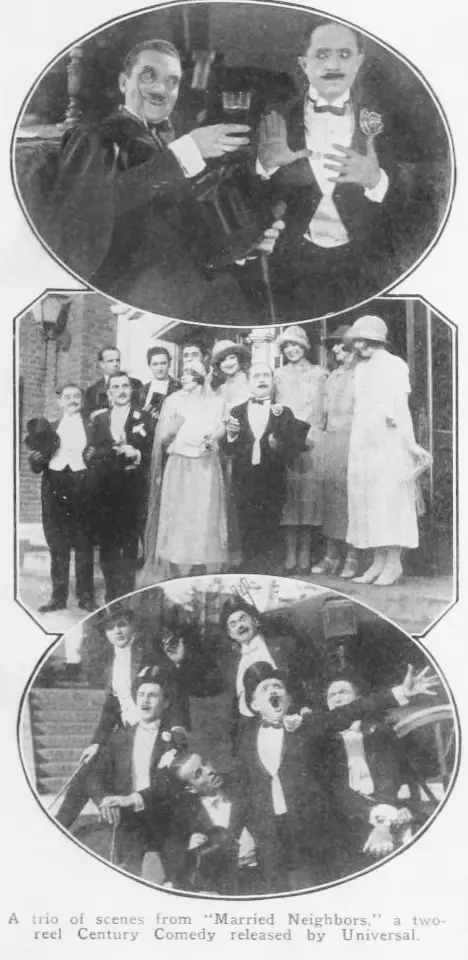
Is 'Married Neighbors' worth watching today? Short answer: yes, but with significant caveats. This isn't a film for everyone, nor is it a forgotten masterpiece, but for those with a specific interest, it offers a surprisingly rich, albeit brief, glimpse into the comedic sensibilities of its era. It’s a film that resonates most strongly with silent film enthusiasts, cinephiles curious about the evolution of slapstick, and those who appreciate the raw, unpolished charm of early cinema. Conversely, modern audiences accustomed to sophisticated narratives, intricate character development, or consistently laugh-out-loud humor will likely find it wanting.
It serves as a fascinating historical document, showcasing how humor was constructed and consumed in the early 20th century. You won't find deep philosophical insights, but you will find a spirited, if somewhat chaotic, attempt at pure entertainment. Its value lies less in its narrative brilliance and more in its capacity to transport you to a different cinematic time.
This film works because... it captures a delightful, uninhibited energy characteristic of early silent comedies, offering a valuable historical snapshot of slapstick and pre-marital anxieties, however exaggerated.
This film fails because... its simplistic plot and broad humor often feel dated, lacking the refined comedic timing or narrative depth that even some contemporary silent films managed to achieve.
You should watch it if... you are a dedicated silent film scholar, a fan of early slapstick, or someone deeply interested in the sociological implications of pre-marital rituals as depicted in nascent cinema.
The plot of “Married Neighbors” is, by modern standards, remarkably thin, yet it's precisely this simplicity that allows its core comedic premise to shine through. We are introduced to Billy Engle, a man on the precipice of matrimony. His impending nuptials to Beth Darlington trigger a classic trope: the bachelor's last hurrah. What makes this particular hurrah intriguing is its social context. Billy isn't just celebrating with fellow bachelors; he's joined by a cadre of young, already-married neighbors. This immediately sets up a dynamic where the celebration isn't just about freedom, but perhaps a nostalgic lament for it, shared by those who have already crossed the threshold.
The film swiftly transitions from convivial revelry to outright chaos. The 'wild tear' isn't merely a party; it's an escalating series of increasingly absurd choices. The decision to commandeer a hansom cab marks the point of no return. This isn't a pre-arranged bachelor party activity; it's an impulsive, alcohol-fueled act of petty mischief. The hansom cab itself becomes a character, or rather, an antagonist, when its horse decides to stage a silent protest, refusing to budge. This unexpected halt forces the party into a physical comedy goldmine.
The subsequent scenes of the men attempting to move the cab—some literally harnessed to the shafts, others adopting 'undignified attitudes' within—are the film's comedic heart. It’s pure, unadulterated physical farce. The humor stems from the sheer indignity and futility of their efforts, a classic silent film gag where human will clashes with inanimate (or animal) stubbornness. The absurdity is amplified by the contrast between their initial high spirits and their eventual sweaty, frustrated attempts.
The narrative's climax, the hansom cab plunging over a bridge, feels like a sudden, almost deus ex machina resolution to their predicament. It’s a convenient, if dramatically illogical, way to end the chaos. That Billy lands directly into Beth's auto is a narrative contrivance typical of the era, prioritizing comedic impact and plot resolution over realism. The swift forgiveness and immediate continuation of the wedding ceremony underscore a prevalent sentiment in early comedies: transgressions, particularly those born of youthful exuberance, are easily overlooked in the face of impending domestic bliss. It’s a remarkably optimistic, almost naive, view of reconciliation.
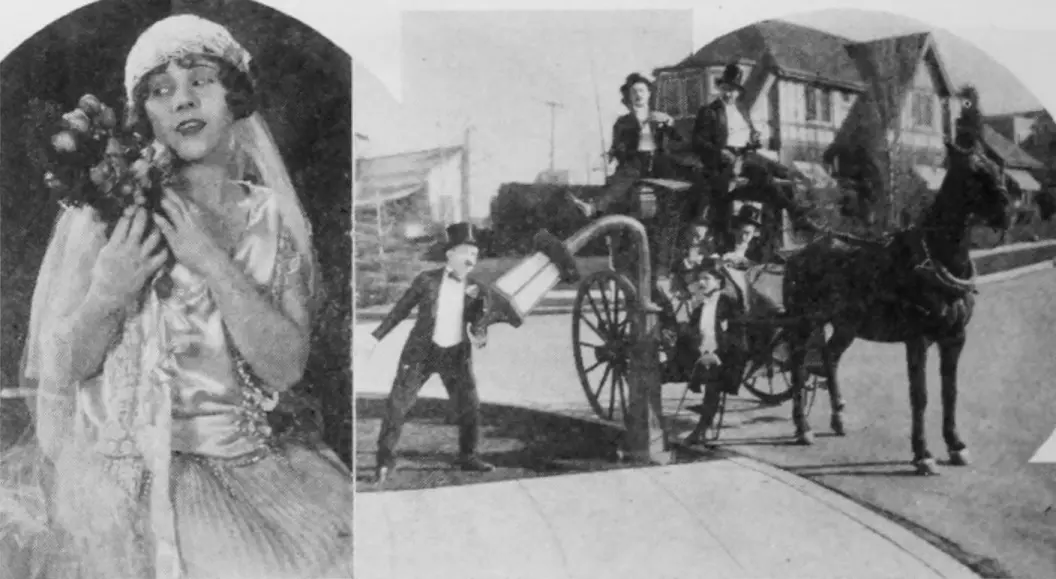
In early silent cinema, performances were often characterized by broad gestures and exaggerated facial expressions, a necessity given the lack of dialogue. The cast of "Married Neighbors"—Beth Darlington, Billy Engle, and Hilliard Karr—adheres to this style, delivering performances that are more about conveying immediate emotion and action than nuanced character studies. This isn't a criticism; it's an acknowledgment of the medium's demands at the time.
Billy Engle, as the central figure, carries much of the film's comedic burden. His portrayal of the bachelor on the loose is energetic and physical. You can imagine his frantic attempts to move the hansom cab, his face contorted in a mixture of frustration and drunken glee. His performance is less about internal struggle and more about external reaction to increasingly ludicrous circumstances. When he finally tumbles into Beth's car, his dishevelled appearance speaks volumes, a visual punchline to his wild night.
Beth Darlington, as the bride-to-be, plays the role of the patient, perhaps slightly exasperated, fiancée. Her screen time is limited, but her presence at the end is crucial for the narrative's resolution. Her reaction to Billy's sudden, messy arrival is key. Does she show genuine anger, or merely a sigh of resignation? The prompt implies forgiveness, suggesting her character serves as the anchor of domesticity, the calm amidst Billy's storm. Her performance, though brief, needs to convey this sense of understanding or inevitability.
The supporting cast, including Hilliard Karr and the other 'married neighbors,' function more as a collective comedic unit. Their roles are to amplify Billy's folly, to participate in the escalating chaos, and to provide additional visual gags during the hansom cab incident. They are less individuals and more components of the larger farcical machine. Their 'undignified attitudes' within the cab are a testament to their commitment to the physical comedy, even if their individual contributions aren't deeply explored. The film doesn't ask for subtlety from them, and they deliver precisely what is needed for the slapstick to land.
Charles Lamont, as the director, navigates this simple narrative with a clear focus on physical comedy and escalating absurdity. The direction is functional, designed to get the gags across as clearly as possible. There's a certain raw charm to this unpolished approach, a stark contrast to the more stylized silent films that would emerge later in the decade.
The pacing of "Married Neighbors" is brisk, moving quickly from the party's inception to the hansom cab's acquisition, and then into the prolonged sequence of the stalled horse. This rapid escalation is vital for maintaining comedic momentum, preventing the audience from dwelling too long on any single gag. The shift from lively revelry to frustrated attempts to move the cab is well-orchestrated, building the humor through repetition and increasing desperation.
Cinematography in early silent films was often straightforward, prioritizing visibility and action. Here, the visuals are likely simple, relying on clear framing to capture the physical comedy. The wide shots of the hansom cab, with men pulling and pushing, would be crucial. There's little room for artistic flourishes; the camera is a documentarian of the farce. The emphasis is on the action, the physical humor, and the broad expressions of the actors.
The tone is undeniably lighthearted and farcical throughout. Even the potential 'danger' of going over a bridge is immediately undercut by Billy's soft landing and quick forgiveness. Lamont ensures that the audience understands this is pure, escapist fun, free from genuine peril or emotional stakes. This commitment to a consistently jovial tone is a strength, ensuring the film remains an entertaining, if superficial, diversion.
"Married Neighbors" is more than just a forgotten film; it's a window into the nascent stages of cinematic comedy. The humor is decidedly low-brow, relying heavily on physical gags, exaggerated reactions, and a simple, direct narrative. This was a common approach in the early 1910s and 1920s, as filmmakers were still discovering the unique capabilities of the medium.
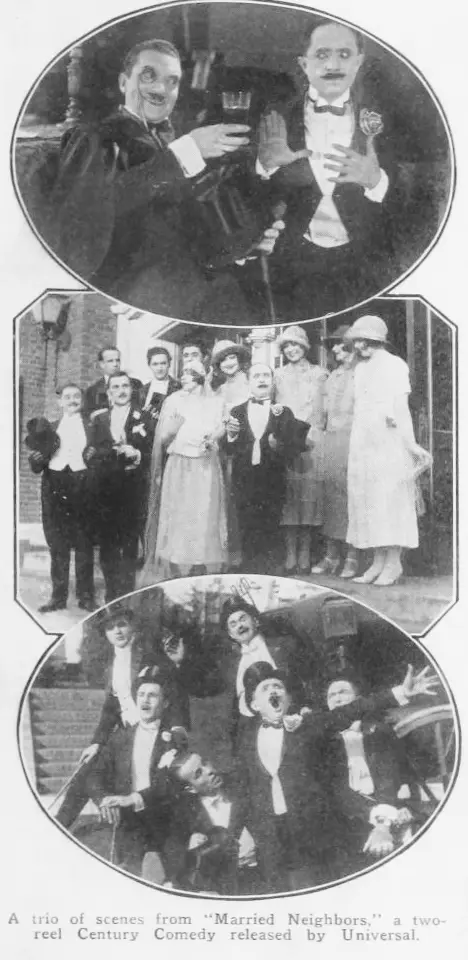
The film's embrace of slapstick, particularly the sequence with the hansom cab, aligns it with the popular comedic traditions of the time. This era saw the rise of comedic titans like Charlie Chaplin and Buster Keaton, who would later refine and elevate physical comedy to an art form. "Married Neighbors" exists in the fertile ground before such refinement, showcasing the raw ingredients of what would become iconic silent film humor. You can see echoes of the Keystone Cops here, a group known for their chaotic chases and physical antics, even if the execution here is less polished.
The theme of pre-marital jitters and the 'last night of freedom' is also a recurring motif in comedies across generations. What's striking here is the casual way the transgression is handled. Billy's wild night, while disruptive, is treated as a minor hiccup, quickly forgotten in the rush to the altar. This reflects a societal attitude that perhaps viewed such male escapades with a degree of indulgence, a stark contrast to how such behavior might be portrayed or judged in later eras.
One could even argue that the film, despite its brevity, offers a surprisingly cynical undertone beneath its farcical surface. The swift forgiveness, the immediate return to the wedding plans – it almost suggests that such wild behavior is an expected, almost ritualistic, pre-marital purge, after which the 'true' domestic life inevitably begins, regardless of the antics. It’s a fascinating, if unintentional, commentary on societal expectations. It works. But it’s flawed.
Compared to other films of its time, such as the more overtly dramatic Corruption or the adventure-driven The Dancer of the Nile, "Married Neighbors" firmly plants itself in the realm of pure, unpretentious comedy. It doesn't aim for grand narratives or moral lessons; its sole purpose is to elicit laughter through physical spectacle. This singular focus, while limiting its scope, also gives it a certain purity of intent.
For the casual viewer seeking modern entertainment, no, 'Married Neighbors' is likely not worth your precious time. Its humor is largely outdated, and its narrative is extremely thin. You will find neither deep characters nor intricate plotting. It functions as a historical artifact more than a universally enjoyable film.
However, for those with a keen interest in early cinema, particularly silent comedies and the evolution of slapstick, then absolutely, it holds significant value. It offers a genuine look at how filmmakers were experimenting with comedic timing and physical gags in the early 20th century. It provides context for the more celebrated works that followed.
It’s a brief, energetic experience. Consider it a historical document of early cinematic attempts at broad humor. If you approach it with the right mindset – as a student of film history rather than a seeker of contemporary thrills – it can be quite illuminating. It's a reminder of where cinematic comedy began.
"Married Neighbors" is not a film that will redefine your understanding of cinema, nor will it likely be a regular re-watch. It is, however, a charmingly chaotic relic from a bygone era of filmmaking. Charles Lamont's direction, while straightforward, effectively delivers the film's simple comedic premise, leaning heavily on the physical talents of Billy Engle and the escalating absurdity of a hansom cab gone rogue. It's a film that exists as a testament to the foundational elements of slapstick, a precursor to the more polished and iconic silent comedies that would follow.
Its value is primarily academic and historical. For those willing to set aside modern expectations and immerse themselves in the unpretentious joy of early cinematic farce, there's a certain delight to be found. It’s a film that reminds us how far cinema has come, and perhaps, how some comedic instincts remain timeless, even if their execution evolves. Approach it with curiosity and a sense of historical appreciation, and "Married Neighbors" might just offer a quaint, if fleeting, smile.
IMDb 6.5
1924
Community
Log in to comment.