Summary
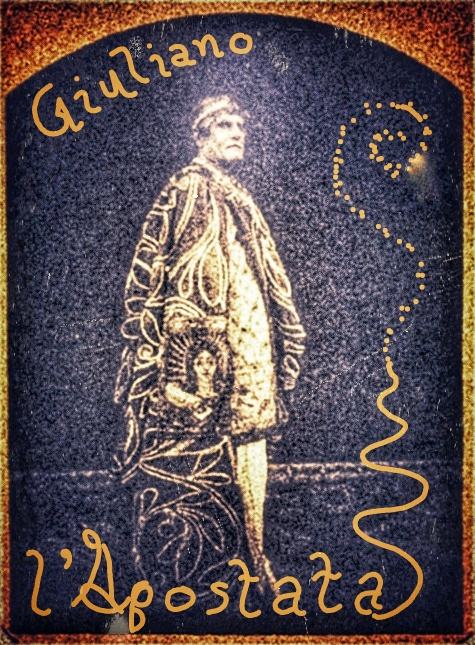
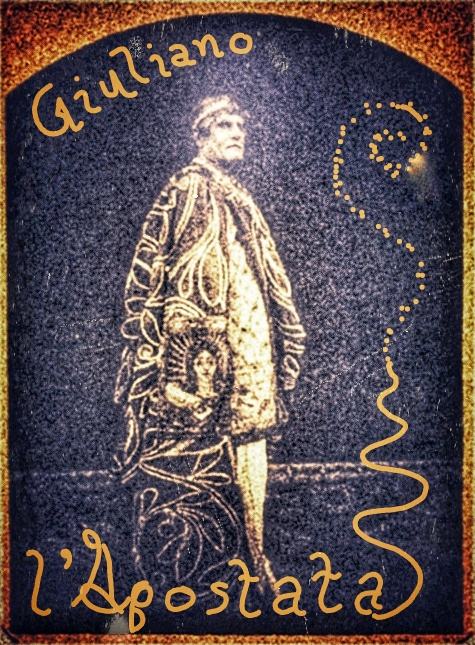
Giuliano l'apostata" unfurls a lavish, melancholic tapestry depicting the tragically brief reign of Julian, the Roman-Byzantine Emperor branded 'the Apostate' by history. Orphaned by the ruthless machinations of his cousin Constantius and himself a survivor of a childhood purge, Julian's formative years are steeped in the Hellenic intellectual tradition under the tutelage of the devoted Mardonius. His ascent to power is complicated by a web of intensely personal dramas: the seductive overtures of Constantius's wife, Eusebia, and a politically expedient marriage to Elena, a devout Christian whose heart is, unknown to Julian, secretly coveted by her youthful page. Dispatched to the barbarian-plagued frontiers of Gaul as Caesar, Julian's military prowess blossoms amidst this emotional maelstrom, which ultimately erupts into a series of devastating romantic revelations. Ascending to the imperial throne, he seeks a poignant, if belated, vengeance for the woman he belatedly realizes he loved, before embarking on a fateful, ultimately doomed military expedition against the Persian Empire. While the narrative prioritizes these intricate, fictionalized love triangles over the geopolitical complexities of the era, the film's enduring allure is significantly bolstered by Duilio Cambellotti's breathtaking Byzantine-Art Nouveau costuming and Luigi Mancinelli's evocative, sweeping score, transforming a historical biopic into a visually and emotionally resonant spectacle.
Synopsis
Highly stylised biopic of the last Pagan Roman-Byzantine Emperor, Julian the Philosopher, known to Christians as 'the Apostate'. Orphaned by his cousin Constantius (Costanzo), and narrowly escaping death himself as a child, Julian is brought up on the Greek classics by his faithful tutor Mardonius. Constantius's seductive wife, Eusebia, has designs on him, but he is given the emperor's sister Elena as his bride. She is a Christian, and is herself the object of the unrequited affection of her teenaged page. After Julian is posted to Gaul as Caesar, to fight the barbarians, the romantic rivalries come to a tragic climax. Julian becomes Emperor, avenges the woman he realises, too late, he loved, and sets out on a fatal campaign against the Persians... The script is stronger on romance than politics, emphasising the (fictional) intersecting love-triangles. However, Duilio Cambellotti's striking Byzantine-Art Nouveau costumes and Luigi Mancinelli's score make it retain interest.
Review Excerpt
"
From the moment the opening credits unfurl, Giuliano l'apostata asserts itself not merely as a historical drama, but as a visually arresting, emotionally charged epic that prioritizes the tumultuous landscape of the human heart over the cold calculations of imperial politics. This is a film that understands the power of spectacle, not as a mere backdrop, but as an integral component of its narrative fabric. It plunges us into the twilight of classical antiquity, a period of profound transit..."