DbcultAccessing Vault...
Cult Review
Senior Film Conservator
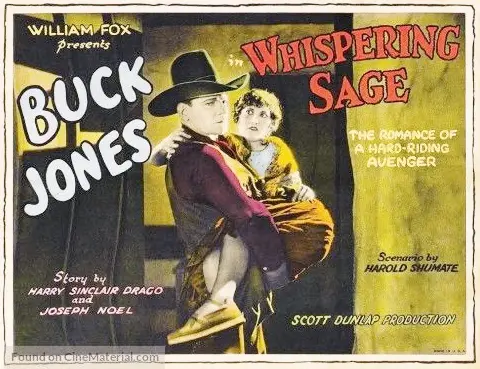
Is Whispering Sage worth watching today? Short answer: yes, but with significant caveats that ground it firmly in its historical context. This silent Western offers a fascinating glimpse into a bygone era of filmmaking, showcasing the star power of Buck Jones and tackling themes that, while dated in execution, remain surprisingly relevant.
This film is for dedicated fans of classic Westerns, silent cinema enthusiasts, and those interested in the social narratives prevalent in 1920s American film. It is emphatically NOT for viewers expecting modern pacing, complex character arcs, or sophisticated storytelling devoid of genre clichés. If you can appreciate film as a historical artifact, you’ll find value here; if not, its charms may be lost on you.
Before delving into the specifics of Whispering Sage, it’s crucial to understand the landscape of silent Westerns. These films were the blockbusters of their day, shaping American mythology and establishing archetypes that persist even now. They relied heavily on physical performance, grand landscapes, and clear-cut morality, often substituting nuanced dialogue for expressive gestures and dramatic intertitles.
In this context, Whispering Sage stands as a fairly conventional example, elevated by its star. It works. But it’s flawed. The genre's conventions, while endearing to some, can feel incredibly simplistic to a modern audience, demanding a certain level of patience and historical appreciation.
This film works because of Buck Jones's undeniable charisma and its surprisingly progressive (for its time) inclusion of an immigrant community as central heroes, challenging the typical 'cowboys vs. Indians' paradigm. It fails because its narrative is often simplistic, relying on a deus ex machina ending and underdeveloped supporting characters. You should watch it if you appreciate the historical significance of silent cinema and want to see a foundational Western star at work, or if you're curious about early portrayals of cultural integration in American film.
At the heart of Whispering Sage is Buck Jones, a name synonymous with silent-era Westerns. Jones possessed an authentic cowboy swagger, a comfortable ease in the saddle, and a screen presence that transcended the lack of spoken dialogue. His performance as Buck Kildare is typical of his work: stoic, honorable, and physically capable. He conveys determination through his posture and a sense of justice through his piercing gaze, even if the emotional range is somewhat limited by today's standards.
Jones wasn't just an actor; he was a brand. His films, much like those of Tom Mix or Hoot Gibson, were built around his persona. In Whispering Sage, this is evident in every frame he inhabits. Whether he's riding across the desert, confronting villains, or tenderly interacting with Mercedes (Hazel Keener), Jones commands attention. His actions are always clear, his motivations pure, making him an easy hero to root for.
Hazel Keener as Mercedes, the Basque leader’s daughter, provides a necessary romantic foil and a symbol of the community's resilience. While her character, like many female roles of the era, is primarily reactive, Keener brings a quiet strength to the part. Her expressions, particularly during moments of fear or affection, are effectively conveyed, adding a layer of humanity to the Basques' plight.
The villains, particularly William Steele as Hugh Acklin and Joe Rickson as the foreman, are painted with broad strokes. They are unambiguously evil, their sneers and aggressive physicality leaving no doubt as to their nefarious intentions. This lack of moral ambiguity is a hallmark of the genre, designed to elicit clear emotional responses from the audience. Rickson, in particular, embodies the sneering henchman archetype, making his eventual unmasking as Tom's killer feel both inevitable and satisfying within the film's framework.
The ensemble cast portraying the Basque community, though often relegated to background roles, collectively conveys a sense of unity and struggle. Their shared plight is palpable, giving weight to Buck Kildare's decision to champion their cause. While individual performances might not leap off the screen, their collective presence is crucial to the film's thematic core, representing the vulnerable but resilient spirit of immigrants seeking a new home.
Joseph Noël's direction in Whispering Sage is competent and functional, serving the narrative without much stylistic flourish. Like many directors of the era, Noël prioritized clear storytelling and showcasing his star. The action sequences, while not groundbreaking, are staged effectively. We see clear heroics, dramatic confrontations, and the expected chases that define the Western genre.
One particular strength of silent Westerns, often overlooked, is their reliance on natural landscapes. The cinematography, while not credited in detail, successfully captures the stark beauty and unforgiving nature of the desert. These wide-open spaces are not just backdrops; they are active characters, emphasizing the isolation of the Basque colony and the vastness of the challenges they face. Shots of riders silhouetted against the horizon or dust clouds kicked up by galloping horses are classic Western imagery, and Whispering Sage delivers on this front.
For example, the initial scenes depicting the Basques establishing their settlement, with their simple dwellings and efforts to cultivate the land, effectively establish their vulnerability against the expansive, indifferent desert. This visual contrast underscores Acklin's greed and the magnitude of the Basques' undertaking.
Noël’s handling of the escalating tension between the factions is straightforward. He uses cross-cutting to show Acklin's men harassing the Basques and Buck's growing awareness and intervention. This builds towards the inevitable climax, even if the pacing occasionally feels a little slow by modern standards, a common characteristic of silent films where intertitles and longer takes were more prevalent.
However, one could argue that Noël missed opportunities for more inventive visual storytelling. While the film is visually clear, it rarely attempts anything truly ambitious or memorable in its camera work or composition, sticking to tried-and-true methods. Compared to some of the more artful silent films of its period, Whispering Sage feels more like a reliable workhorse than a groundbreaking visual experiment.
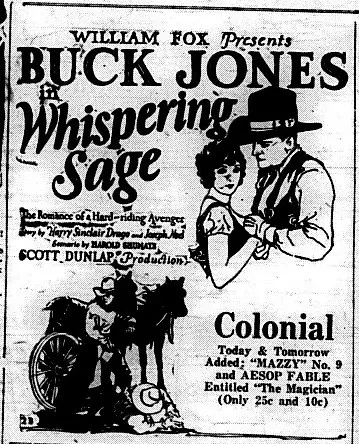
The pacing of Whispering Sage is typical of a silent film, which can be an adjustment for contemporary viewers. Scenes often linger slightly longer than expected, and the rhythm is dictated by the cadence of intertitles and the need for actors to convey emotion without dialogue. This isn't necessarily a flaw, but a characteristic of the medium. For those unaccustomed, it can feel deliberate, almost meditative at times, before bursting into action sequences.
The film maintains a fairly consistent tone of classic Western heroism and melodrama. Buck Kildare is the archetypal good guy, the Basques are the deserving victims, and Acklin and his men are the pure villains. There's little room for moral ambiguity, which contributes to the film's straightforward appeal. The romance between Buck and Mercedes, while sweet, is also quite chaste and serves primarily as a reward for the hero's efforts rather than a deeply explored emotional journey.
However, the resolution, with the timely arrival of government forces, feels like a somewhat convenient narrative shortcut. While common in early cinema, this 'deus ex machina' moment, where an external force solves the primary conflict, undermines the agency of the characters who have fought so hard. It lessens the impact of Buck's personal heroism, making the ending feel a little too neat and tidy, robbing the Basques of a truly earned victory.
Whispering Sage weaves several classic Western narrative threads: the lone rider seeking justice, the land dispute, and the clash between established power and vulnerable newcomers. Buck Kildare's initial search for his brother's killer provides a compelling personal stakes, which then broadens to encompass the larger struggle of the Basque colony. This expansion of purpose gives the film a broader thematic resonance.
The portrayal of the Basque community is perhaps the most interesting aspect of the film from a historical perspective. While their depiction might feel somewhat generalized or even exoticized by today's standards – a common pitfall in early cinema's handling of non-Anglo cultures – the film positions them as sympathetic, industrious, and deserving of their land. This contrasts sharply with the villainous Hugh Acklin, whose greed and xenophobia are explicitly condemned. For its time, featuring an immigrant group as central figures facing systemic oppression was a noteworthy, if imperfect, narrative choice.
The film touches upon themes of land rights, the challenges of frontier life, and the struggle for belonging. Acklin's desire to seize the Basques' land by any means necessary speaks to the darker side of westward expansion and the often-brutal competition for resources. Buck's transformation from a personal avenger to a champion of the oppressed adds a layer of moral complexity to his character, demonstrating a commitment to a justice larger than his own.
The revelation that Acklin's foreman murdered Buck's brother, Tom, neatly ties together the personal and communal conflicts. It provides a satisfying convergence of plotlines, ensuring that Buck's initial quest for vengeance is fulfilled within the context of his new alliance. This narrative economy, while somewhat predictable, efficiently resolves the film's core mysteries.
However, the film doesn't delve deeply into the cultural specifics of the Basques. They are presented more as a generic 'other' whose struggles are universalized rather than explored with specific nuance. This is a missed opportunity, but perhaps an understandable limitation given the conventions and runtime of silent features. The focus remains squarely on the external conflict and Buck's heroic intervention.
For those with an appreciation for film history, particularly the silent era and the Western genre, Whispering Sage is absolutely worth watching. It serves as an excellent example of Buck Jones's star power and the foundational storytelling of early Westerns. It offers a window into the narrative concerns and production values of the 1920s.
However, if your cinematic palate leans towards modern, fast-paced, or overtly complex narratives, this film might test your patience. Its charms are subtle and require a willingness to engage with a different style of filmmaking. It is a historical curiosity as much as it is entertainment.
Consider it a valuable piece of cinematic archeology, offering insights into how stories were told, heroes were forged, and social issues (even indirectly) were explored in the nascent days of Hollywood. It might not be a film you revisit frequently, but it's one that deserves a viewing for its place in the genre's lineage.
Whispering Sage is more than just a relic; it’s a foundational piece of the Western genre, carried by the formidable presence of Buck Jones. While it certainly shows its age in terms of pacing and narrative sophistication, its core themes of justice, land rights, and the struggles of immigrant communities resonate even today. The film’s greatest strength lies in its unvarnished depiction of frontier morality and the magnetic appeal of its leading man.
It's a film that demands an appreciation for its historical context. Don't expect the nuanced character work of The Confession or the epic scope of Arizona, but rather a straightforward, earnest tale of good triumphing over evil in the American West. Its ending, while a bit too convenient, still delivers the satisfying resolution that silent audiences craved.
Ultimately, Whispering Sage offers a valuable, if not always thrilling, journey back to the roots of American cinema. It’s a testament to the enduring power of the Western myth and the charisma of its early stars. Watch it to understand where the genre began, and to witness a unique moment in cinematic history.
IMDb —
1925
Community
Log in to comment.