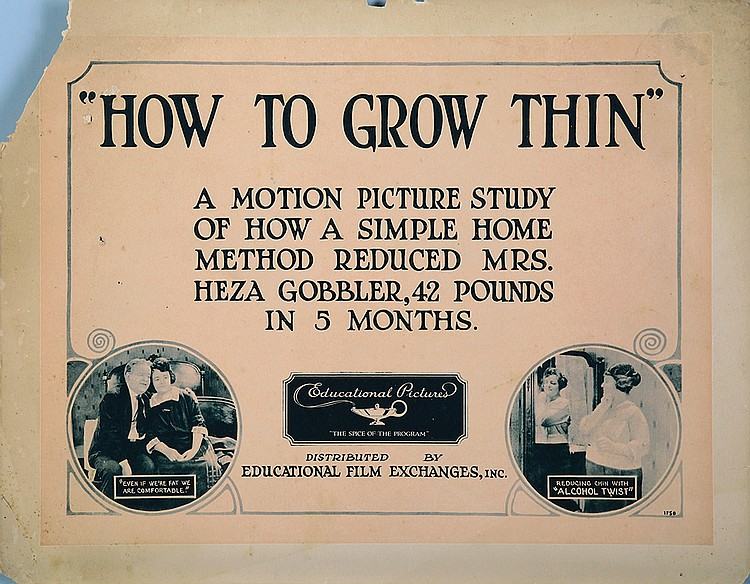
Mrs. Gobler determines to reduce her waist line and accordingly goes to an expert and gets the following advice: "The enemies of beauty are pork, candy, white bread and potatoes.
United States
The Progenitor of the Fitness Satire To watch How to Grow Thin in the modern age is to witness the embryonic stages of a cultural neurosis that has since metastasized into a multi-billion dollar industry. This 1912 short film captures a pivotal moment in the Western consciousness where the body became a project, an ...

Comparing the cinematic DNA and archive impact of two defining moments in cult history.
Unknown Director

Unknown Director
Community
Log in to comment.
" The Progenitor of the Fitness Satire To watch How to Grow Thin in the modern age is to witness the embryonic stages of a cultural neurosis that has since metastasized into a multi-billion dollar industry. This 1912 short film captures a pivotal moment in the Western consciousness where the body became a project, an object to be sculpted through rigorous denial and mechanical motion. Unlike the grand, sprawling narratives found in Theodora, which sought to recreate the majesty of antiquity, th..."
Unknown Director