DbcultAccessing Vault...
7.5/10
Senior Film Conservator
A definitive 7.5/10 rating for a film that redefined the boundaries of cult cinema. The House of Mirth remains a cornerstone of transgressive art.
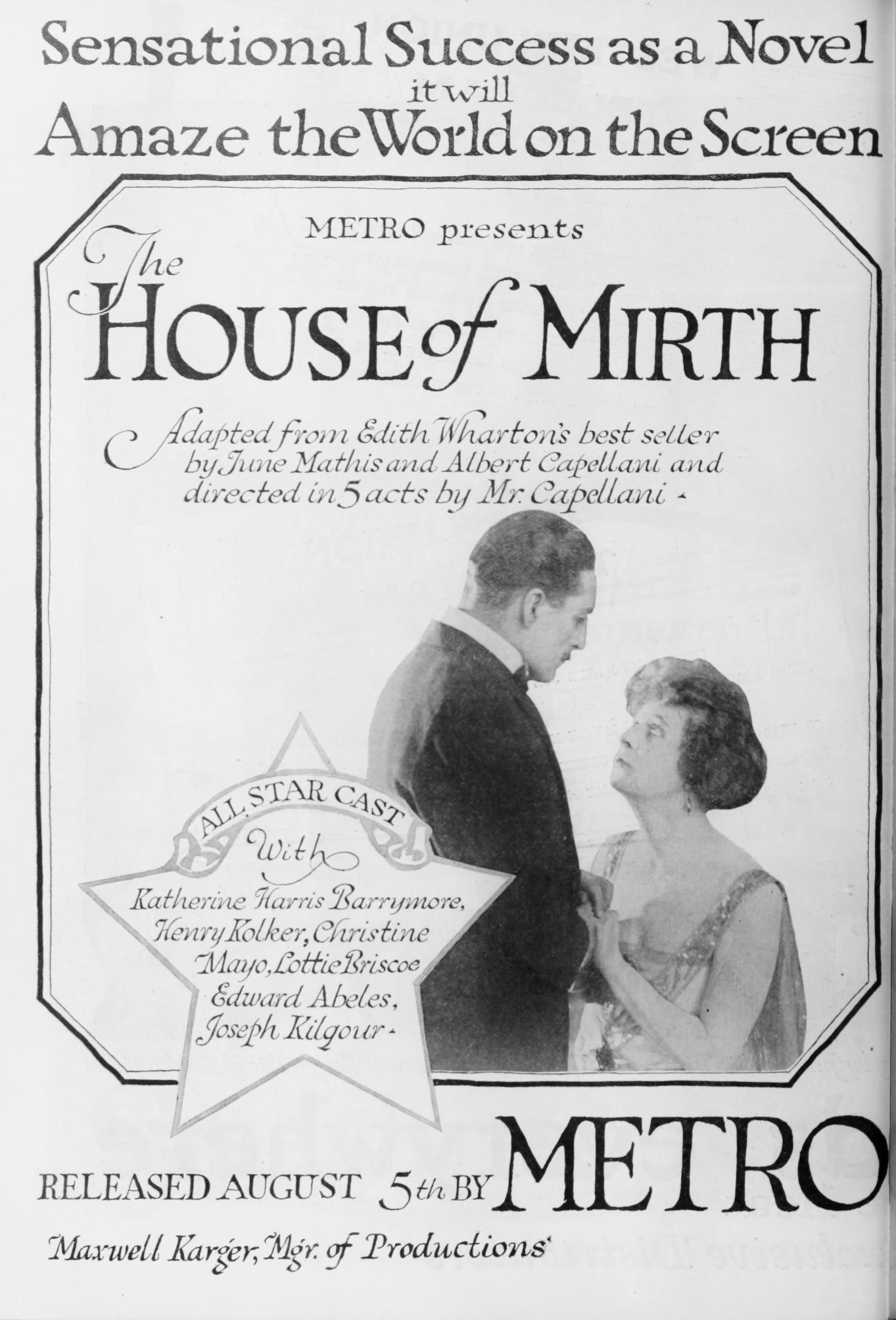
In the annals of early cinema, few adaptations managed to capture the intricate social critique and heart-wrenching tragedy of their literary source material quite like Albert Capellani’s 1918 silent film, The House of Mirth. Based on Edith Wharton’s seminal 1905 novel, this cinematic endeavor plunges viewers into the glittering, yet ultimately unforgiving, world of New York’s Gilded Age elite. It’s a realm where beauty is currency, social standing is paramount, and a woman’s worth is meticulously weighed against her marital prospects and financial acumen. Capellani, renowned for his nuanced storytelling and ability to elicit powerful performances, took on the monumental task of translating Wharton’s incisive prose and psychological depth into a visual language, a challenge made all the more formidable by the inherent limitations of the silent era. Yet, what emerges is a surprisingly potent and poignant portrayal of Lily Bart, a character whose plight resonates with a timeless relevance, exploring themes of societal constraint, economic necessity, and the often-devastating consequences of a life lived on the precipice of ruin.
At the core of this narrative, both literary and cinematic, is Lily Bart, brought to vivid, if silent, life by the remarkable Pauline Welch. Welch's portrayal is a masterclass in silent acting, conveying the myriad complexities of Lily’s character through subtle gestures, expressive eyes, and an exquisite grace that perfectly encapsulates her social standing. Lily is not merely beautiful; she is a product of her environment, groomed for a specific role within the upper echelons of society. Her beauty, her charm, her impeccable taste—these are her assets, carefully cultivated to secure a prosperous marriage. However, beneath the veneer of socialite elegance lies a woman of genuine feeling, a soul capable of profound love and an innate moral compass that frequently conflicts with the pragmatic demands of her world. She is, in essence, a butterfly trapped in a gilded cage, her wings too delicate for the harsh realities beyond its bars. Her reluctance to compromise her ideals for sheer financial gain, even when desperately needed, defines her tragic arc. Unlike the more overtly rebellious heroines sometimes seen in films of the period, such as those that might appear in A Modern Thelma, Lily's struggle is internal, a quiet rebellion against the very system that created her.
Lily’s journey is intricately woven with the men who orbit her, each representing a different facet of her societal dilemma. There is Lawrence Selden, portrayed with quiet earnestness by Henry Kolker. Selden embodies intellectual companionship and genuine affection, a man of integrity whose moderate means, however, render him an impractical choice in Lily’s material-driven world. Their connection is palpable, often expressed through longing glances and unspoken understandings, a testament to the power of silent film to convey emotional depth without dialogue. He represents the path not taken, the road of authentic love that Lily, bound by her circumstances, feels she cannot afford to tread.
Then there is Simon Rosedale, the wealthy businessman, played by Sidney Bracey. Rosedale, a figure of the newly rich, offers Lily the financial security she desperately needs, albeit with a social stigma attached to his perceived lack of refinement. He is pragmatic, direct, and sees Lily as a valuable acquisition, a means to elevate his own social standing. His pursuit is persistent, a constant reminder of the transactional nature of marriage in this society.
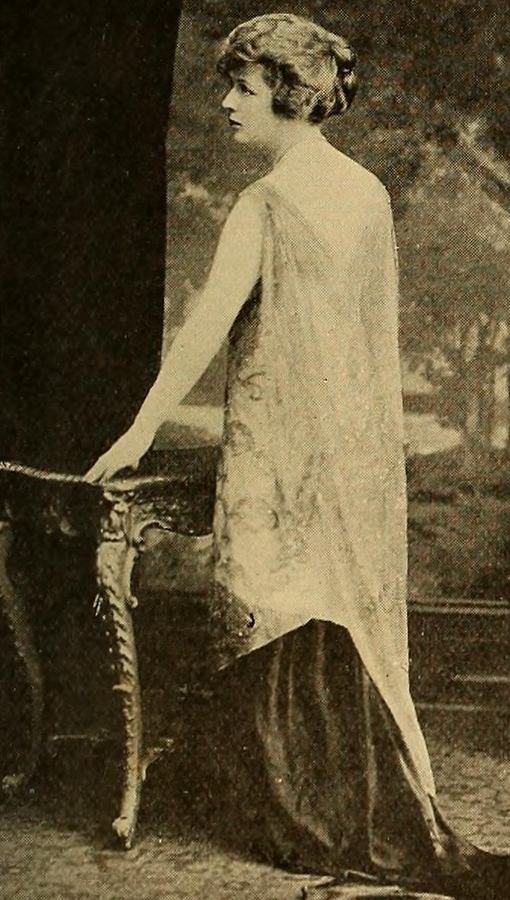
The most treacherous of these relationships, however, involves Augustus Trenor-Dorset, a married man whose casual advances become a dangerous game. His flirtations, though initially harmless in the social milieu, quickly escalate, placing Lily in a morally compromising position. The film expertly builds this tension, showcasing Lily’s attempts to navigate these treacherous waters with grace, yet ultimately failing to escape the currents of scandal. This particular entanglement highlights the double standards prevalent in the era, where a man’s transgressions are often overlooked, while a woman’s mere proximity to impropriety can shatter her reputation irrevocably. It's a stark reminder of the fragile position women held, echoing the social anxieties found in other melodramas of the era like East Lynne.
No discussion of Lily Bart’s downfall would be complete without acknowledging the pivotal, and indeed villainous, role of Bertha Dorset, portrayed with chilling efficacy by Lottie Briscoe. Bertha is the epitome of Gilded Age hypocrisy: a woman who brazenly carries on an affair with Ned Silverton, yet maintains a facade of societal respectability. Her decision to publicly insult Lily, casting her out of polite society, is not merely an act of jealousy or spite; it’s a calculated maneuver to deflect attention from her own indiscretions. The scene where Bertha returns, ostensibly from the country, only to find Lily alone with Augustus, is a masterclass in silent film tension. The audience witnesses Lily’s prior rejection of Augustus’s advances, making Bertha’s subsequent public condemnation all the more cruel and unjust. Briscoe’s performance captures the icy calculation and ruthless self-preservation of a woman who understands the rules of the social game and plays them without mercy. Her actions are a stark illustration of how quickly reputations could be destroyed, a theme explored with similar intensity in films like The Woman in the Case, where a woman's honor is similarly imperiled by malicious gossip and circumstantial evidence.
Lily’s subsequent exile from New York society marks the beginning of her precipitous fall. Stripped of her social standing, she is forced to relocate, a poignant visual metaphor for her displacement from the world she once inhabited. The death of her aunt, her last financial anchor, leaves her utterly penniless, forcing her to confront the indignity of seeking employment—a fate considered unthinkable for a woman of her former station. These scenes are handled with a stark realism, showcasing the harsh realities faced by women who lacked independent means or a husband to provide for them. Welch’s portrayal of Lily’s growing desperation and humiliation is profoundly moving, her once radiant beauty now clouded by anxiety and despair. The film masterfully uses visual cues to convey her dwindling resources and increasing isolation, a silent scream against the injustices of a society that values superficiality over intrinsic worth.
It is a testament to the talent of director Albert Capellani and his screenwriters, June Mathis and Edith Wharton herself (a rare and fascinating collaboration), that The House of Mirth successfully translates the nuanced social commentary of the novel to the silent screen. The film relies heavily on visual storytelling, using elaborate set designs, period costumes, and carefully choreographed movements to establish the opulent yet suffocating atmosphere of the Gilded Age. Intertitles, rather than merely advancing the plot, are often crafted with a literary flair, echoing Wharton’s own elegant prose and providing insight into characters’ thoughts and societal rules. Capellani’s direction emphasizes the stark contrasts: the lavish balls versus Lily’s lonely struggle, the glittering facades versus the moral decay beneath. The film’s ability to convey complex emotions and societal pressures without spoken dialogue is particularly impressive, relying on the expressive power of its actors and the evocative power of its cinematography. It makes one ponder how much more could be conveyed in the early days of cinema than simple action, delving into the psychological landscape of its characters.
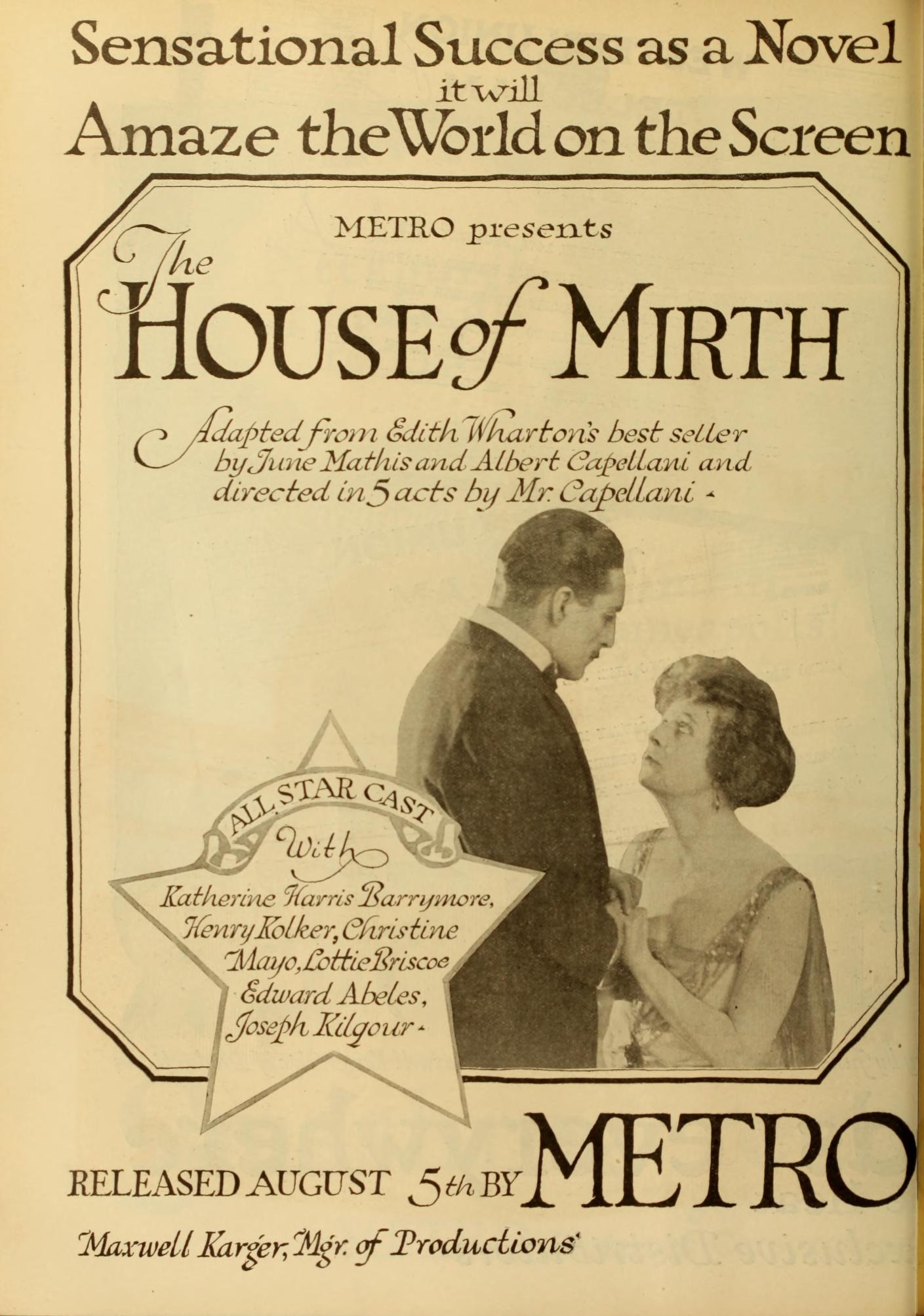
The ensemble cast, under Capellani's direction, delivers performances that are both period-appropriate and emotionally resonant. Pauline Welch, as Lily Bart, is undeniably the film’s anchor. Her performance is imbued with a delicate vulnerability and a quiet strength that makes Lily’s tragic journey all the more impactful. She conveys Lily’s internal conflict—her desire for love versus her need for security—with remarkable clarity. Henry Kolker’s Lawrence Selden is a portrait of restrained devotion, his quiet dignity providing a moral counterpoint to the superficiality around him. Lottie Briscoe’s Bertha Dorset is memorably venomous, her sneers and calculated gestures painting a vivid picture of a ruthless social predator. Even the supporting cast, including Sidney Bracey as the pragmatic Rosedale and the various socialites, contribute to the rich tapestry of this bygone era. The film’s success hinges on these performances, which manage to bridge the gap between audience and character, allowing for a deep emotional connection despite the absence of spoken words.
Perhaps the most significant divergence between Capellani’s film and Wharton’s novel lies in its conclusion. While Wharton’s original masterpiece ends in Lily Bart’s tragic, lonely death, the film, in a move perhaps dictated by the sensibilities of early Hollywood or a desire for a more palatable narrative, offers a glimmer of hope. As Lily stands on the precipice of suicide, overwhelmed by her circumstances and the crushing weight of societal judgment, it is Lawrence Selden who intervenes. His arrival is not just timely; it is a profound act of love and redemption. He convinces her to marry him, offering a lifeline that promises escape from her despair and a future built on genuine affection rather than financial necessity. This ending, while undeniably different from the novel’s bleak realism, provides a powerful cinematic resolution, one that speaks to the enduring power of love to overcome even the most formidable social barriers. It transforms Lily’s story from an unmitigated tragedy into a tale of resilience and salvation, albeit one achieved at the very last moment. While the novel highlights the inexorable nature of social forces, the film, perhaps characteristic of its era, suggests that individual connection can still triumph.
Even a century after its release, The House of Mirth, both in its literary and cinematic forms, continues to resonate with audiences. Wharton's sharp critique of a society obsessed with wealth, appearance, and social climbing remains disturbingly relevant. The film effectively underscores the hypocrisy of the elite, the double standards applied to men and women, and the devastating consequences for those who fail to conform or secure their financial footing. Lily Bart's struggle is not merely a historical curiosity; it is a universal narrative of an individual battling systemic pressures. Her journey illustrates the fragility of reputation and the crushing weight of economic insecurity, themes that echo through countless human experiences across generations. The film serves as a powerful reminder that while the trappings of society may change, the fundamental human desires for love, security, and acceptance, and the challenges in achieving them, remain constant. Its portrayal of Lily’s vulnerability and the harshness of her world stands as a poignant commentary on the human cost of rigid social structures. The film, in its silent eloquence, manages to transcend its era, offering a mirror to our own societal values and follies.
Albert Capellani’s 1918 adaptation of The House of Mirth is more than just a historical curiosity; it is a significant piece of early cinema that deserves renewed appreciation. It skillfully navigates the complexities of Wharton’s novel, presenting a compelling narrative of a woman’s struggle against an unforgiving society. The performances, particularly Pauline Welch’s Lily Bart, are deeply affecting, conveying a spectrum of emotions that transcend the silent medium. While its ending takes a different turn from the novel, it offers a powerful, albeit perhaps more conventional, resolution that still resonates with hope and the triumph of enduring love. For anyone interested in the evolution of film, the adaptation of classic literature, or the enduring power of social drama, The House of Mirth is an essential viewing. It reminds us of the power of storytelling, even without spoken words, to illuminate the human condition and critique the societal constructs that shape our lives. It stands as a powerful testament to the artistry of silent film and the timeless genius of Edith Wharton.
IMDb —
1936
Community
Log in to comment.