DbcultAccessing Vault...
Cult Review
Senior Film Conservator
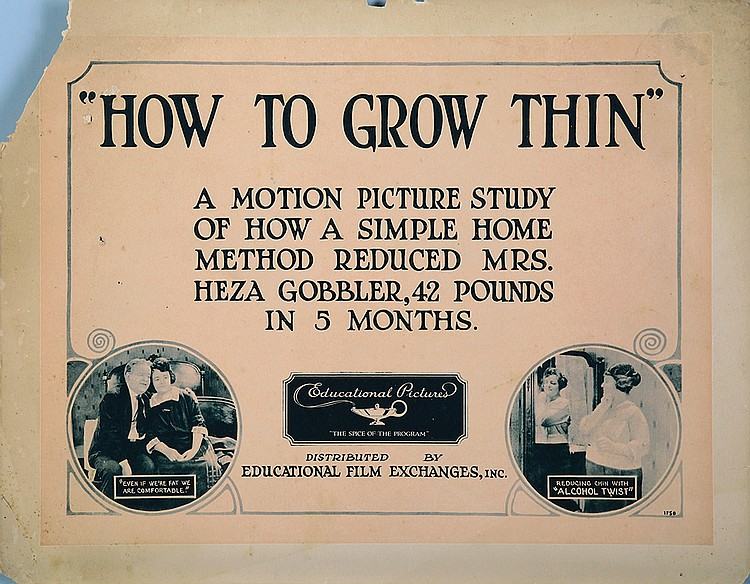
To watch How to Grow Thin in the modern age is to witness the embryonic stages of a cultural neurosis that has since metastasized into a multi-billion dollar industry. This 1912 short film captures a pivotal moment in the Western consciousness where the body became a project, an object to be sculpted through rigorous denial and mechanical motion. Unlike the grand, sprawling narratives found in Theodora, which sought to recreate the majesty of antiquity, this domestic comedy turns its lens inward, toward the middle-class living room and the private anxieties of the female form. It is a work of startlingly modern cynicism, wrapped in the flickering, staccato charm of early silent cinema.
The film operates with a didactic efficiency. Mrs. Gobler is not merely a character; she is an avatar for the burgeoning 'New Woman' who finds herself caught between the traditional domestic sphere and the new, unforgiving standards of urban vanity. The doctor she visits is less a healer and more a high priest of secular asceticism. His list of 'enemies'—pork, candy, white bread, and potatoes—reads like a foundational text for every fad diet that would follow in the subsequent century. There is a visceral quality to the way the film treats these common staples as villains, a narrative choice that mirrors the moralizing tone of Jewel, though focused on the flesh rather than the spirit.
The centerpiece of the film is the 'tummy twist.' In the absence of contemporary gym equipment, the film portrays exercise as a form of rhythmic burlesque. Mrs. Gobler’s movements are performed with a grim determination that stands in stark contrast to the effortless grace often depicted in Fair Lady. Here, the labor of beauty is laid bare. It is unglamorous, repetitive, and inherently ridiculous to the outside observer. This is where the husband enters the frame—not as a supportive partner, but as a skeptical, laughing interlocutor. His presence serves to highlight the gendered divide of the era: while the woman must undergo physical transformation to maintain her social currency, the man is permitted the luxury of stagnant observation.
"The doctor's final retort—comparing weight loss to a bath—is perhaps the most honest moment in early cinema. it strips away the illusion of the 'happily ever after' and replaces it with the reality of the 'ever after' maintenance."
The visual language of How to Grow Thin is deceptively simple. The camera remains mostly static, a silent witness to Mrs. Gobler’s tribulations. Yet, within this fixed frame, we see a masterclass in physical comedy that predates the more polished slapstick of the late 1910s. The way she handles the alcohol rub, with a mixture of shock and resignation, provides a window into the tactile reality of 1912 life. It is a far cry from the rugged, outdoor survivalism of The Law of the North, yet it depicts a different kind of survival—the survival of one's relevance in a society that was beginning to value thinness as a prerequisite for respectability.
Time in this film is compressed with a narrative audacity. We see the struggle, and then, with the flicker of a title card, five months have vanished. The revelation of the thirty-pound loss is played not with a triumphant orchestral swell, but with a sense of clinical validation. The scales do not lie. This moment of success, however, is where the film transcends its comedic roots and enters the realm of the existential. When Mrs. Gobler asks if her victory is permanent, she is asking the question that haunts all of humanity: can we ever truly 'arrive' at a state of perfection?
The doctor's reply—'No lady, neither is a bath'—is a stroke of genius. It is a line that would feel at home in a cynical 1940s noir or a modern dark comedy. It suggests that the body is a vessel in a constant state of decay and accumulation, requiring endless, Sisyphean labor just to remain presentable. This philosophy of transience is a recurring theme in the more melancholic works of the period, such as The Waif, where the fragility of one's state is always at the forefront. In How to Grow Thin, the fragility is simply hidden under a layer of satirical fat.
When we compare this film to Snobs, we see a similar preoccupation with social perception, but How to Grow Thin is far more intimate, focusing on the literal flesh rather than just the sartorial trappings of class. While The Sixteenth Wife explores the exoticized 'other' and the politics of the harem, Mrs. Gobler’s story is rooted in the mundane reality of the Western kitchen and the bathroom scale. It is this groundedness that makes the film so enduringly relatable. We may no longer fear the 'enemy' of the potato with the same fervor as the Edwardians, but the 'tummy twist' has merely been rebranded as Pilates, and the alcohol rub has become the lymphatic drainage massage.
The husband’s laughter, too, echoes through time. It represents the external gaze that both demands the transformation and ridicules the process. His role is reminiscent of the judgmental atmospheres in When Love Is King, where the protagonist is constantly measured against an impossible standard. However, in How to Grow Thin, the protagonist actually achieves the standard, only to find that the goalposts have been moved to infinity. Success is not a destination; it is a temporary reprieve from the inevitable return to 'pork and candy.'
From a technical standpoint, the film utilizes the limited resources of 1912 to great effect. The use of the scale as a dramatic device is particularly clever, providing a quantifiable metric for the narrative arc. This use of props to drive the plot is a hallmark of early storytelling, seen also in the mysterious artifacts of The Ring of the Borgias. But here, the 'artifact' is a household object, making the stakes feel personal and immediate. The lighting is flat, typical of the era's studio work, but it serves the clinical nature of the doctor's office and the domesticity of the Gobler home.
The film also touches upon the idea of the 'expert'—a figure who would become increasingly central to 20th-century life. This doctor is the precursor to the celebrity trainer and the Instagram influencer. His authority is absolute, his advice is presented as law, and his dismissal of Mrs. Gobler’s hopes for permanence is the ultimate exercise of power. This dynamic is explored with more dramatic weight in Szent Péter esernyöje, where authority and faith intersect, but in this comedy, the 'faith' is placed in the science of the rub and the twist.
How to Grow Thin is a remarkable piece of social commentary disguised as a lighthearted romp. It avoids the melodrama of The Imp or the action-oriented pacing of The Gun Woman, opting instead for a satirical look at the domestic front. It reminds us that the struggle for self-improvement is an ancient one, and that the 'enemies of beauty' have been with us since the dawn of the camera. The film’s greatest achievement is its refusal to offer a simple happy ending. By equating a diet to a bath, it offers a pragmatic, if slightly depressing, view of the human condition: we are never finished, we are only ever temporarily clean. For anyone interested in the intersection of cinema history and social evolution, this film is an essential, if brief, viewing experience. It captures the spirit of an age that was just beginning to realize that the body could be a burden, a project, and a punchline, all at once.

IMDb 5.4
1920
Community
Log in to comment.