Summary
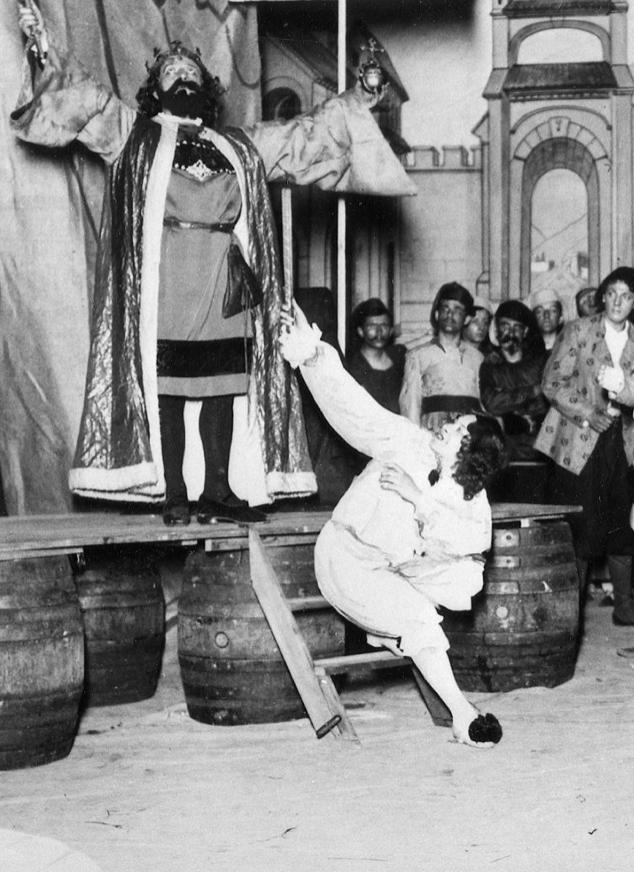
Once resplendent in ermine arrogance, König Nicolo—an autocrat who mistook adoration for immortality—now drifts through the cobwebbed arteries of his former realm like a ghost who has misplaced his own afterlife. The chandeliers that once flattered his vanity now drip candle-tallow tears; courtiers who once choreographed every blink of his eyelids have evaporated into rumor. Cloaked in anonymity, the ex-sovereign wanders market stalls where his profile once adorned coins now melted into tinkers’ slag. Children chase him for sport, mistaking his crownless shadow for that of a common vagrant; dogs sniff his heels with pity rather than menace. Each footstep is a palimpsest: under the grime he still sees imperial mosaics bearing his face, yet townsfolk tread across them with indifferent boots. In a tavern he overhears ballads caricaturing his gluttonous banquets; in a church he spies a fresco where his likeness has been replaced by a sow wearing a diadem. Nightfall finds him beneath the skeletal ribs of an unfinished triumphal arch—intended to celebrate perpetual conquest—now a refuge for bats and heretical graffiti. He tries to barter a signet ring for stale bread; the baker laughs, claiming the seal resembles a cheap brothel token. Memories ambush him: the silk-scented yawn of a mistress, the metallic snap of a dungeon latch, the choreographed ovation that rose whenever he exhaled. Paranoia coils tighter: every cloaked silhouette might be an assassin sent by the revolutionary council, every giggle a coded insult. Yet the most excruciating torment is the ordinariness of contempt—no blazing damnation, merely the shrug of a world that has moved on. When plague banners flutter at the city gates, the deposed monarch, half-feral, joins the stream of refugees, jostled, elbowed, reduced to a passport of scars. At a crossroads he encounters a traveling lantern projectionist; the flickering images on a bedsheet canvas show newsreels of his own coronation. Viewers clap at the pageantry, failing to recognize the hunched silhouette selling chestnuts beside the screen. In that guttering light, Nicolo confronts the grotesque elasticity of identity: the same face that once launched galleys now peddles hazelnuts. He slinks away before the reel reveals the executioner’s blade that never fell—history’s sly ellipsis.
King Nicolo through hit egoism and slackness has lost his fame and power is now deposed, completely alone and walks through his former empire, unrecognized, in constant fear of people whom are foreign to him.
Review Excerpt
"
::-moz-selection{background:#EAB308;color:#000;}
::selection{background:#EAB308;color:#000;}
a{color:#0E7490;text-decoration:none;border-bottom:1px dotted #0E7490;}
a:hover{color:#fff;border-bottom:1px solid #fff;}
blockquote{border-left:4px solid #C2410C;padding-left:1rem;margin:1.5rem 0;font-style:italic;color:#EAB308;}
h2,h3{margin:2rem 0 1rem;font-weight:600;letter-spacing:.05em;text-transform:uppercase;}
h2{font-size:1.5rem;color:#C2410C;border-bottom:2px solid #C2410C;display:inline-bloc..."