DbcultAccessing Vault...
Cult Review
Senior Film Conservator
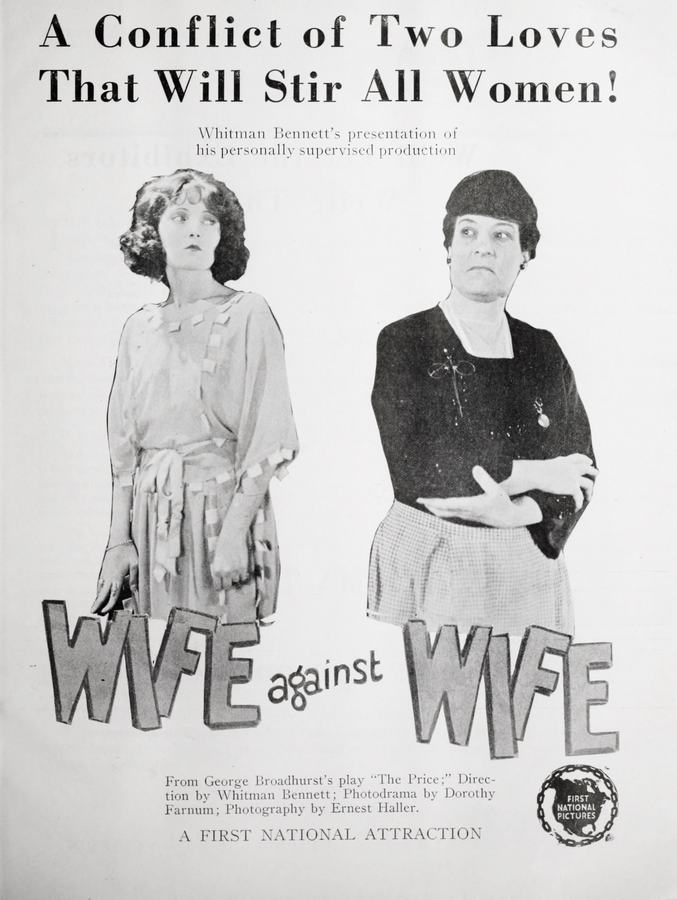
Wife Against Wife unfolds as a darkly operatic exploration of the human soul’s capacity for both grandeur and ruin. Stannard Dole, the American sculptor whose hands shape marble into living forms, is a figure both sublime and deeply flawed. His infatuation with Gabrielle Gautier—a Parisian model whose beauty transcends mere physicality—unfolds with the inevitability of a gilded cage. The film’s opening act, set against the romantic haze of Paris, is a masterclass in visual storytelling: the Seine’s shimmering reflection frames Gabrielle’s silhouette as Stannard sketches her, his pencil strokes echoing the tension between artistic obsession and carnal desire. Yet his inability to complete the statue she inspires—a sculpture left perpetually in progress—becomes a haunting metaphor for his emotional immaturity.
The narrative’s pivot to New York City is a masterstroke of tonal contrast. Here, Gabrielle’s arrival is not a triumph but a reckoning. Stannard’s marital entanglement—a union of convenience sustained by his wife’s ruthless pragmatism—is revealed as a prison of his own making. His manipulation of Gabrielle, positioning her under the stewardship of Dr. Ethan Bristol, is a calculated move to weaponize her vulnerability. The dynamics between these four characters—Stannard’s self-serving artistry, Gabrielle’s tragic naivety, Mrs. Dole’s venomous cunning, and Bristol’s quiet integrity—are rendered with a psychological acuity that elevates the film beyond mere melodrama.
Director George Broadhurst and writer Dorothy Farnum craft a narrative where every action is a brushstroke in a larger canvas of moral decay. Stannard’s death scene—a climactic moment where he gazes upon his finished statue while whispering a deceitful blessing to Gabrielle and Bristol—is a tour de force of dramatic irony. The statue, a monument to his artistic triumph, becomes a grotesque symbol of his emotional bankruptcy. Mrs. Dole’s subsequent role as a housekeeper in the Bristol household is a masterful inversion of power; her attempts to unravel the couple through salacious revelations are met with a resilience forged in shared vulnerability. The child, born of this turbulent interlude, emerges as both a beacon of hope and a reminder of the sacrifices demanded by love.
The film’s visual language is as evocative as its narrative. The contrast between the cold, polished surfaces of Stannard’s studio and the raw, organic textures of Gabrielle’s emotional landscape is heightened by the cinematography. Shadows and light play a central role in delineating moral boundaries: Gabrielle is often bathed in soft, golden hues, while Stannard’s world is suffused with the stark, unyielding light of a workbench. These choices mirror the thematic tension between art’s capacity to immortalize beauty and its potential to perpetuate suffering.
Performances are uniformly transcendent. Pauline Starke’s portrayal of Gabrielle is a study in layered poignancy; her eyes betray a world of unspoken anguish as she navigates between the sculptor’s manipulation and Bristol’s steadfast care. Percy Marmont’s Stannard is a paradox—charming yet repulsive, a man whose genius is both his salvation and his damnation. Emily Fitzroy’s Mrs. Dole is a chilling embodiment of calculated malice, her every glance a dagger aimed at the couple’s fragile bond. The supporting cast, particularly Edward Langford as Dr. Bristol, adds depth with performances that balance stoicism and quiet passion.
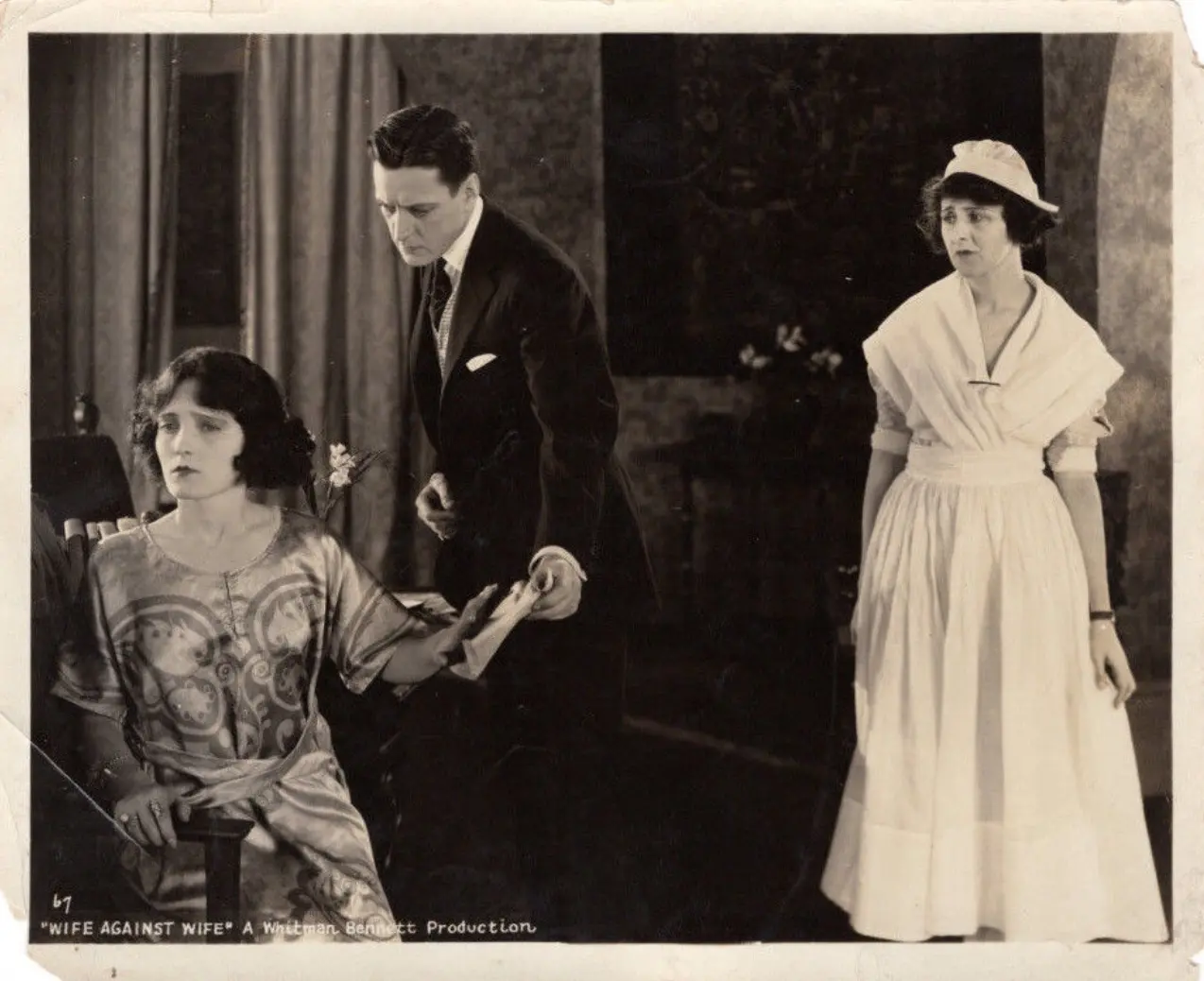
Wife Against Wife occupies a unique space in the annals of early cinema. Its thematic preoccupations with artistic hubris and the fragility of human connection echo in later works such as The Grand Passion and God’s Country and the Woman, yet its execution is distinct in its focus on the corrosive effects of unfulfilled ambition. The film’s pacing, deliberate yet never languid, allows the emotional undercurrents to build with the inevitability of a storm. Its climax, where the child’s presence becomes the couple’s salvation, is a narrative choice that feels both heartwarming and bittersweet—a testament to the enduring power of love to redeem even the most fractured of circumstances.
Cinematic comparisons might be drawn to The Messenger for its exploration of moral dilemmas or The Mystery of the Black Pearl for its atmospheric tension. However, Wife Against Wife distinguishes itself through its unflinching portrayal of the intersection between art and emotion. The film’s dialogue, crisp and laden with subtext, is delivered with a precision that underscores the characters’ inner turmoil. The interplay between silence and speech is particularly effective—Stannard’s final moments are marked by a wordless exchange with Gabrielle, a visual cue that speaks volumes about the weight of his deceit.
The film’s score, though modest in its instrumentation, complements the narrative with a haunting elegance. Strings swell during moments of tension, while a sparse piano motif recurs in scenes of introspection. These auditory elements, coupled with the stark visual design, create an immersive experience that lingers long after the credits roll. The production design, particularly the contrast between the austere New York interiors and the romanticized Parisian settings, reinforces the geographical and emotional disjunctions within the story.
Wife Against Wife is not without its flaws. The secondary characters, particularly Dr. Bristol, occasionally lapse into the didacticism of early cinema’s moralizing tendencies. The pacing, while generally deft, slows in the middle act as the film indulges in dialogue-heavy scenes that test the audience’s patience. Yet these are minor quibbles in the face of a narrative that is as daring in its emotional honesty as it is in its visual ambition.
In the broader context of film history, Wife Against Wife serves as a fascinating artifact of the 1920s’ burgeoning cinematic language. Its exploration of gender dynamics, particularly the ways in which women navigate a world dominated by men’s ambitions, anticipates the themes that would come to define the New Hollywood era. The film’s unresolved tensions—Gabrielle’s agency in a relationship defined by manipulation, the child’s ambiguous role as both a symbol of hope and a burden—invite modern audiences to interrogate the ethical complexities of its narrative.
Ultimately, Wife Against Wife is a film that lingers in the mind like an unfinished sculpture. Its beauty lies not in resolution but in the questions it leaves unanswerable. Stannard’s unfinished statue, Gabrielle’s unrequited love, and the fragile hope of a child born from chaos—all these elements coalesce into a meditation on the impermanence of human endeavor. It is a reminder that art, like love, is a process fraught with imperfection, yet capable of transcending its flaws through the sheer force of its existence.
IMDb —
1918
Community
Log in to comment.