DbcultAccessing Vault...
Cult Review
Senior Film Conservator
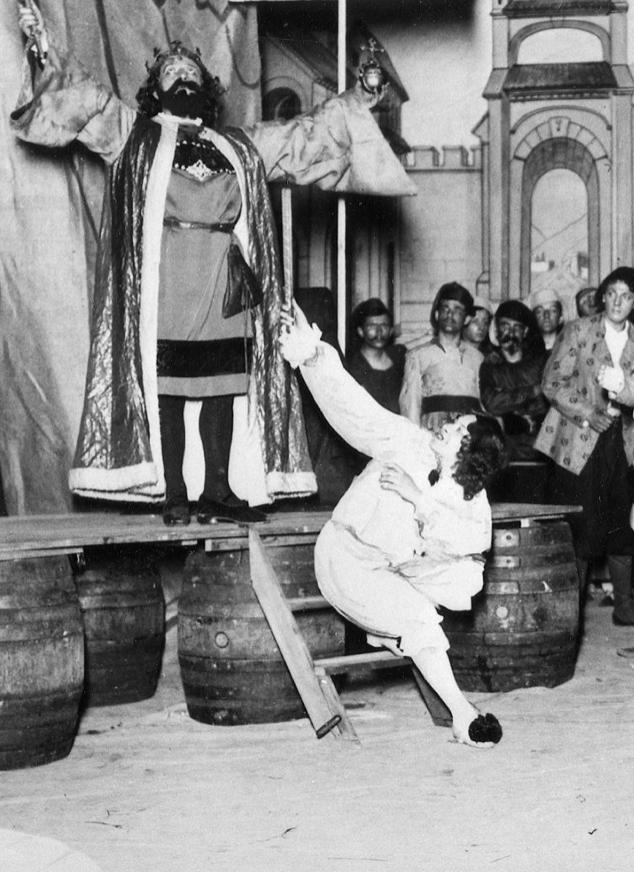
In the sepia crucible of 1925, German screens were already smoldering with broken thrones—think A Law Unto Himself or the glacial fatalism of The Snail—yet none dared to strip majesty so mercilessly bare as König Nicolo. Frank Wedekind, that scoundrel poet who once scandalized Europe with Spring Awakening, here fashions a parable that gnaws at the marrow of power: once the applause stops, a crown is only a dented chamber pot. The film’s visual lexis borrows from the angular nightmares of Georg Grosz: cobblestones tilting like guillotine platforms, smoke that coils like unpaid debts. Director Hans Felix—an unsung maestro—lets silence scream louder than intertitles, holding a take until the viewer squirms in complicit discomfort.
Forget the comfy safety of linear narration; we tumble alongside Nicolo through temporal folds. One instant he is swatting diplomats like lazy wasps; the next, he’s bartering crusts with a war-scarred widow. The editing—razor-blade montage that Soviet contemporaries would applaud—splices coronation gold leaf against plague pits, revealing sovereignty as a currency hyper-inflated into worthlessness. Mid-film, a traveling cinema within the cinema projects newsreels of the king’s naval parade; viewers laugh at the gilded barge, oblivious that the nut-seller beside them once commanded that floating cathedral. Meta-gestures this audacious wouldn’t resurface until Herzog’s Heart of Glass half a century later.
Power is a perfume that evaporates when the bottle breaks, leaving only the sour stink of mortality.
Felix’s camera stalks his protagonist like a hired assassin, perpetually two paces behind, rendering foreground backsides of anonymous burghers who bar the king from audience sympathy. Depth of field becomes moral commentary: faces in foreground are razor-sharp, Nicolo’s visage wanes into a blur—an optical decree that his identity diffuses into rumor. Compare this strategy to Hearts of Love, where romantic leads bask in soft-focus halo; here, the ex-king is denied even the dignity of haze. Lighting swings from chiaroscuro caverns to over-exposed noon streets that bleach his royal insignia to nothing.
Leopold von Ledebur’s Nicolo is a study in collapsed gravitas—his cheekbones jut like broken battlement, eyes flicker between entitlement and animal cunning. Watch the micro-gesture when he reflexively extends a hand for a courtier’s kiss that never arrives: fingers curl into a phantom fist, then wilt. Around him, character actors flourish: Paul Biensfeldt’s pot-bellied baker who mocks the king’s seal; Marie von Buelow’s laundress humming republican ditties while wringing out a former royal banner; Julius Falkenstein’s one-armed veteran who spits at Nicolo’s shadow yet demands alms from the next passer-by—humanity in all its transactional splendor.
Wedekind’s intertitles read like cracked imperial decrees—archaic diction colliding with slang freshly minted in Berlin gutters. Example: “Henceforth let laughter be taxed; those who cannot pay shall surrender their teeth.” Modern viewers detect pre-echoes of Brecht’s alienation, yet Wedekind is rawer, less theoretical. His thematic DNA laces fear of female sexuality (a constant in The Woman of Mystery) with loathing of hierarchical rot. In König Nicolo, matriarchs dismiss the king’s plea for shelter with the same casual scorn they reserve for pickpockets, implying tyranny and thievery are fraternal twins.
Production designer Fritz Jessner constructs a city that metastasizes from Nicolo’s psyche: avenues shrink to alleys, plazas sink into cesspools. Buildings lean as if eavesdropping. Compare this to the stolid bourgeois interiors of Her Maternal Right; here, every stone is mutinous. A triumphal arch—half-built—becomes narrative spine: its incomplete arc mirrors the king’s truncated destiny. During climax, scaffolding collapses in a dust storm that swallows daylight, an orgasm of civic schadenfreude.
Though released in the twilight of silent cinema, König Nicolo shipped with a recommendation for live orchestration—yet the score specifies negative space: long stretches of percussionless hush punctuated by lone tuba, an aural equivalent of Nicolo’s hollow footsteps. Archival notes reveal that some exhibitors ignored the cue sheet, slathering scenes with generic waltz; audiences reportedly laughed, undercutting the existential horror. Modern restorations reinsert strategic silence, reviving the film’s suffocating dread.
Shot months before the Locarno Treaties, the film trembles with foreboding of institutional fragility. Viewers of 1925 saw in Nicolo’s downfall a referendum on Kaiser Wilhelm’s exile; viewers of 1945 retroactively grafted Hitler’s bunker delusions onto the narrative. Thus, the film mutates like a palimpsest with each historical convulsion—an attribute it shares with The Voice of Destiny, though the latter moralizes, whereas König Nicolo merely peels the scab and invites you to stare at the pus.
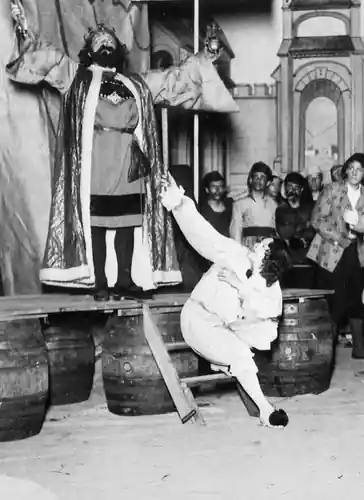
Coins bearing Nicolo’s profile circulate as black-market trinkets—valueless metal whose worth exists solely in memory. Chestnuts, roasted by the deposed monarch, serve as proletariat staple, their brittle shells metaphors for fractured sovereignty. The portable cinema screen—white canvas splashed with royal pomp—becomes a shroud: people witness history as disposable spectacle, a prophecy of Instagram culture. The triangulation of these objects indicts capitalism, nostalgia, and mass media in one breathless sweep.
Power in König Nicolo is theatrical: it exists only while spectators believe. Once the footlights die, monarch and street busker share the same ontological plane. Wedekind prefigures Foucault’s panopticon critique: surveillance without spectatorship is impotent. This thesis resonates with Simon, the Jester, yet here the jester and king are one, trapped inside a joke he no longer understands.
I was frightened not by my enemies, but by the silence of my friends—who never were friends, only echoes.
Contemporaneous critics dismissed the film as “too bitter for post-war stomachs,” citing its refusal to offer redemption. It limped through second-tier screens, often paired with slapstick shorts to sweeten the bile. Yet cine-clubs in Paris during the 1950s resurrected it, mesmerized by its pre-noir nihilism. Recently, a 4-K restoration toured arthouses, accompanied by live tuba improvisations; reviewers invoked Taxi Driver and Downfall, tracing a through-line of toxic self-mythology imploding.
While Nicolo frantically clings to past glory, female characters embody pragmatic futurity. The laundress repurposes royal banners into diapers; the baker’s daughter barters pastries for textbooks. Their entrepreneurial resilience casts the king’s hysteria as infantile. Wedekind—often accused of misogyny—here grants women the narrative’s centrifugal force, a corrective to the damsels populating Sunny Jane.
Editor Heinz Hilpert alternates between vertiginous whip-pans and static tableaux lasting an eternity. One sequence intercuts the king’s memory of a masquerade ball—faces swirling in delirium—with the present desolation of the same ballroom, now a storehouse for plague corpses. The rhythmic disparity—waltz versus stillness—induces nausea, implicating viewers in the carnival of collapse.
Stream any documentary on deposed despots and you’ll spot Nicolo’s gait: the hesitant shuffle of someone who once ordered parades now terrified to jaywalk. The film’s DNA resurfaces in The Last Days of Ceausescu, Idi Amin: Famous Last Words, even fictional sagas like House of Cards. König Nicolo distills the archetype to its mineral essence: power is a consensual mirage; once subjects retract belief, the sovereign becomes landfill.
Though monochromatic, tinting techniques bathe night scenes in sepia uric hues, daylight in arterial rust. The palette evokes bodily decay, underscoring the theme of regal corporeality putrefying into civic fertilizer. Cinematographer Ernst Stahl-Nachbaur employs under-exposure to swallow eye-sockets into darkness, transforming faces into skull-tableaus reminiscent of Otto Dix canvases.
1. Strip iconography until only scar tissue remains. 2. Let silence occupy more bandwidth than dialogue. 3. Force the viewer to witness humiliation without catharsis. 4. Deny redemption; offer only the feral dignity of survival. 5. Stage history as a looped projection—spectators laughing at yesterday’s pomposity—until they realize the joke’s on them.
If you crave escapism, binge A Modern Musketeer. If you hunger for a film that peels your complacency like hot tar, König Nicolo awaits. It offers no comfort, only the chill of self-recognition: every audience member, too, will fade from center stage into footnote. Accept its invitation, and you’ll exit the theater hearing your own footsteps echo a little louder, a little lonelier, down the corridor of time.
IMDb 7
1931
Community
Log in to comment.