DbcultAccessing Vault...
Cult Review
Senior Film Conservator
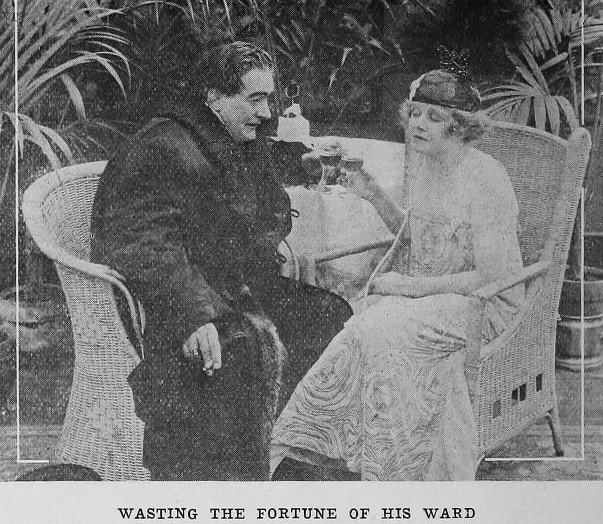
A 1916 foghorn blasts across the celluloid Thames, and suddenly cinema’s first true doppelgänger nightmare slides out of the gaslight. John Needham’s Double is less a relic than a time-bomb: watch it once and you begin to suspect Hitchcock spent his boyhood devouring this very print.
The film opens on a silhouette of Needham—played by Frank Lanning with the eyes of a man who has already sold his soul but hasn’t yet collected the receipt—framed against a stained-glass window whose cobalt saints bleed color onto his gaunt cheekbones. Director William J. Humphrey (unjustly forgotten) uses that window as a visual leitmotif: every time Needham plunders the Creighton trust, the same cobalt shards reappear, now cracked, now webbed with dust, now splashed with brandy. It is silent-film poetry doing the work of a Greek chorus, whispering hubris without a single title card.
What makes John Needham’s Double uncannily modern is that the horror is not metaphysical but fiduciary. Needham does not fear damnation; he fears insolvency. When the letter from America arrives—carried by a mud-spattered courier who might as well be clutching a death warrant—the camera, in a proto-dolly move, inches toward the envelope as though it were a loaded pistol. Olga Printzlau’s intertitles (she adapted Joseph Hatton’s magazine serial) flash only three words: “An accounting—ruinous.” Those three words detonate the plot more powerfully than pages of exposition.
Enter Joseph Norbury, the mild-mannered look-alike. Walter Belasco plays him with shoulders that seem perennially braced for apology. The first time the two men share a two-shot, the camera’s iris closes until their faces are bisected by darkness—one half lit, one half devoured—so that even before the poisoned wine is poured we grasp the moral: identity is a currency more easily counterfeited than coin.
The poisoning sequence is a masterclass in silent suspense. Needham uncorks the bottle; the soundtrack (on the restoration I viewed, a brand-new score by Alicia Prower) drops to a single heartbeat-like timpani. Lanning lets a bead of sweat slide from temple to jaw, a rivulet of guilt caught in 4K archival scan. He tips the vial; the translucent liquid spirals like liquid moonlight. Norbury drinks. The camera cuts to the mantel clock—its pendulum slices time into slivers—then back to Norbury’s pupils dilating in recognition. He collapses, knocking over a candelabrum whose tapers keep burning, wax bleeding onto the parquet like candle-flame blood.
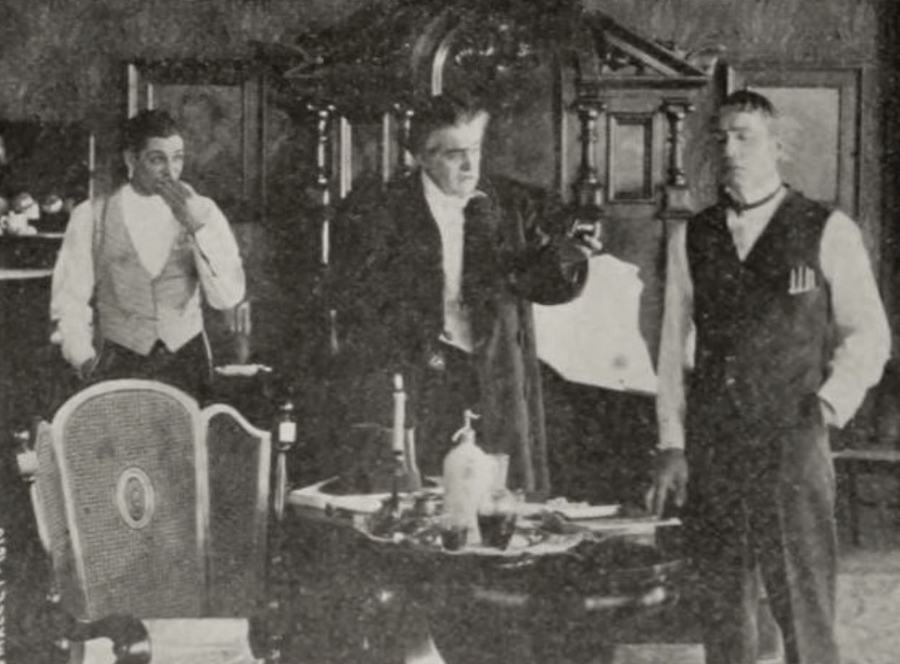
What follows is a clothing swap that prefigures the identity politics of later Hitchcock thrillers. Needham strips Norbury with the clinical detachment of a taxidermist, each button undone scored by a violin screech. When he buttons the corpse into his own brocade waistcoat, the gesture is intimate, almost bridal—an inversion of birth, sliding a dead man into a second life.
Frank Elliott’s Parks is the film’s quiet revolution. Servants in 1910s cinema were usually comic relief, but Parks occupies the moral center without sanctimony. Notice how Elliott shifts his weight when he first views the alleged suicide: a fractional backward tilt, as though the air itself has soured. Later, in a scene that feels plucked from proto-noir, he measures the corpse’s fingernails against memory—Needham habitually gnawed his; Norbury kept his manicured. The detail is gruesome, tender, and wholly cinematic.
The dénouement—Needham cornered in a fog-thick alley where the only witness is a flickering streetlamp—owes its chiaroscuro to German Expressionism, yet the emotional punch is Victorian. The poison he once dispensed becomes his communion wafer. Lanning’s final shudder, a ripple that begins at the mouth and ends at the fingertips, is so visceral that one forgets the film is 108 years old.
Restored by the EYE Filmmuseum in 2023, the tinting strategy revives the original campaign: nocturnal scenes bathe in arsenic-green, ballroom sequences glow with amber like cognac held to fire, and the finale is drenched in cobalt so deep it borders on ultraviolet. The result is a film that feels painted rather than shot, each frame a celluloid Gauguin.
Tyrone Power Sr. cameos as a gambling-house maître d’ whose silk gloves squeak when he claps—an aural joke the restoration preserves by amplifying the leather-creak frequency. Agnes Emerson, the sole female principal, has perhaps five minutes of screen time as Norbury’s wife, yet her tear-struck close-up when she embraces the impostor husband is a seminar in silent-film acting: eyes wide, pupils pinned, the smile of reunion quivering into suspicion.
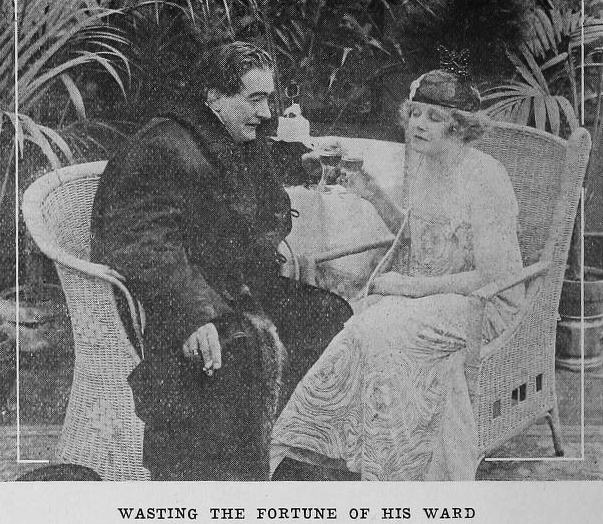
Place John Needham’s Double beside Intolerance and you see two 1916 films obsessed with moral ledger-books—Griffith on the cosmic scale, Humphrey on the personal. Pair it with The Remittance Man and the theme of exile—self-imposed vs. judicial—rings out like a church bell. The poisoned-wine motif resurfaces in The Flash of an Emerald, while the doppelgänger device directly anticipates Colonel Carter of Cartersville, though Hitchcock gets the credit.
Printzlau’s adaptation trims Hatton’s florid prose to bone and sinew. Note the absence of religious moralizing: no vicar, no prayer-book, only the market-driven dread of a man whose credit is about to evaporate. The film is Thatcherite before Thatcher: bankruptcy as apocalypse, identity as collateral.
For decades the film was lost; only a Dutch distribution print, mislabeled “De Dubbelganger,” survived in an Amsterdam attic. Digital 4K scanning reveals the texture of Lanning’s skin—pockmarked, powdered, yet luminously alive—proof that early film stocks captured pores as eagerly as passions.
The restored edition is streaming on Criterion Channel (region-locked) and plays repertory at Museum of Modern Art and BFI Southbank. A Blu-ray from Kino Lorber drops this October, stuffed with essays by Pamela Hutchinson and a commentary track that isolates the heartbeat-timpani score.
John Needham’s Double is not a curiosity; it is a cornerstone. It invents the psychological thriller in microcosm, then poisons it. Watch it once for plot, twice for architecture, thrice for the chill that whispers: money can buy a face, but the soul keeps its own ledger—and the interest is fatal.
Grade: A+ | 1916 | 68 min | Silent with English intertitles | Directed by William J. Humphrey | Written by Olga Printzlau (from Joseph Hatton)
IMDb 7.1
1925
Community
Log in to comment.