Summary
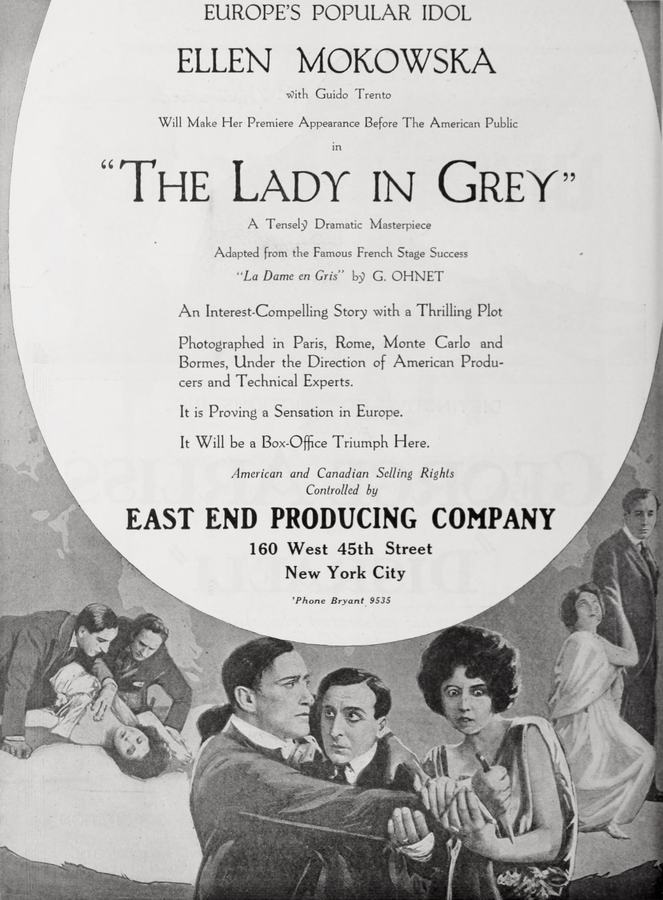
A spectral woman, draped in fog-toned silk, drifts through candle-scented corridors of a crumbling Riviera palazzo; her veil is stitched from the very guilt of the men who once swore to cherish her. Each footstep re-opens a scar: Riccardo Achilli’s asthmatic count, trembling under chandeliers of cut-glass regret; Renato Trento’s barrister, pockets bulging with unsigned pardons; Helena Makowska’s opera diva, voice cracked by the aria she dared to rewrite; Gioacchino Grassi’s consumptive notary, licking blood from sealed affidavits; Gian Paolo Rosmino’s prodigal tenor, clutching a score inked with his own death date; Suzanne Fabre’s governess, eyes like frostbitten violets; Guido Trento’s prefect, who files suicides under “natural causes.” The plot is a Möbius strip of testimonies: every flashback unthreads what the previous scene embroidered. A will is read, torn, re-inked with invisible lemon juice; a wedding dress is measured for a corpse; a child’s lullaby mutates into a courtroom requiem. The grey lady is not one but many: the jilted bride, the silenced witness, the mother who never was, the verdict that never arrived. She materializes only where architecture fails—behind a missing banister spindle, inside the hollow bust of a blindfolded Justice, through the bullet hole in a stained-glass Saint Cecilia. By the time the last reel clatters, the living have become annotations in her diary; the dead, its narrators.
Review Excerpt
"
The first time I saw La dame en gris I was alone in a Bologna archive at 2 a.m., the projector’s carbon-arc hiss sounding like the slow exhalation of a dying century. When the lights came up I realized I had bitten my knuckle hard enough to draw blood—something no splatter film has ever managed. That is the peculiar necromancy of Georges Ohnet’s 1923 morality play: it wounds without showing a weapon, indicts without delivering a verdict, and seduces while remaining as frigid as marble.
Narrati..."