Summary
Scarlet earth fractures beneath hobnailed boots while a nation gnaws its own heart: in the parched sierras of Castile, a fugitive schoolteacher—his spectacles cracked like the republic he once preached—drags a blood-smeared map of Spain across volcanic black soil, pursued by phantoms in moth-eaten uniforms who chant obsolete battle hymns. A widowed charcoal burner, her face a landscape of ash and candle wax, trades her last ember for a cartridge, then kisses the brass as if it were a tiny sun. Between cathedral ruins and railway tracks warped by dynamite, a chorus of orphans rehearses the multiplication table with the mechanical devotion of monks reciting psalms, unaware that each integer is a grave. The camera lingers on a single violet sprouting from a corpse’s buttonhole—its petals tremble, strobed by muzzle flare, until a mute soldier, José Argelagués in a performance carved from obsidian, plucks it and tucks it inside a love letter he will never post. Meanwhile, Fernando Viola’s anarchist printer splashes crimson ink across broadsheets that double as shrouds, while Ángeles Rivas, eyes two oil-black comets, dances a fandisco on a tabletop, her heels punctuating the silence like Morse code for broken republics. Through velvet night, a train of cattle wagons rattles toward nowhere; inside, a theatre troupe rehearses Calderón’s honor plays, their breath frosting the slats, their rifles substituting for prop swords. When dawn finally bleeds over the horizon, the land itself seems to exhale iron dust: the teacher, now half-blind, buries his books, kisses the charcoal burner’s ashen forehead, and walks into a sulphur mist, clutching a child’s slate chalked with the single word mañana. Fade on a crane shot ascending above the Iberian skeleton: no flags, only wind.
Review Excerpt
"
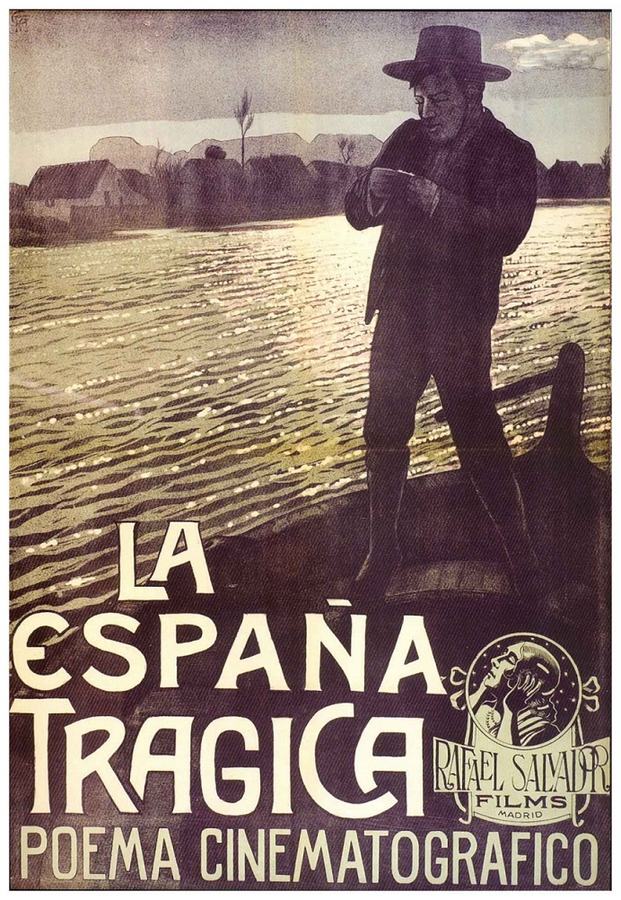
Nitrate ghosts do not scream; they smolder. Pedro de Repide’s suppressed 1917 fresco La España trágica o Tierra de sangre is a half-melted candle of a film, its tallow dripping with the molten wax of a country chewing its own limbs. Viewing it today—through a 4K glass-eye salvaged from a Salamandan archive—feels like inhaling cordite in a confession booth.
A Canvas Scorched by Fratricide
Repide, a pamphleteer turned cine-provocateur, refuses the tidy dialectics of The Romance of Elaine or th..."