Summary
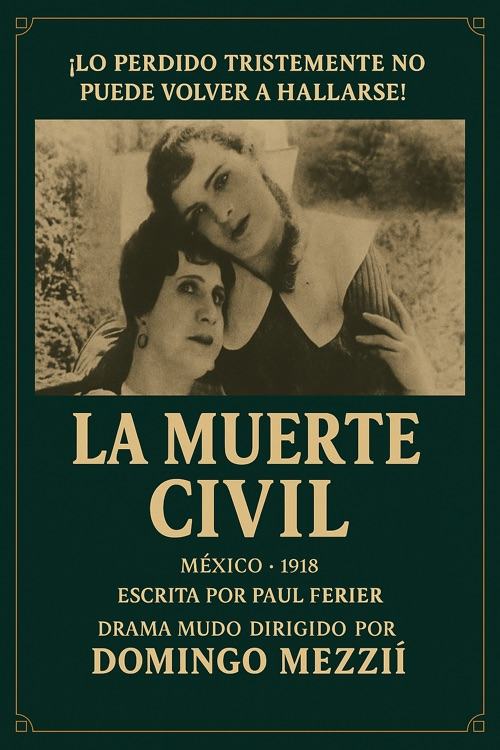
Domingo Mezzi's 'La muerte civil' unfolds as a meticulous study of a marriage that has slipped beyond the threshold of ordinary discord into a state of existential stasis. The film opens with a lingering shot of a rain‑slicked Buenos Aires street, where the protagonist, a middle‑aged accountant named Mateo (played by Mezzi), returns home to find his wife, Clara (Lupe Rivas Cacho), already seated at the kitchen table, her eyes fixed on a half‑filled glass of water. Their dialogue, sparse and laden with unspoken grievances, reveals a history of compromises that have eroded into a ritualized silence. As weeks bleed into months, the narrative charts a series of quotidian encounters—a shared breakfast that feels like a performance, a night spent watching an old documentary about the Spanish Civil War, a fleeting argument over a misplaced photograph—each scene a brushstroke that paints the gradual disintegration of intimacy. Salvador Uriarte’s character, the neighbor and former university colleague of Mateo, appears intermittently, offering philosophical asides that echo the film’s central motif: the notion of a 'civil death'—the point at which a relationship, though legally intact, ceases to function as a living, breathing partnership. Maria Luisa Escobar portrays Clara’s mother, whose occasional visits serve as a mirror reflecting the generational expectations that bind the couple to a façade of normalcy. The climax arrives when Clara, after a silent dinner, leaves a handwritten note on the kitchen counter, its ink smudged by the rain that has been a constant visual metaphor throughout the film. The note reads simply, "I am still here, but I am no longer us," encapsulating the film’s exploration of identity, loss, and the quiet resignation that accompanies the end of a shared life. The final frame lingers on Mateo standing alone in the doorway, the city’s neon lights flickering behind him, as the sound of distant traffic fades into a low, mournful hum.
Review Excerpt
"
body { background-color: #000; color: #fff; font-family: Georgia, serif; line-height: 1.7; }
.review { max-width: 800px; margin: 0 auto; padding: 20px; }
.highlight { color: #C2410C; font-weight: bold; }
.emphasis { color: #EAB308; font-weight: bold; }
.note { color: #0E7490; font-style: italic; }
a { color: #EAB308; text-decoration: underline; }
From the moment the opening rain‑drenched tableau settles on the screen, "La muerte civi..."