DbcultAccessing Vault...
7.1/10
Senior Film Conservator
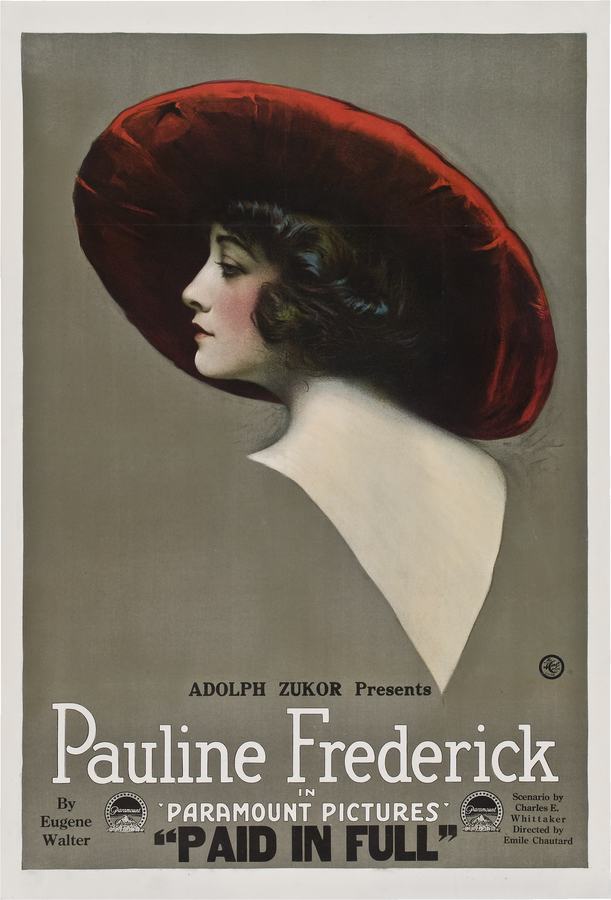
A definitive 7.1/10 rating for a film that redefined the boundaries of cult cinema. Paid in Full remains a cornerstone of transgressive art.
The 1919 silent feature Paid in Full stands as a stark tableau of moral decay, marital betrayal, and the corrosive allure of wealth. Directed by Frank S. Beresford and penned by a trio of seasoned screenwriters—Beresford, Charles E. Whittaker, and Eugene Walter—the film weaves a narrative that feels both timeless and unsettlingly contemporary.
\nAt its core, the story follows Joe Brooks (Wyndham Standing), a diligent bookkeeper whose seemingly modest position aboard Captain Williams' (Frank Losee) shipping enterprise belies a simmering desperation. The captain, a paternal figure with a predilection for the elegance of Emma Brooks (Vera Beresford), unwittingly becomes the catalyst for Joe’s transgression. When Jimsy Smith (Robert Cain), a dock laborer whose affection for Emma borders on the obsessive, discovers the embezzlement, the film’s tension pivots from financial intrigue to a battle of honor.
\nThe screenplay deftly manipulates the audience’s sympathies, oscillating between empathy for a husband driven by greed and revulsion at his willingness to compromise his wife's virtue. The captain’s proposition—offering a receipted bill in exchange for Emma’s honor—functions as a grotesque moral litmus test, exposing the fragile veneer of respectability that cloaks the characters’ true natures.
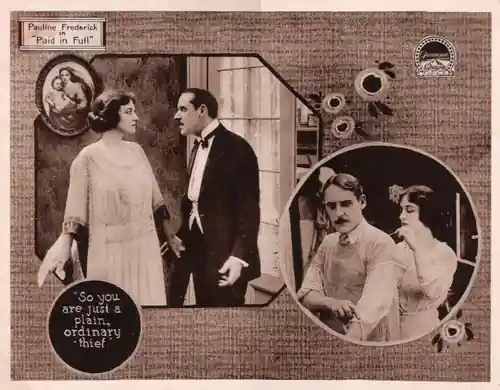
Wyndham Standing delivers a performance that is at once restrained and volatile. His portrayal of Joe’s internal conflict is conveyed through subtle gestures—a clenched jaw, a lingering stare at the ledger—allowing the silent medium to speak volumes without the crutch of dialogue. Vera Beresford’s Emma radiates a luminous resilience; her eyes, often illuminated by a soft golden glow, betray a depth of sorrow that transcends the script’s constraints.
\nPauline Frederick, though in a supporting role, injects a poignant counterpoint, embodying the societal expectations placed upon women in the post‑World War I era. Her brief yet impactful scenes echo the thematic concerns of contemporaneous works such as A Wife on Trial, where the courtroom becomes a metaphorical arena for gendered power struggles.
\nVisually, Paid in Full exploits the chiaroscuro lighting techniques popularized by German Expressionism, casting long shadows across the ship’s cramped offices and the captain’s opulent quarters. The use of deep blacks juxtaposed with sudden bursts of dark orange—particularly during the climactic confrontation—creates a visceral sense of impending doom.
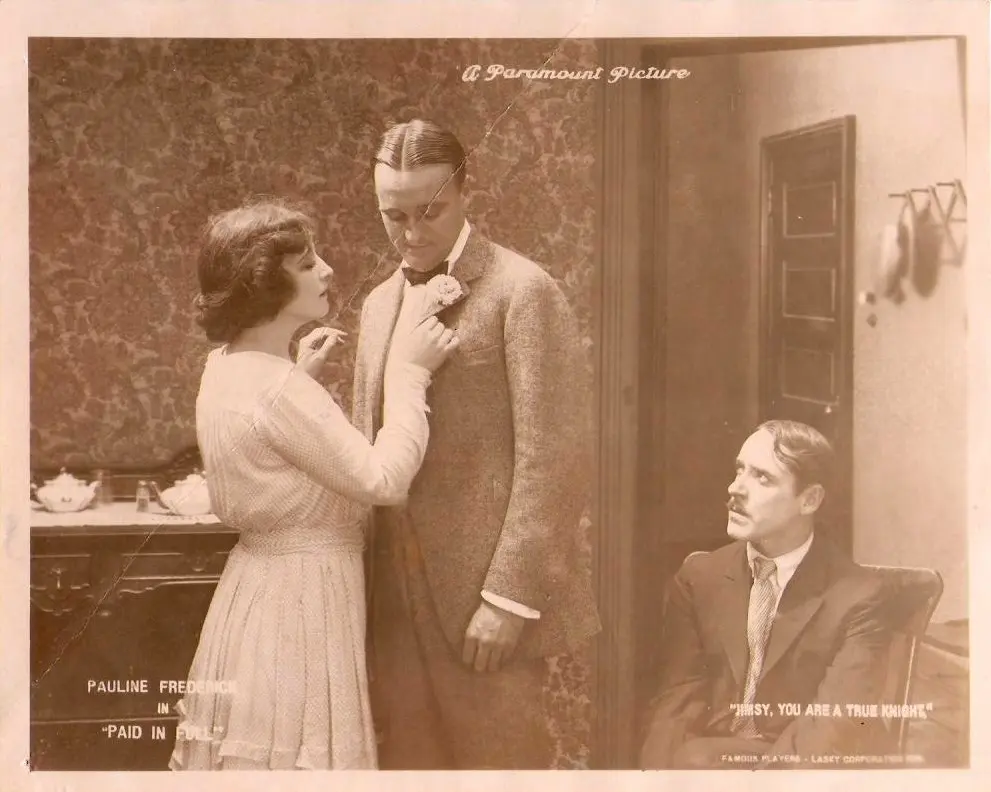
The film’s mise‑en‑scène is meticulous. The ledger, a recurring prop, is shot from low angles, emphasizing its dominance over Joe’s psyche. The receipt, when finally handed to Emma, glints with a yellowed hue, symbolizing both the promise of redemption and the tarnish of compromise.
\nWhen placed alongside other silent dramas of the period—such as With Hoops of Steel and The Woman Who Gave—Paid in Full distinguishes itself through its unflinching examination of personal integrity versus societal expectation. While the former films often resolve conflicts through external redemption arcs, this film internalizes the moral reckoning, culminating in Joe’s self‑inflicted demise.
\nThe narrative’s bleak resolution—Joe’s suicide—mirrors the fatalistic tones of A Fool There Was, where characters are inexorably drawn toward ruin by their own flaws.
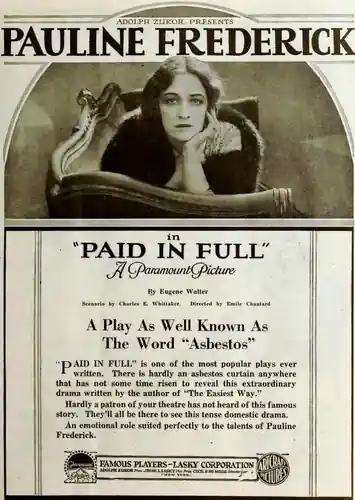
The film’s exploration of honor is two‑fold. On one level, Emma’s refusal to barter her virtue for financial absolution serves as a feminist assertion of agency, predating the more overtly political narratives of later works like Damon and Pythias. On another level, Joe’s descent illustrates the corrosive impact of unchecked capitalism on personal morality—a theme resonant with the economic anxieties of the post‑war period.
\nThe captain’s role is equally ambivalent. His affection for Emma appears benevolent, yet his willingness to exploit her honor for a receipt reveals a patriarchal entitlement that underscores the film’s critique of power dynamics.
\nThe editing is brisk, with cross‑cutting that heightens the suspense as Jimsy races to intervene. Intertitles are sparingly used, each line rendered in an elegant serif that mirrors the film’s period aesthetic. When performed with a live piano accompaniment, the score—often employing a somber minor key punctuated by occasional sea‑blue melodic motifs—accentuates the maritime setting while underscoring the emotional turbulence.
\nAlthough Paid in Full has largely faded from mainstream retrospectives, recent scholarship has begun to reevaluate its contribution to early narrative cinema. Film historians note its sophisticated character study and its daring portrayal of a woman who refuses to be commodified—a narrative choice that anticipates the more overt feminist cinema of the 1920s and 1930s.
\nThe film’s preservation status remains precarious, with only fragmented reels housed in a handful of archives. This scarcity only heightens its mystique, prompting cinephiles to seek out related works for comparative analysis, such as Little Miss Grown‑Up and The Spanish Jade, both of which echo similar motifs of honor and sacrifice.
\nIn sum, Paid in Full is a masterclass in silent-era storytelling, marrying economical plot construction with profound emotional resonance. Its dark palette, both literal and figurative, invites viewers to contemplate the price of integrity in a world where financial desperation can eclipse human decency. For scholars, enthusiasts, and casual viewers alike, the film offers a compelling window into the moral quandaries that defined an era of cinematic experimentation.
IMDb 5.8
1915
Community
Log in to comment.