Summary
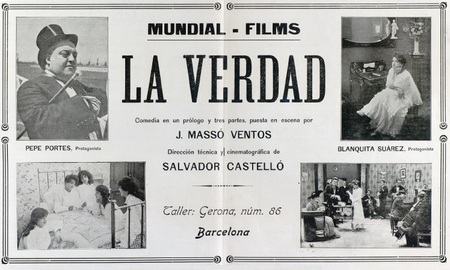
Anaïs, a celebrated photojournalist whose career is built on the pursuit of stark, unvarnished realities, finds her meticulously curated existence violently upended by the sudden, deeply ambiguous death of her estranged sister, Isabella. This precipitous event compels Anaïs to return to the ancestral home, a sprawling, dilapidated estate shrouded in the melancholic mists of the Galician countryside—a place she had vehemently excised from her life decades earlier. What begins as a quest for clarity regarding Isabella's demise swiftly transmutes into a descent into a labyrinth of spectral memories and suffocating silences. Isabella's life, superficially one of quiet domesticity, progressively exposes fissures of a profound, unsettling secret, hinting at a clandestine entanglement with Father Mateo, a charismatic yet inscrutable spiritual leader whose influence permeates the secluded community. As Anaïs meticulously sifts through the remnants of her sister’s life, she is both aided and obstructed by the cryptic pronouncements of Dolores, the estate’s long-serving, stoic housekeeper, and the fragmented, often contradictory, testimonies of local villagers like Sofia and Elena. The film, a tour de force of psychological deconstruction, masterfully blurs the insidious lines between objective remembrance and subjective fabrication. It culminates not in a singular, cathartic revelation, but in a chilling, unsettling realization: "La verdad" (The Truth) is not a singular, immutable entity, but a shifting, treacherous mirage, perpetually reshaped by the insidious currents of trauma, guilt, and the desperate human yearning for narrative coherence. The final frames offer not resolution, but an unnerving circularity, suggesting that some truths are too corrosive to be fully confronted, leaving Anaïs irrevocably adrift in a sea of her own making, forever grappling with the spectral echoes of what might have been.
Review Excerpt
"
From the very first lingering shot, La verdad establishes itself not merely as a film, but as an experience—an unsettling excavation into the treacherous terrain of memory, identity, and the elusive nature of truth itself. José Massó Ventos, the visionary writer behind this Spanish masterpiece, crafts a narrative so intricately woven that it demands not just passive viewing, but active participation, challenging the audience to question every perceived reality. It’s a work that doesn't jus..."