DbcultAccessing Vault...
Cult Review
Senior Film Conservator
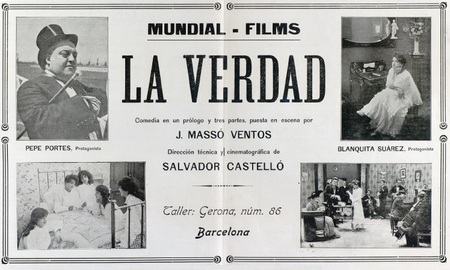
From the very first lingering shot, La verdad establishes itself not merely as a film, but as an experience—an unsettling excavation into the treacherous terrain of memory, identity, and the elusive nature of truth itself. José Massó Ventos, the visionary writer behind this Spanish masterpiece, crafts a narrative so intricately woven that it demands not just passive viewing, but active participation, challenging the audience to question every perceived reality. It’s a work that doesn't just tell a story; it unravels one, thread by agonizing thread, revealing the corroded underbelly of a family's legacy and the psychological scars it leaves across generations.
The film centers on Anaïs, portrayed with an astonishing blend of steely resolve and profound vulnerability by Lina Leroy. Anaïs is a photojournalist, a woman whose professional life is dedicated to capturing objective reality, a stark irony given the subjective quagmire she is about to enter. Her world, built on tangible evidence and documented facts, begins to fracture upon receiving news of her estranged sister, Isabella's, mysterious death. Florentina Alis inhabits Isabella through a series of fragmented flashbacks and the spectral presence she leaves behind, a performance that is all the more impactful for its elusive nature. The tension between the sisters, a chasm of unspoken resentments and shared traumas, forms the emotional bedrock of Anaïs's reluctant return to the decaying family estate in rural Galicia.
The setting itself is a character: a gothic, sprawling edifice that breathes with forgotten secrets and a palpable sense of dread. The cinematography, utilizing deep shadows and a muted color palette punctuated by moments of stark, almost clinical light, mirrors Anaïs's journey into the murky depths of her family's past. Every creaking floorboard, every rustle of ancient curtains, contributes to an atmosphere of pervasive unease. This is not a horror film in the conventional sense, but its psychological terror is far more insidious, burrowing under the skin and lingering long after the credits roll. The landscape, too, plays a crucial role, with the omnipresent Galician mists serving as a metaphor for the obfuscation of truth, a veil that constantly shifts, revealing glimpses only to obscure them once more.
As Anaïs begins to investigate Isabella's life, she uncovers disturbing connections to a local, enigmatic spiritual figure, Father Mateo, brought to life with an unnerving calm by José Portes. Portes imbues Father Mateo with an aura of benevolent manipulation, a man whose words offer solace but whose motives remain shrouded in ambiguity. His presence casts a long shadow over the community, and Isabella's involvement with his teachings adds another layer of complexity to her already opaque existence. Was she a devoted follower, a victim, or an active participant in something far darker? The film masterfully withholds definitive answers, forcing Anaïs, and by extension the viewer, to piece together a narrative from unreliable sources.
The supporting cast delivers performances that are equally nuanced and compelling. Berta Kid, as the estate's stoic and long-serving housekeeper, Dolores, is a revelation. Her character, initially appearing as a peripheral figure, gradually reveals herself as a repository of the family’s darkest secrets, her cryptic pronouncements acting as both guides and misdirections for Anaïs. Dolores’s loyalty is ambiguous, her knowledge profound, and Kid's portrayal is a masterclass in understated power. Similarly, Blanca Suárez and Milagros Nicolau, playing local villagers Sofia and Elena, respectively, contribute vital pieces to the fragmented puzzle, their testimonies often contradicting each other, highlighting the subjective nature of truth in a small, insular community where secrets are fiercely guarded.
José Massó Ventos’s screenplay is a marvel of psychological precision. It eschews conventional plot structures, instead opting for a mosaic of fragmented memories, unsettling revelations, and dreamlike sequences that blur the lines between reality and delusion. The dialogue is sparse but potent, each word carrying significant weight, often leaving more unsaid than spoken. This deliberate narrative choice immerses the audience directly into Anaïs’s deteriorating mental state, creating a powerful sense of empathy and shared disorientation. The film doesn't offer easy answers; it provokes questions, forcing introspection on the audience about their own relationship with truth, memory, and the narratives they construct to make sense of their lives.
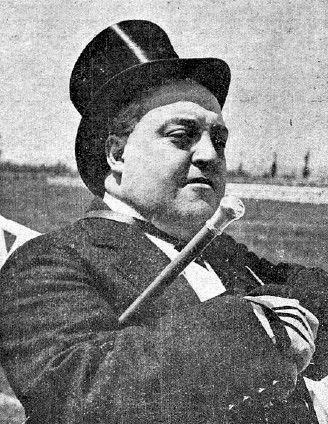
The thematic core of La verdad resonates deeply with the philosophical explorations found in other cinematic works that delve into the malleability of perception. One might draw parallels to the psychological intensity of Casus, which similarly dissects a pivotal event from multiple, often conflicting, perspectives, demonstrating how a single 'case' can spawn myriad subjective realities. While La verdad is less concerned with legalistic definitions, it shares that film's fascination with the unreliable narrator and the insidious ways trauma can rewrite personal histories. The film also evokes the melancholic contemplation of human nature’s darker impulses, echoing the unsettling revelations found in a film like The Law of Nature, albeit through a more intimate, familial lens rather than a grand societal one.
The sound design in La verdad is particularly noteworthy. It's a symphony of subtle disquiet: the whisper of wind through decaying corridors, the distant toll of a church bell, the oppressive silence that follows a shocking revelation. These auditory elements are not mere background; they are integral to building the film's pervasive sense of dread and psychological tension, often conveying more than any spoken word could. The score, when it emerges, is haunting and sparse, a minimalist composition that underscores Anaïs’s isolation and growing despair without ever becoming melodramatic. It’s a testament to the film's meticulous craftsmanship that every technical element serves the overarching narrative and thematic goals.
Lina Leroy’s performance as Anaïs is a tour de force, a masterclass in conveying profound internal turmoil with minimal external flourish. Her face, often framed in close-up, becomes a landscape of shifting emotions—doubt, fear, anger, and a desperate yearning for clarity. She carries the film’s immense emotional weight, guiding the audience through Anaïs's descent into a personal hell where the past is never truly past. The transformation she undergoes, from a seemingly composed professional to a woman teetering on the brink of psychological collapse, is utterly convincing and deeply affecting. This is the kind of performance that defines a career, cementing Leroy as an actress of formidable range and depth.
The film's exploration of memory is particularly resonant. It posits that memory is not a fixed, immutable record, but a fluid, often treacherous construct, constantly reshaped by present anxieties and past traumas. Anaïs's own recollections of her childhood, initially presented as clear and distinct, begin to warp and contradict under the pressure of new information, forcing her to confront the unsettling possibility that her entire life narrative might be built on a foundation of lies or deliberate omissions. This theme is handled with remarkable sensitivity and intellectual rigor, avoiding easy answers and instead embracing the inherent ambiguity of human recall.
La verdad is not a film for those seeking neat resolutions or comforting conclusions. Its power lies in its relentless refusal to provide them. The ending, far from offering catharsis, leaves Anaïs, and the viewer, in a state of unsettling ambiguity, grappling with the realization that some truths are too corrosive to be fully faced, too fragmented to be fully understood. It suggests that perhaps the ultimate truth is that there is no single, monolithic truth, only a multitude of perspectives, each colored by personal experience, guilt, and the desperate human need to create a coherent narrative, however flawed. This lingering uncertainty is precisely what makes the film so impactful, ensuring its themes reverberate long after the final frame fades to black.
The masterful direction, combined with José Massó Ventos's profound script, elevates La verdad to the realm of essential viewing for anyone interested in serious, thought-provoking cinema. It is a film that demands to be discussed, dissected, and revisited, each viewing potentially revealing new layers of meaning and further challenging one’s perceptions. Its artistic integrity is unassailable, and its contribution to the canon of psychological drama is significant. This is a film that doesn't just entertain; it interrogates, leaving an indelible mark on the viewer's psyche and prompting a deeper reflection on the very nature of reality and the stories we tell ourselves to survive.

IMDb —
1920
Community
Log in to comment.