Summary
Vienna, 1917: a city exhaling the last opium breath of empire. Into this twilight stumbles Thomas, a shell-shocked cartographer who can no longer draw borders because every frontier has bled him dry. He drifts from café to flophouse, pocketing cigarette butts and the addresses of women who promise forgetting. One night he rescues Liesel, a music-hall contortionist whose spine bends like the Danube, from a naval officer ready to trade her for a morphine vial. Their pact is wordless: she will chart the map of his nightmares if he will be the still point around which her body can finally rest. Together they descend the social ladder—past soup kitchens smelling of turnip and despair, past factories where girls paint radium onto watch dials until their bones glow like saints—until they fetch up in the Spittelberg slums, renting a room whose wallpaper sweats arsenic. Here Thomas begins to ink a secret atlas: not of nations but of wounds, every scar on every passer-by translated into coastlines, every laceration a gulf. Liesel dances for officers who pay in butter and propaganda; he sells his maps to anarchists planning the next revolution. When the child arrives—mute, with eyes the color of stale beer—they name him Otto after the emperor nobody admits still exists. The war ends on paper, yet the city continues detonating: flour riots, influenza, the return of men whose faces have been replaced by copper masks. In the blackout of 1919 Thomas finally recognizes the topography of grief: it is not a territory to be conquered but a floodplain that must be entered barefoot. He burns his maps, mixes the ash with condensed milk, feeds the paste to Otto so the boy can internalize the shape of loss. Liesel apprentices herself to an undertaker; her choreography shifts from erotic arabesques to the measured gestures of someone who lowers tiny coffins into muddy graves. The last reel unspools during a lantern festival meant to celebrate the republic. While citizens release paper balloons scribbled with wishes, Thomas and Liesel drift down the canal in a stolen funeral gondola. Between them rests Otto, no longer breathing. They slit the child’s shroud, weight it with the undertaker’s iron crosses, let the current claim him. Above them the sky bursts into counterfeit constellations—every lantern a star that never earned its brightness—yet the couple never look up; they keep their gaze on the black water, the only map that ever told them the truth. Fade-out on their silhouettes dissolving into industrial fog, Vienna humming like a hive that has forgotten it once dreamed of honey.
Review Excerpt
"
No title card prepares you for the first image: a cartographer’s compass scratching through paper as if trying to wound the world. From that instant Lebenswogen announces itself—not as melodrama but as a hemorrhage of ink, sex, and imperial debris.
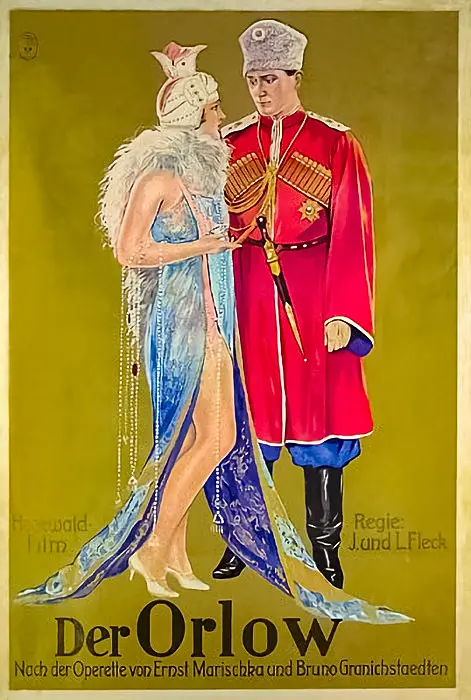
The Fleck husband-and-wife directing team, usually relegated to footnotes in Weimar histories, here achieve a fractal intimacy: every close-up feels like a biopsy of the Austro-Hungarian corpse. Camera setups are low, conspiratorial, as though the ..."