DbcultAccessing Vault...
Cult Review
Senior Film Conservator
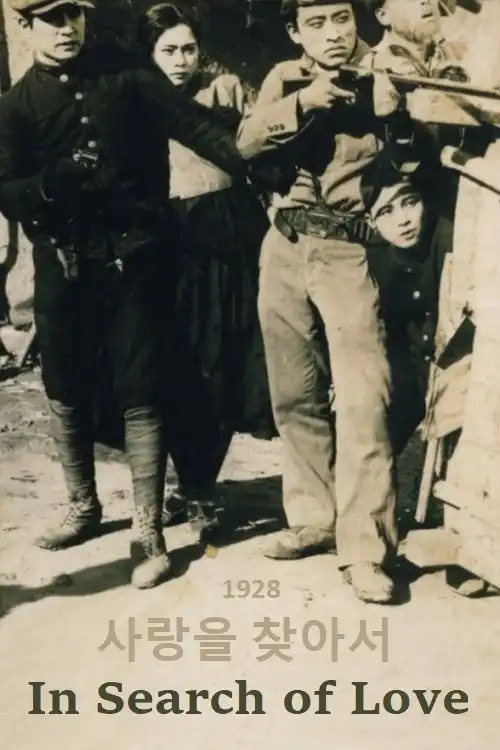
If you're into historical dramas with a bit of a raw, desperate edge, then Looking for Love might just be digging up today. It's not a cozy watch, but for anyone curious about the struggles of Korean immigrants in a really difficult time, it offers a stark, sometimes uncomfortable look. However, if you're expecting big-budget polish or a happy ending, you'll probably want to skip this one entirely.
The film starts with our lead, played by Kyeong-seon Lee, leaving Korea. It’s not a grand departure, more like a quiet fading out, you know? You feel the weight of him stepping away, but also this strange hope, almost. Like he’s chasing something better, a new start. The shots of him on the road, looking back, are simple but really stick with you.
Then the news hits, hard. Word gets back about Chinese bandits attacking the village where other Korean immigrants had settled. It’s not some big, dramatic reveal. Just whispers, then a few more solid reports from a traveler, all hushed tones. But the way it’s shown, the faces of his friends changing around him, it sells the dread. Suddenly, that new start feels like a pretty bad idea. 😟
That’s when the decision comes. Not really a choice, is it? More like an instinct, a gut punch. Kyeong-seon Lee’s character, with his pals, they gotta go back. To Korea. To help, to fight, to just be there. It's a pull stronger than any danger, stronger than any hope for a peaceful life somewhere else. You see it in their eyes.
The journey back, man, it’s not easy. You see them just walking. So much walking. Through all sorts of terrain – dusty roads, rocky paths, maybe even some sparse forest. There’s a scene where they’re just trudging up this one hill, and the shot holds, like it wants you to feel every single step, every bit of their exhaustion. It’s not exciting, no, but it makes you feel it. The dust, too. There’s a lot of dust. You almost taste it watching.
And then there's the border. This is where things get really tense, a palpable shift. Japanese police officers are everywhere, rigid, unsmiling. They are not messing around. No friendly warnings. Just straight-up, stark warnings about shooting trespassers. The tension builds pretty slowly, but you feel it tightening with every frame, every glimpse of a uniform. It's less about fast action and more about the suffocating dread, knowing what's at stake.
There’s a moment, I think it was Bong-chun Yun’s character, he just looks at the border line, at the patrols, and his face... it says everything. No dialogue needed. Just this mix of fear and absolute resolve. You almost expect him to just charge, reckless, but he doesn't. They plan. Or at least, they try to. A quick huddle, hushed words.
The actual crossing attempt, wow. It’s chaotic, in a really understated way. You hear the shots first, sharp cracks that echo, then you see the panic. It’s not pretty. People scrambling, falling. The camera work during this part feels a bit shaky, almost like someone was

IMDb —
1918
Community
Log in to comment.