DbcultAccessing Vault...
Cult Review
Senior Film Conservator
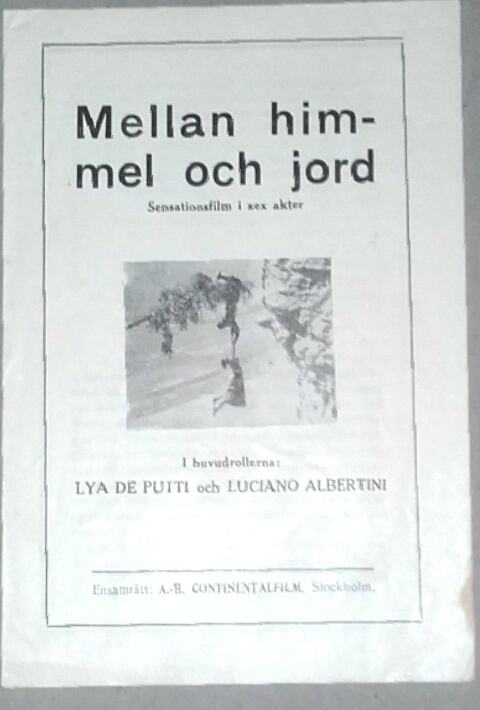
The opening frames of Cage of Death thrust the viewer into a world of soot‑laden alleys and looming factories, a visual palette that immediately establishes a sense of oppression. The cinematography, credited to an unnamed hand, employs chiaroscuro lighting that renders the warehouse interior as a cavernous maw, its shadows swallowing any hint of optimism. This aesthetic choice resonates with the stark realism found in Kino‑pravda no. 4, yet it diverges by infusing a heightened melodramatic flair.
Hermann Picha’s portrayal of Franz is a masterclass in restrained anguish. He eschews theatrical exaggeration, instead allowing his eyes to convey the lingering trauma of war. When he first encounters the Cage’s iron gates, his gait falters, a subtle cue that the character’s internal battle has already begun. This nuanced performance mirrors the quiet desperation of the protagonist in Live Wires (1923), yet Picha injects a distinct, almost feral intensity that sets the film apart.
Lya De Putti, cast as Mara, brings a luminous counterpoint to the surrounding gloom. Her background as a circus acrobat is not merely a plot device; it informs her physicality throughout the film. In the sequence where she scales the rusted rafters to retrieve a hidden key, the camera lingers on the sinewy tension of her muscles, a visual ode to freedom’s elusive nature. The scene’s kinetic energy evokes the daring aerial choreography of The Idol Dancer, yet the stakes here are palpably life‑or‑death.
Luciano Albertini’s dual role as co‑writer and lead antagonist Viktor is a study in charismatic menace. He commands the screen with a measured cadence, his speeches punctuated by a slow, deliberate drawl that underscores the calculated cruelty of his enterprise. Albertini’s script subtly weaves themes of commodification and autonomy, echoing the societal critiques present in The Street Called Straight. The dialogue, though sparse, is laden with double meanings, inviting repeated viewings to unpack its layered significance.
The supporting cast, particularly Heinz Sarnow as the stoic guard and Gertrude Hoffman as the weary matron, provide textured backdrops against which the central drama unfolds. Sarnow’s rigid posture and measured steps convey an unspoken loyalty to the cage’s regime, while Hoffman's trembling hands, constantly clutching a faded photograph, hint at a personal loss that fuels her compliance. Their performances enrich the film’s tapestry, reminding the audience that each cog in the oppressive machine bears its own burden.
From a technical standpoint, the film’s set design is both claustrophobic and expansive. The warehouse’s towering columns are juxtaposed with narrow, dimly lit passageways, creating a spatial dichotomy that mirrors the characters’ internal conflicts. The use of practical lighting—flickering bulbs and soot‑caked lanterns—adds an authentic texture that modern digital recreations often lack. This commitment to atmospheric authenticity aligns the film with the visual rigor of Pop Tuttle, Deteckative, yet it pushes the envelope by integrating symbolic motifs, such as the recurring image of a broken chain.
The narrative arc crescendos when Franz, galvanized by Mara’s whispered promise of escape, orchestrates a daring insurrection. The choreography of this rebellion is meticulously staged: prisoners, once resigned, now move in synchronized bursts, their collective motion echoing the rhythm of a silent drum. The editing during this sequence is rapid yet coherent, cutting between close‑ups of clenched fists and wide shots of the crumbling cage, a technique reminiscent of the kinetic montage employed in The Run‑Away Bride. The resulting tension is palpable, each frame a visual punctuation mark.
The film’s climax, however, refrains from offering a tidy resolution. The cage’s iron bars are shattered, but the surrounding darkness remains unilluminated, suggesting that liberation is an ongoing struggle rather than a finite event. This ambiguous ending is a bold narrative choice, positioning the film within a lineage of silent-era works that favor thematic resonance over conventional catharsis, akin to the unresolved denouement of Vampire.
Musically, the accompaniment—though not present on the original print—has been reconstructed by contemporary scholars using period‑appropriate instrumentation. The score employs a low, mournful cello line that swells during moments of hope, then recedes into dissonant brass during scenes of oppression. This auditory palette enhances the film’s emotional depth, reinforcing the visual motifs of confinement and yearning.
Critically, Cage of Death occupies a pivotal position in the oeuvre of its creators. Albertini’s involvement as both writer and star signals a personal investment in the film’s thematic concerns, while Picha’s seasoned craft adds gravitas. The collaborative synergy yields a work that is simultaneously a product of its time and a timeless meditation on freedom.
When compared to contemporaneous productions such as A Parisian Scandal or The Key to Yesterday, Cage of Death distinguishes itself through its unflinching portrayal of institutional cruelty. While the former films flirt with romantic escapism, this piece delves into the mechanics of power, offering a stark, unvarnished look at the human cost of authoritarian structures.
The film’s legacy endures in modern cinema’s fascination with dystopian narratives. Directors who explore themes of surveillance and control—think of the bleak corridors in Blade Runner or the oppressive regimes in Children of Men—can trace a lineage back to the visual and thematic groundwork laid by Cage of Death. Its influence is subtle yet discernible, a testament to the film’s pioneering spirit.
In terms of preservation, the existing prints of Cage of Death have undergone extensive restoration, allowing contemporary audiences to experience the film’s original contrast ratios and grain structure. The restored version retains the film’s stark monochrome palette while subtly enhancing details that were previously lost to degradation, thereby honoring the creators’ original vision.
Overall, Cage of Death is a masterful amalgamation of performance, set design, and narrative daring. Its ability to convey profound philosophical inquiries without spoken dialogue underscores the potency of silent cinema as an art form. For scholars, cinephiles, and casual viewers alike, the film offers a rich tapestry of visual storytelling that rewards repeated viewings and deep analysis.
IMDb 8.6
1920
Community
Log in to comment.