DbcultAccessing Vault...
5.2/10
Senior Film Conservator
A definitive 5.2/10 rating for a film that redefined the boundaries of cult cinema. Muraliwala remains a cornerstone of transgressive art.
Is Muraliwala worth watching today? Short answer: yes, absolutely, but with significant caveats. This isn't a film for casual viewing; it's a profound, often challenging, cinematic artifact that demands a specific kind of engagement.
It's a film for those deeply invested in the philosophical underpinnings of devotional cinema and the rich tapestry of Indian mythology, particularly the Vaishnavite tradition. However, it is decidedly NOT for viewers seeking fast-paced narrative, contemporary production values, or a purely entertainment-driven experience.
Muraliwala is more than just a film; it’s a living document of early cinematic storytelling, a philosophical treatise disguised as a mythological drama. Released at a time when cinema was still finding its voice, it grapples with themes that remain eternally relevant: the nature of divine love, the conflict between spiritual devotion and societal expectations, and the ultimate realization of omnipresence. The film’s ambition, even by modern standards, is staggering, attempting to translate complex theological concepts into a visual language.
The narrative, drawn from the Gita Govinda and Vaishnavite traditions, centers on Krishna, not just as a mischievous child, but as a divine catalyst. His interaction with Radha, a married devotee, forms the core conflict. Radha’s unwavering spiritual connection to Krishna clashes directly with her duties as a wife to Raman, creating a domestic and spiritual tension that drives the entire plot. This isn't merely a love triangle; it’s a philosophical debate given human form.
The critical moment, when Krishna commands Radha to see him in her husband, Raman, is the film's philosophical pivot. It’s a bold assertion, challenging the conventional understanding of devotion and pushing the boundaries of spiritual enlightenment. This command elevates the film beyond a simple retelling of a myth, turning it into an exploration of Advaita Vedanta principles within a devotional framework. It works. But it’s flawed.
The heart of Muraliwala beats with the tension between Radha's transcendental devotion and the very real, very human jealousy of her husband, Raman. This isn't a simple tale of good versus evil, but rather a nuanced exploration of human limitations in the face of divine love. Radha’s struggle is not just external, against her husband and mother-in-law, but internal, as she strives to reconcile her spiritual yearning with societal norms.
The film dares to ask: can divine love exist within the confines of earthly relationships? Can one truly see the omnipresent in the immediate? These are weighty questions, handled with a sincerity that, despite the film's age, still resonates. The portrayal of Raman's doubt and jealousy, though perhaps melodramatic by today's standards, serves to ground the divine narrative in relatable human emotions. His journey from suspicion to submission is as central to the film's message as Radha's own enlightenment.
For contemporary audiences, approaching Muraliwala requires a recalibration of expectations. This is not a blockbuster, nor is it designed for passive consumption. It is a piece of cinematic history, a cultural artifact that offers a window into the narrative styles and philosophical concerns of its era.
This film works because it tackles profound philosophical and spiritual questions with an earnestness and directness that is rare in modern cinema. Its unique interpretation of the Radha-Krishna narrative, emphasizing omnipresence, provides a fresh perspective even for those familiar with the mythology.
This film fails because its pacing can be excruciatingly slow for modern viewers, and its production values, while impressive for its time, may appear rudimentary. The acting style, typical of early cinema, often leans towards theatricality rather than naturalism, which can create a barrier to immersion.
You should watch it if you have an academic interest in early Indian cinema, a deep appreciation for mythological and devotional narratives, or a desire to explore the philosophical depths of the Vaishnavite tradition. It's an experience for the patient and the curious, not for those seeking light entertainment.
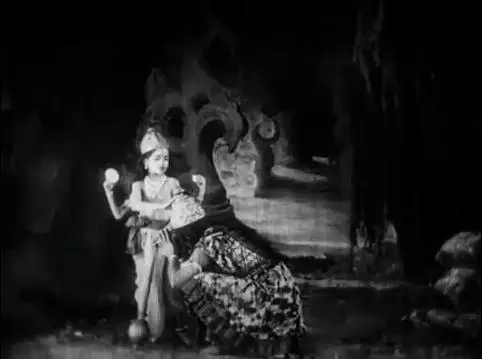
While specific directorial credits aren't provided, the overall vision behind Muraliwala is undeniably ambitious. The film attempts to visualize complex spiritual tenets, a task that even today's filmmakers with advanced technology would find challenging. The decision to portray Krishna holding four sacraments with four arms, for instance, is a powerful visual metaphor for divine completeness and universal authority. This isn't just a simple special effect; it's a symbolic declaration, asserting Krishna's ultimate form and Raman's ultimate realization.
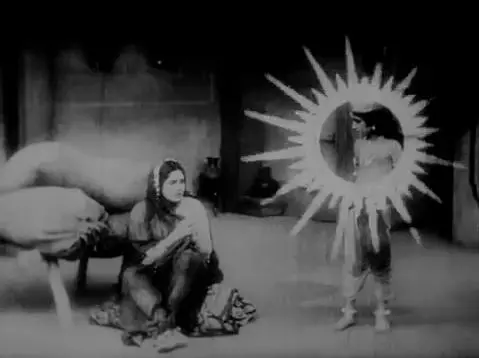
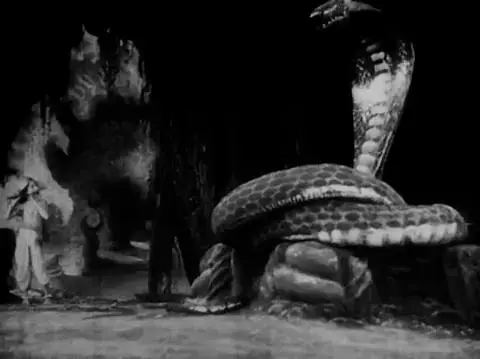
The sequence where Krishna conquers Kaliya in the poisoned lake, returning on the serpent-king’s hood, is another moment of audacious visual storytelling. It's an iconic image in Hindu mythology, and its cinematic representation, however rudimentary by modern standards, would have been groundbreaking. This scene serves as a dramatic externalization of the internal spiritual victory achieved by Radha and Raman, tying the cosmic to the personal.
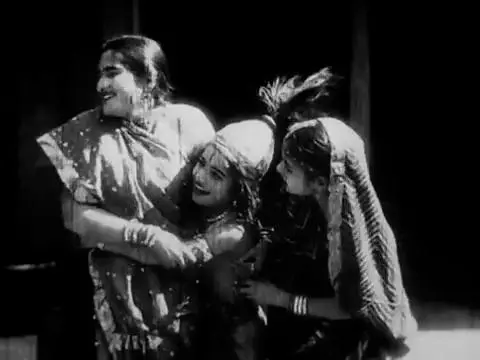
The cast, including Lalji Gokhale, Padmadai, and Bal Gajbar, navigates a difficult balance between the human and the divine. Padmadai, likely playing Radha, carries the emotional weight of a woman torn between earthly duties and spiritual calling. Her performance, though perhaps stylized for its era, must convey a profound inner transformation, moving from yearning devotee to enlightened soul. The subtlety required for such a role, particularly in an age of less nuanced acting, would have been immense.
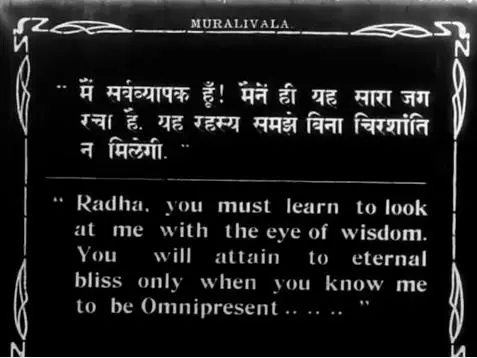
Lalji Gokhale, presumably portraying Krishna, faces the unique challenge of embodying both the playful tormentor and the omniscient deity. His command to Radha, “
You will attain me when you know me to be Omnipresent. Unless you learn to realize me in your husband Raman, you will not attain eternal happiness.” is delivered with an authority that must convey divinity, yet with an underlying compassion that makes the spiritual lesson palatable. This is not a performance easily achieved.
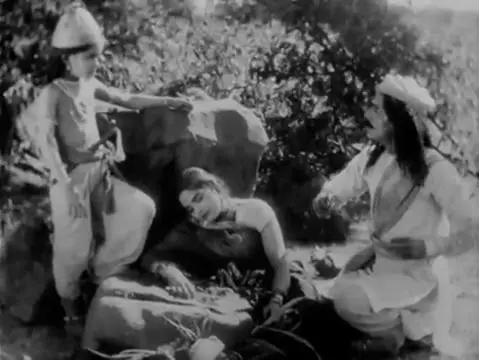
Bal Gajbar, likely as Raman, has the unenviable task of portraying doubt, jealousy, and ultimately, submission. His character's journey is perhaps the most human and relatable, struggling with the concept of sharing his wife's devotion with a divine being. The scene where he lies down in submission before Krishna signifies not just a physical act, but a complete surrender of ego and doubt, a moment that requires a compelling, if theatrical, performance to land effectively.
Given the era, the cinematography of Muraliwala would have been functional, focusing on clear storytelling and evocative imagery rather than complex camera movements. The visual language would have relied heavily on tableau-like compositions, allowing the audience to absorb the philosophical weight of each scene. The contrast between the pastoral settings of Krishna’s pranks and the more intense, dramatic confrontations within Radha’s home would have been key.
The pacing is undeniably slow, a characteristic common to early cinema. This deliberate rhythm, however, is not without purpose. It allows the audience time to contemplate the philosophical dialogues and the internal struggles of the characters. Each gesture, each line of dialogue, is given space to breathe, mirroring the contemplative nature of the spiritual journey itself. While it might test the patience of modern viewers, it’s crucial to understanding the film’s original intent and impact. Comparing it to something like So This is Eden or The Conquest of Canaan, both from similar periods, highlights how deliberate pacing was a stylistic choice, not merely a technical limitation.
The tone of Muraliwala is reverential and didactic, yet it manages to infuse moments of playful mischief, particularly in Krishna’s early scenes. This blend of lightheartedness and profound seriousness is a hallmark of the Krishna mythology. The film maintains a consistent focus on its central philosophical debate, never straying far from the question of true devotion and the nature of the divine. It's a film that seeks to instruct as much as it seeks to entertain, a characteristic that sets it apart from many contemporary productions.
One unconventional observation is how effectively the film uses the domestic setting—Radha's home, her husband, her mother-in-law—as a crucible for spiritual transformation. Instead of seeking enlightenment in secluded ashrams, Radha is commanded to find it within the very relationships that seem to bind her. This grounds the abstract concept of omnipresence in the tangible, making the spiritual journey incredibly potent. It’s a surprisingly progressive message for its time, challenging escapist notions of spirituality.
Muraliwala is not merely a film to be watched; it is an experience to be engaged with, a piece of cinematic history that demands respect and patience. It stands as a testament to the power of early filmmakers to tackle complex spiritual narratives with ambition and conviction. While its slow pace and archaic production values will undoubtedly deter many, those who commit to its journey will find a profound and thought-provoking exploration of devotion, doubt, and the ultimate realization of the divine within the everyday.
It's a challenging film, yes, but its unique philosophical stance and historical significance make it an essential watch for cinephiles and cultural scholars alike. It may not offer the immediate gratification of modern blockbusters like Open Your Eyes, but its enduring questions and innovative storytelling for its time leave a far deeper impression. This isn't just a movie; it's a spiritual discourse captured on celluloid, a bold statement on the nature of love and divinity that continues to echo through time. Its value lies not in its entertainment factor, but in its profound cultural and philosophical weight. It's a film that asks you to look inward, and for that, it deserves its place in the cinematic pantheon.
IMDb —
1926
Community
Log in to comment.