Summary
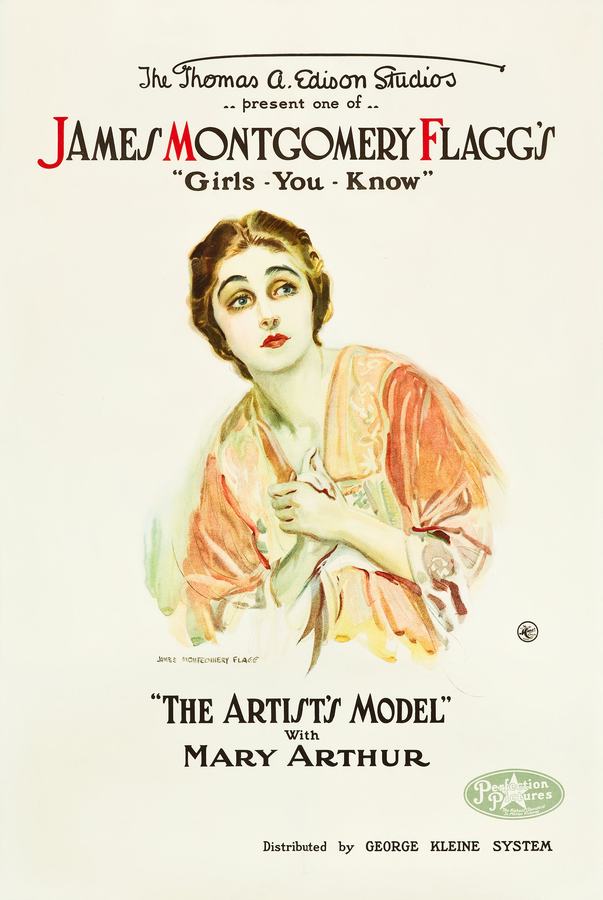
In the vibrant, tumultuous art scene of early 20th-century New York, 'The Artist's Model' unfurls a poignant narrative of creative genesis, burgeoning affection, and the relentless tug-of-war between artistic purity and societal expectation. John Sterling (Jack Eaton), a painter of raw, untamed talent, finds himself adrift, his canvases echoing an unarticulated longing for inspiration. His quest culminates in the serendipitous encounter with Lillian Thorne (Mary Arthur), a young woman whose delicate beauty belies a profound strength and an innate, intuitive grasp of aesthetic truth. Lillian, initially hesitant to embrace the controversial role of an artist's model due to prevailing social strictures, ultimately succumbs to the compelling sincerity of John's vision, becoming his muse and, inextricably, the silent architect of his burgeoning heart. Their fragile idyll, however, is imperiled by the magnetic, yet ultimately manipulative, presence of Julian Vance (James Montgomery Flagg), a celebrated portraitist whose charm masks a predatory ambition. Vance, a writer on the film himself, initially positions himself as a mentor, offering Sterling a deceptive path to commercial acclaim, but his true machinations are revealed as he endeavors to prise Lillian from Sterling's orbit, tempting her with promises of a more 'respectable' existence and attempting to corrupt Sterling's artistic integrity. Arthur William Brown, as the shrewd gallery owner Mr. Blackwood, further complicates matters, embodying the commercial pressures that threaten to dilute Sterling's authentic voice. The film culminates in a grand exhibition, a crucible where Sterling's emotionally resonant portrait of Lillian stands in stark, defiant contrast to Vance's more technically polished but emotionally barren works. Lillian, empowered by her journey, asserts her agency, her choice affirming not only Sterling's unique artistic vision but also the profound, unyielding bond forged in the crucible of creation.
Review Excerpt
"
Unveiling the Canvas of the Soul: A Deep Dive into 'The Artist's Model'
Stepping back into the nascent years of cinematic storytelling, one occasionally stumbles upon a creation that, despite its temporal distance, resonates with an almost startling contemporary relevance. Such is the case with 'The Artist's Model,' a film that, even a century after its inception, speaks volumes about the intricate dance between creator and muse, the relentless pursuit of authenticity, and the often-fra..."