DbcultAccessing Vault...
Cult Review
Senior Film Conservator
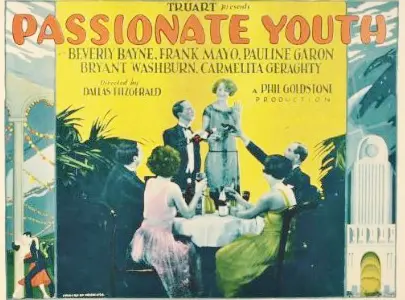
The cinematic landscape of the mid-1920s was often a battleground between the lingering shadows of Victorian morality and the burgeoning light of the Jazz Age. Passionate Youth, released in 1925, stands as a fascinating artifact of this transitional period, blending the high-stakes tension of a courtroom procedural with the simmering passions of a domestic melodrama. It is a film that dares to ask whether a woman can truly possess both professional eminence and maternal sanctity, a theme that resonates even a century later. While some might dismiss it as a relic, a closer inspection reveals a narrative complexity that rivals the psychological depth of The Girl and the Judge.
At the heart of this storm is Mary Rand, portrayed with a steely grace by Beverly Bayne. Mary is not merely a protagonist; she is a disruptor. By leaving her husband, a man of the cloth, to pursue a lucrative law practice, she challenges the very foundations of the nuclear family. This is not the whimsical rebellion seen in The Wildcat, but a calculated, intellectual pursuit of power. The film meticulously tracks her rise to District Attorney, a position that places her at the apex of the legal hierarchy, yet simultaneously isolates her from the emotional needs of her daughter, Henrietta.
The introduction of Corbin, played with a slippery, oily charm by Frank Mayo, introduces a catalyst of chaos. Corbin is the quintessential interloper, a man who views the law not as a pursuit of justice, but as a playground for his own appetites. His simultaneous pursuit of Mary and Henrietta creates a claustrophobic triangle of desire that mirrors the dark psychological undercurrents found in Gefangene Seele. The tension is palpable, as the camera captures the subtle shifts in Mary’s expression—the flicker of doubt, the surge of pride—as she navigates her professional obligations while remaining blind to the rot within her own home.
"The courtroom in Passionate Youth is not just a setting; it is a confessional where the sins of the past are weighed against the evidence of the present."
When Corbin is murdered, the film shifts gears from a social drama into a taut mystery. The suspicion falling on Henrietta, played by the vivacious Pauline Garon, provides the narrative with its most poignant stakes. Garon brings a frenetic energy to the role, a stark contrast to Bayne’s controlled performance. Her plight evokes the same sense of desperate innocence seen in Always in the Way, yet the legal framework provides a more structured path to her eventual exoneration. The cinematography during the investigation scenes utilizes sharp contrasts, perhaps not as jarring as the expressionism in The Unholy Three, but effective enough to heighten the sense of impending doom.
The return of John Rand, the minister-turned-lawyer, is the film's masterstroke of thematic synthesis. Played with a quiet intensity by Bryant Washburn, John represents the bridge between the spiritual and the secular. His defense of his daughter is not merely a legal strategy; it is an act of atonement. The scene where he proves that the gun found on Henrietta was not the murder weapon is a triumph of silent era storytelling. Without the aid of synchronized dialogue, the tension is built through rapid editing and the expressive gestures of the cast. It is a sequence that rivals the technical precision of Time Lock No. 776.
Visually, the film is a masterclass in 1920s mise-en-scène. The opulent interiors of Mary’s law offices contrast sharply with the austere, almost gothic atmosphere of the courtroom. The costume design, particularly for the female leads, serves as a visual shorthand for their shifting social status. Mary’s sharp, tailored suits signal her authority, while Henrietta’s softer, more ethereal gowns emphasize her vulnerability. This attention to detail is reminiscent of the historical grandeur found in Dorothy Vernon of Haddon Hall, though applied here to a contemporary setting.
One cannot discuss Passionate Youth without acknowledging its place within the broader context of silent cinema’s obsession with the 'fallen' woman and the 'modern' girl. While films like Black Oxen explored the rejuvenating power of science and social standing, this film looks inward at the family unit. The reconciliation of John and Mary at the film's conclusion might seem like a concession to traditional values, but it is earned through fire. It is a restoration of balance, suggesting that neither pure piety nor unbridled ambition is sufficient for a meaningful life.
The supporting cast, including James McElhern and Carmelita Geraghty, provides a solid foundation for the central drama. Each character, no matter how minor, feels lived-in, contributing to a sense of a world that exists beyond the frame. This ensemble approach is what gives the film its weight, preventing it from devolving into a mere star vehicle. It shares this quality with other character-driven dramas of the era, such as The Italian, where the environment is as much a character as the protagonists themselves.
The screenplay by J. Grubb Alexander and Ben Allah is remarkably tight. There is very little narrative fat, with each scene serving to either advance the plot or deepen the characterizations. The pacing is deliberate, allowing the mystery to unfold with a logic that is often missing from more sensationalist fare like Caught in the Act. Even the titles are used sparingly, allowing the visual storytelling to carry the burden of the emotional beats. This is a film that trusts its audience's intelligence, a trait it shares with the sophisticated narratives of Erlebnisse einer Sekretärin.
Technically, the restoration of such films is vital. The play of light and shadow in the final courtroom confrontation is a testament to the artistry of the silent era cinematographers. The way the light catches the metallic sheen of the evidence—the gun, the bullets—creates a sense of cold, hard reality that punctures the melodramatic atmosphere. It is a precursor to the noir aesthetics that would dominate the following decades. While it lacks the overt social commentary of The Black Stork, it possesses a subtle, subversive edge that makes it a more enduring piece of art.
In the final analysis, Passionate Youth is a work of significant merit. It captures a moment in time when the world was changing, and it does so with a sincerity that is deeply moving. The performances are universally excellent, the direction is sure-footed, and the story is both gripping and emotionally resonant. It stands as a reminder that the themes of justice, love, and family are timeless, even when presented through the flickering light of a century-old projector. For those who appreciate the nuances of silent cinema, this film is an essential experience, a rich tapestry of human emotion and legal intrigue that rewards careful viewing. It may not have the comedic levity of Pick Out Your Husband or the raw grit of Mouchy, but its unique blend of genres makes it a standout in the 1925 cinematic canon. It is a film of sharp edges and warm hearts, a cinematic contradiction that perfectly mirrors the complexities of the human condition.
The legacy of Passionate Youth lies in its refusal to offer easy answers. Mary Rand is not punished for her ambition, but she is forced to confront the cost of it. John Rand is not portrayed as a saintly figure, but as a man who must rediscover his own strength to save what he loves. Even the villainous Corbin is given a certain level of depth, his motivations rooted in a recognizable, if toxic, desire for connection. This moral ambiguity is what elevates the film above the standard melodramas of its day, making it a sophisticated exploration of the ties that bind us and the laws that seek to define us. It is a triumph of the silent screen, a passionate cry from a youth that was anything but simple.
IMDb 6.8
1928
Community
Log in to comment.