DbcultAccessing Vault...
Cult Review
Senior Film Conservator
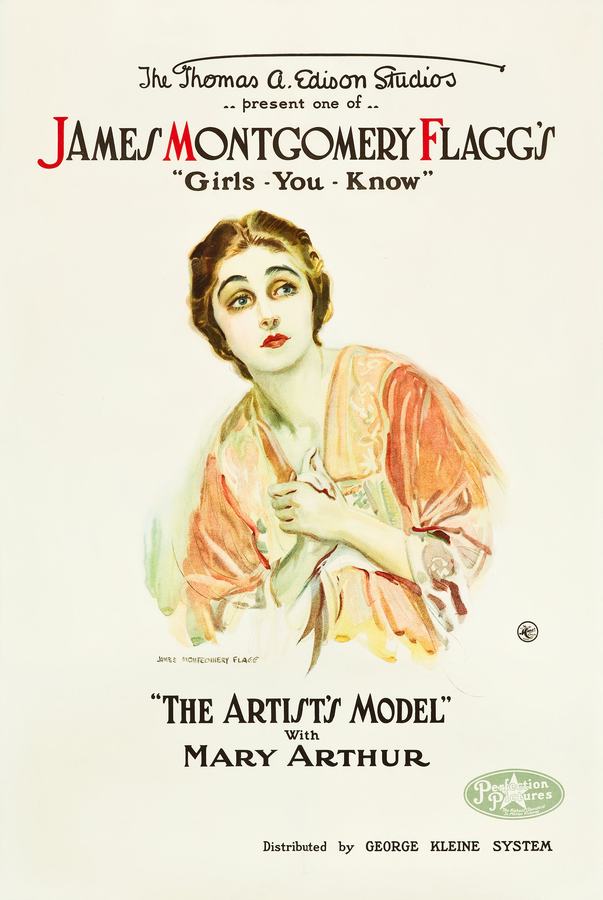
Stepping back into the nascent years of cinematic storytelling, one occasionally stumbles upon a creation that, despite its temporal distance, resonates with an almost startling contemporary relevance. Such is the case with 'The Artist's Model,' a film that, even a century after its inception, speaks volumes about the intricate dance between creator and muse, the relentless pursuit of authenticity, and the often-fraught journey of artistic integrity. It's a testament to the enduring power of human emotion and the timeless struggles that define the creative spirit, rendered with a sensitivity and nuance that belies its early production era.
At its core, the film is an exploration of inspiration—its genesis, its nurturing, and its potential for corruption. Jack Eaton, in the role of John Sterling, delivers a performance that is both earnest and subtly profound. Sterling is not merely a painter; he is a vessel of burgeoning talent, a man whose canvases are less about literal representation and more about channeling an inner vision that clamors for expression. Eaton portrays Sterling's initial struggles with a quiet desperation, his eyes often conveying a yearning that words alone could not capture in the silent medium. One can feel the weight of his artistic ambition, the frustration of unfulfilled potential, before Lillian Thorne enters his life.
Mary Arthur, as Lillian Thorne, is nothing short of luminous. Her portrayal transcends the mere archetype of the 'beautiful muse' to create a character imbued with genuine agency and inner fortitude. Lillian is introduced as a woman navigating the challenging social landscape of her time, where the profession of an artist's model often carried a societal stigma. Arthur masterfully conveys Lillian's initial reticence, her guarded demeanor, which slowly melts away under the warmth of Sterling's sincere respect and artistic devotion. Her transformation from a hesitant subject to an active participant in the creative process is one of the film's most compelling arcs. It’s not just her physical beauty that captivates; it's the quiet intelligence in her gaze, the subtle shifts in her posture that communicate a profound understanding of the art being made, and her growing emotional connection to Sterling. Her performance elevates the film beyond a simple romance, transforming it into a meditation on the collaborative nature of art and the profound intimacy shared between an artist and their inspiration.
The narrative gains its crucial dramatic tension with the introduction of Julian Vance, portrayed with a compelling blend of charisma and insidious charm by James Montgomery Flagg. Flagg, a renowned illustrator and artist in his own right, also penned the screenplay, offering a fascinating meta-commentary on the art world he knew so intimately. His dual role as both writer and antagonist allows for a nuanced, albeit villainous, characterization. Vance is not a cartoonish villain; he is a man of considerable talent and social standing, whose artistic success has perhaps come at the cost of his soul. He represents the seductive allure of commercialism and the dangers of artistic compromise. Flagg's Vance is polished, articulate, and initially appears as a benevolent mentor to the struggling Sterling. However, his true colors are gradually revealed as he attempts to subtly undermine Sterling's artistic vision and, more egregiously, to lure Lillian away with promises of a 'better' life, one free from the perceived impropriety of being a model. Vance’s machinations are a stark reminder of the external pressures that can corrupt pure artistic endeavor, a theme that resonates through many creative narratives, echoing the societal critiques found in films like Pillars of Society, which similarly dissected social hypocrisy.
Further adding layers to the film's exploration of the art market is Arthur William Brown as Mr. Blackwood, the pragmatic gallery owner. Brown, another real-life illustrator lending his presence to the film, embodies the commercial realities that artists face. Blackwood is not malicious, but he is driven by profit and marketability. His interactions with Sterling highlight the perennial struggle between creating art for art's sake and creating art that sells. He represents the gatekeepers of the art world, those who wield influence over an artist's career and whose opinions can make or break a reputation. His cautious enthusiasm for Sterling's raw talent, coupled with his insistence on a more 'palatable' direction, serves as a constant pressure point for Sterling, forcing him to confront what he is willing to sacrifice for success.
While the director's name may not be as prominently remembered as some contemporaries, the direction of 'The Artist's Model' is marked by a quiet elegance and a surprisingly sophisticated understanding of visual storytelling. The composition of scenes often mirrors the artistic principles central to the narrative, with frames carefully constructed to emphasize emotional states and character relationships. The use of natural light, particularly in Sterling’s studio scenes, evokes a sense of authenticity and intimacy, allowing the audience to feel like silent observers of the creative process. Close-ups, though used sparingly, are powerfully effective, drawing attention to the subtle expressions that convey deep emotional currents—a furrowed brow of concern, a fleeting smile of understanding, a gaze of unwavering determination. The pacing, while measured by modern standards, allows the emotional beats to land with considerable impact, giving space for the audience to absorb the unfolding drama. This deliberate rhythm is a hallmark of many films of the era, reminiscent of the contemplative narrative structures found in works like Vera, the Medium, where character psychology unfolded at a more deliberate pace.
The film's thematic depth is perhaps its most enduring quality. It grapples with universal questions: What is the true cost of art? Can inspiration flourish under pressure? And how does one maintain integrity in a world that often values superficiality over substance? Sterling's journey is one of self-discovery, not just as an artist but as a man. He learns to trust his own vision, to defend his muse, and to resist the siren call of easy success. Lillian, too, undergoes a profound transformation, evolving from a passive subject to an active agent in her own destiny. Her final choice at the exhibition is not merely about choosing a man; it is about choosing authenticity, validating Sterling's art, and asserting her own worth beyond her physical appearance. This theme of a woman's evolving agency, while perhaps not as overtly feminist as later works, is subtly yet powerfully present, echoing the quiet strength seen in characters from films like Havasi Magdolna.
The climax, set against the backdrop of a prestigious art exhibition, is a masterclass in silent film dramaturgy. The unveiling of Sterling's portrait of Lillian is not merely a reveal of a painting; it is the culmination of their shared journey, a visual testament to their emotional and artistic bond. The stark contrast between Sterling's emotionally charged, raw masterpiece and Vance's more technically perfect but soulless works speaks volumes without a single intertitle. The reactions of the gallery-goers, the subtle shifts in their expressions, and particularly Lillian's decisive affirmation of Sterling's work, build to a powerful emotional crescendo. It’s a moment that champions artistic truth over commercial artifice, a theme that has been revisited countless times in cinema, from early melodramas to contemporary independent films.
'The Artist's Model' stands as a compelling example of early cinema's capacity for narrative sophistication and emotional depth. It is a film that, through its strong performances, thoughtful direction, and thematically rich screenplay (thanks in no small part to James Montgomery Flagg's insights), transcends its historical context. It reminds us that the struggles of creation, the search for a muse, and the battle for artistic authenticity are timeless human endeavors. While not as widely known as some of its contemporaries, its quiet power and resonant themes make it a vital piece of cinematic history, offering insights not just into the art world of its time, but into the universal human condition itself. It's a film that encourages introspection, provoking thoughts on what truly defines value in art and in life. Much like how Langdon's Legacy explored the enduring impact of personal choices, 'The Artist's Model' illuminates the lasting imprint of creative passion and integrity.
The subtle interplay of ambition, affection, and betrayal is handled with a delicate touch, avoiding overt melodrama in favor of nuanced emotional portrayals. The film understands that true drama often lies in the unspoken, in the longing glances, the hesitant gestures, and the silent decisions that shape a life. The relationship between Sterling and Lillian is built on mutual respect and a shared understanding of beauty, rather than fleeting passion. This foundation makes their bond feel authentic and their eventual triumph over adversity all the more satisfying. It’s a narrative choice that grants the film an enduring quality, allowing it to speak to audiences across generations about the profound connections that fuel both art and the human spirit. The film's lasting impact lies in its ability to portray the artist's journey not as a solitary pursuit, but as a collaborative dance, where the muse is as much a creator as the artist themselves. It’s a quiet masterpiece that, like a beautifully rendered portrait, reveals more with each contemplative viewing, leaving an indelible mark on the discerning viewer.
IMDb —
1934
Community
Log in to comment.