DbcultAccessing Vault...
6.2/10
Senior Film Conservator
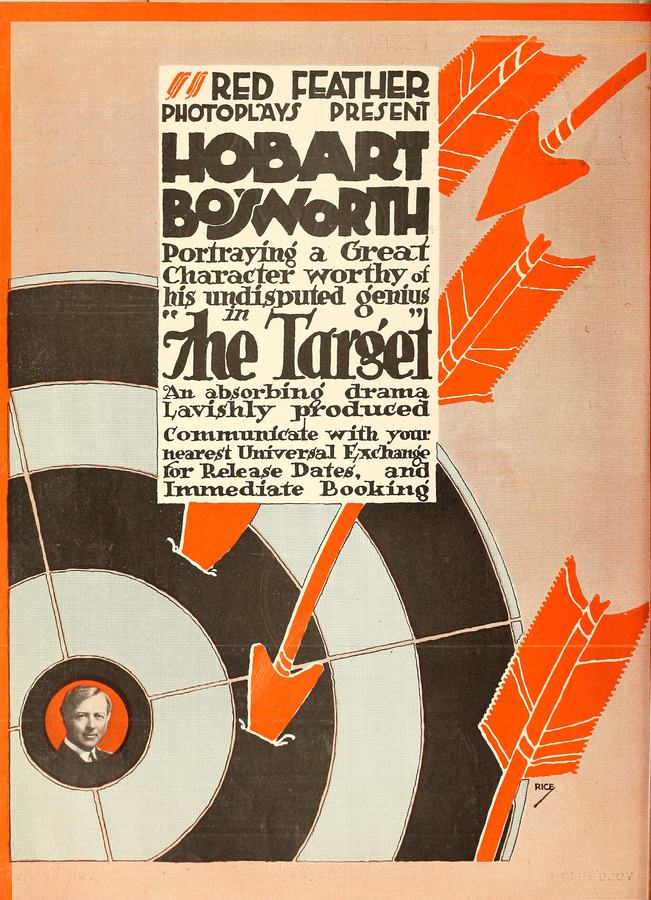
A definitive 6.2/10 rating for a film that redefined the boundaries of cult cinema. The Target remains a cornerstone of transgressive art.
Stepping back into the nascent days of cinematic storytelling, we encounter Robert N. Bradbury's 1916 drama, 'The Target'. This isn't just a film; it's a stark, often brutal, examination of human resilience, the capriciousness of fate, and the indelible scars left by betrayal and injustice. In an era where narrative was conveyed through grand gestures and intertitles, Bradbury crafted a tale that, despite its century-old vintage, still resonates with a raw emotional potency. It’s a compelling piece of early cinema that begs for a contemporary re-evaluation, not merely as a historical artifact, but as a surprisingly sophisticated exploration of a man's tragic odyssey.
Our protagonist, Bill Brent, portrayed with a compelling gravitas by the esteemed Hobart Bosworth, begins his journey as a paragon of professional virtue. A lawyer of considerable skill, his reputation in his small Colorado community is unblemished, his counsel sought, his presence respected. He lives a quiet, dutiful life, caring for his elderly mother, a testament to his inherent goodness. Yet, it is often the most upright individuals who are most vulnerable to the machinations of the less scrupulous. Brent's fatal flaw, perhaps, lies in his profound capacity for trust, a vulnerability exploited by the adventuress Marion Moore. Their marriage, a whirlwind of infatuation on his part and calculated self-interest on hers, quickly dissolves, leaving Brent not just heartbroken, but adrift. His subsequent descent into alcoholism is painted with a stark, unflinching brush, demonstrating the profound psychological impact of betrayal in a way that feels remarkably modern for its time. This isn't a mere plot point; it's a visceral depiction of a man’s spirit being systematically eroded.
The narrative then plunges Brent into an even deeper abyss. A murder is committed, and through a cruel twist of fate and the perfidy of his own law partner, Brent finds himself unjustly accused and convicted. This segment of the film, while brief, carries the thematic weight of classics like ‘The Count of Monte Cristo’, where an innocent man is condemned, stripped of his liberty and dignity. The injustice is palpable, and Bosworth's portrayal of a man bewildered and broken by a system he once upheld is truly powerful. The silent medium, in this instance, amplifies the internal torment; the audience is left to project their own understanding of despair onto Brent’s expressive, yet wordless, performance.
The confines of prison, however, are not the end of Bill Brent's story. His spirit, though tested, finds a flicker of hope in the unlikely camaraderie of his cellmate, Jack. Their daring escape to the untamed wilderness of Canada marks a pivotal shift in the film's tone, transitioning from urban tragedy to a saga of survival and reinvention. Here, amidst the rugged beauty of nature, they forge a new life, building a prosperous trapping business. This period of exile offers Brent a semblance of peace, a chance to rebuild not just his fortunes, but his very self. It’s a testament to the human capacity for resilience, for finding purpose even in the most desolate circumstances.
The arrival of Nita, the sole survivor of a boating accident, further complicates and enriches their secluded existence. Jane Novak, as Nita, brings a fresh, innocent energy to the screen, contrasting sharply with the hardened visages of Brent and Jack. Her presence sparks a tender romance with Jack, leading to their eventual marriage. For Brent, this burgeoning happiness, this echo of the domestic bliss he once yearned for, serves as both a comfort and a catalyst. Witnessing Jack and Nita's joy, he recognizes the incompleteness of his own redemption. The call of his past, specifically the unwavering thought of his ailing mother, becomes an irresistible pull, urging him back to the very place that had betrayed him. This decision, fraught with peril, underscores Brent's inherent moral compass; true peace, for him, can only be found through facing his demons and seeking a final, bittersweet reunion with his roots.
The climax of 'The Target' is a masterclass in tragic irony. As Bill Brent, a man who has endured so much, approaches his childhood home, a beacon of hope and finality, he is confronted by the town sheriff. This isn't just any sheriff; this is a man who, in an earlier, forgotten chapter, owed Brent a debt of eternal gratitude. The dramatic tension here is exquisitely handled, even in the silent format. The audience understands the profound injustice unfolding as the sheriff, oblivious to Brent's true identity or his past kindness, acts on his duty. Brent’s desperate dash towards his mother, a final act of filial devotion, is cut short by the sheriff’s bullet. It's a gut-wrenching moment, a cruel twist of fate that denies him a full measure of peace.
Yet, even in death, there's a poignant, almost spiritual, resolution. Brent lives just long enough to reach his mother's side, to exchange a final, loving glance before both succumb to their respective ailments, dying almost simultaneously. This shared demise, a quiet, intimate moment amidst the preceding chaos, elevates the film from mere melodrama to a profound meditation on life's interconnectedness and the inevitability of fate. It's a powerful, symbolic ending that lingers long after the final intertitle, reminding us of the enduring bonds of family and the often-unseen threads that weave through our lives.
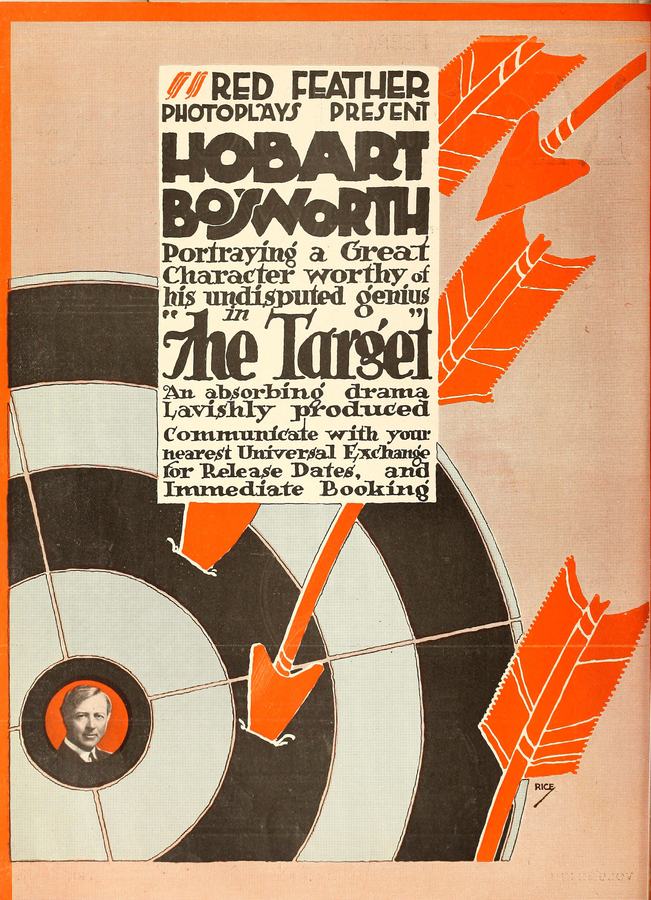
Hobart Bosworth, as Bill Brent, carries the weight of the film on his broad shoulders. His performance is a masterclass in silent acting, conveying a vast spectrum of emotions—from initial dignity and professional pride to the depths of despair, the quiet resolve of exile, and the ultimate, tragic resignation. His facial expressions, his posture, and his deliberate movements speak volumes, allowing the audience to intuit his internal struggles without a single spoken word. This kind of nuanced portrayal was critical in the silent era, and Bosworth delivers it with exceptional skill, positioning 'The Target' alongside other emotionally charged dramas of the period like ‘The Case of Becky’, where the dramatic intensity relied heavily on the actors' physical and emotional presence.
Anna Lehr, as the treacherous Marion Moore, embodies the femme fatale archetype with chilling efficiency. Her beauty is a deceptive veil, her motivations purely self-serving, and her betrayal the catalyst for Brent's downfall. Lehr's performance captures the essence of a character whose allure is as dangerous as it is captivating. Jane Novak, as Nita, provides a much-needed counterpoint of innocence and warmth, her gentle demeanor offering a brief respite from the narrative's darker elements. The supporting cast, including A. Kammeyer, Maude George, Robert N. Bradbury himself, Dick La Reno, and Albert MacQuarrie, each contribute to the texture of the film, creating a believable world in which Brent's tragedy unfolds. It is a testament to Bradbury's direction that even minor characters leave an impression, hinting at a wider, complex society.
Robert N. Bradbury, who not only directed but also penned the screenplay for 'The Target', demonstrates a keen understanding of dramatic structure and character development. The narrative arc, from respected lawyer to fallen man, to exiled survivor, and finally to tragic hero, is meticulously crafted. The pacing, a crucial element in silent films, is handled with an expert hand, allowing moments of quiet reflection to breathe before propelling the plot forward with sudden, impactful events. Bradbury avoids excessive melodrama, opting instead for a more grounded, albeit heightened, realism that allows the emotional beats to land with genuine force. His vision for the Canadian wilderness scenes, in particular, offers a stark contrast to the confining urban environments, effectively using setting as a character in itself, much like the sweeping landscapes in films such as ‘The Valley of Decision’.
The themes explored in 'The Target' are timeless: justice, betrayal, the corrupting influence of power, and the search for redemption. Bradbury doesn't shy away from depicting the harsh realities of life, but he also infuses the story with moments of unexpected kindness and profound loyalty. The relationship between Bill and Jack, for instance, transcends mere cellmate camaraderie, evolving into a deep, unwavering bond forged in adversity. This exploration of male friendship, tested by extreme circumstances, adds another layer of emotional depth to the film. Comparatively, the moral complexities and the exploration of societal judgment could draw parallels with films like ‘Purity’ or even ‘Evidence’, both of which delved into the intricacies of human morality and reputation.
While 'The Target' may lack the grand spectacle of some of its contemporary epics, its power lies in its intimate focus on a single man's struggle against an indifferent, often cruel, world. It's a reminder that even in an era of nascent technology, filmmakers were capable of crafting narratives of immense emotional weight and thematic complexity. The film's conclusion, with its heartbreaking irony and quiet dignity, ensures that Bill Brent's story, despite its tragic end, remains impactful. It speaks to the universal human desire for justice, for belonging, and for the solace of family, even when such desires are ultimately denied.
Revisiting 'The Target' today offers more than just a glimpse into cinematic history. It provides a window into the prevailing moral anxieties and narrative conventions of the early 20th century, presented through a lens of raw, unadorned emotion. It's a testament to the enduring craft of storytelling, proving that a compelling plot, strong performances, and a clear directorial vision can transcend the limitations of technology and time. For enthusiasts of silent cinema, or indeed anyone interested in the foundational narratives that shaped the medium, 'The Target' is a compelling and often overlooked gem, deserving of its place in the pantheon of early American dramas.
In many ways, the film acts as a stark precursor to the film noir genre, exploring themes of an individual caught in a web of circumstances beyond his control, leading to a tragic, almost predetermined fate. The shadows of injustice and the fleeting nature of happiness are painted with broad, expressive strokes, much like the dramatic intensity seen in films such as ‘Carmen’ or the moral dilemmas presented in ‘The Yellow Traffic’. Bradbury masterfully uses the visual language of silent film to convey the weight of Brent’s suffering, his moments of hope, and the ultimate, crushing irony of his demise. The final scenes, devoid of dialogue, are particularly impactful, relying entirely on Bosworth’s extraordinary ability to communicate profound grief and acceptance through his eyes and body language.
Ultimately, 'The Target' is a powerful reminder of the cyclical nature of human experience – the rise, the fall, the struggle for redemption, and the often-unpredictable hand of fate. It challenges viewers to consider the true meaning of justice and the arbitrary nature of consequence, even when one’s intentions are pure. This is not a story with a neatly tied bow; it’s a raw, emotional journey that speaks to the enduring human condition, making it a compelling watch even a century after its initial release. Its quiet strength and profound emotional resonance ensure its place as a significant, albeit often understated, work of early cinema.
IMDb 4.9
1919
Community
Log in to comment.