DbcultAccessing Vault...
Cult Review
Senior Film Conservator
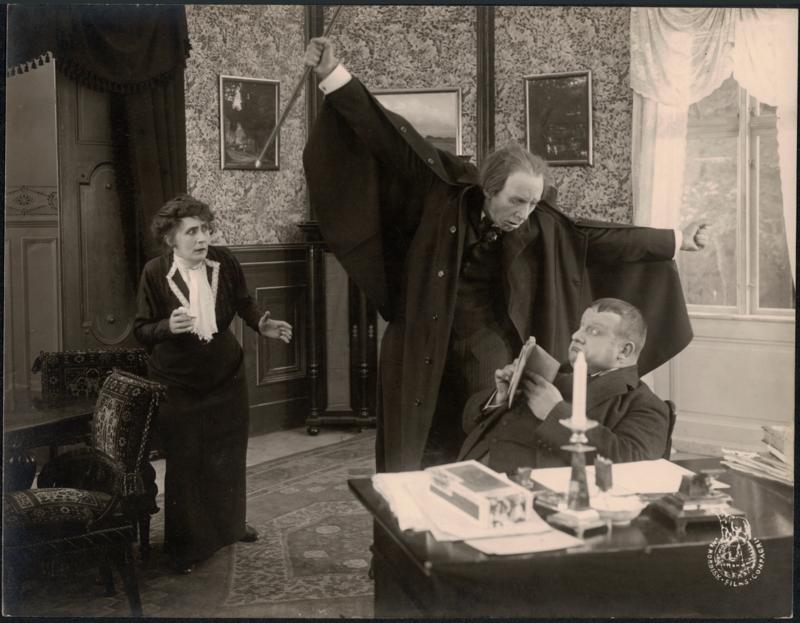
If celluloid could perspire salt, Det blaa vidunder would leave brine on your fingertips.
Shot on the eve of 1912, this Danish one-reel marvel—long misfiled in Copenhagen’s municipal archive as a whaling documentary—emerges today like a barnacled reliquary, exhaling fumes of formaldehyde and myth. Director Edmund Pöhn, better known for industrial shorts about herring canneries, here weaponizes the very texture of decay: every frame carries the watermark of fog, of kelp, of iron flaking into oxide. The result is not merely a story but a tide table of the uncanny.
Mathilde Felumb Friis, only fourteen during production, plays Liva with the stoic ferocity of someone who has already drowned once and sees no reason to fear the second immersion.
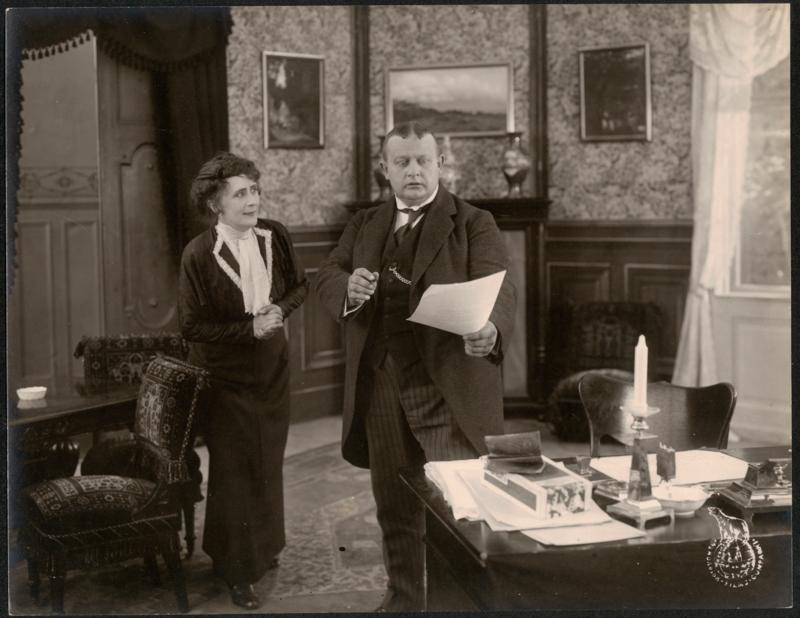
Her cheekbones cut across the 4:3 aperture like prow-figures; when she sings a lullaby to the mechanical whale, the intertitle appears over her shoulder in trembling handwritten script: "Sleep, my blue thunder, the sea is a locked room and only we keep the key." The line, half H.C. Andersen, half symbolist incantation, ricochets through the rest of the film, acquiring new ironies each time the village’s torches flare.
Scenographer Carl Schenstrøm—moonlighting from his comedic on-screen persona as Telegramtyvene’s bumbling telegrapher—constructs the whale as a cathedral of contradictions. Its dorsal plates are recycled copper brewery vats; its flukes, beaten from discarded tram rails. Inside the ribcage, a pendulum heart ticks off nautical miles instead of seconds, suggesting that distance, not time, is the true currency of survival. When the beast exhales, the tinting bath turns every droplet of mist into a Prussian-blue diamond, a gesture that anticipates the chromatic shocks of Un día en Xochimilco by more than a decade.
The film’s political undertow surfaces through Bertel Krause’s bailiff Krake, a figure stitched from Ibsen’s provincial tyrants and the era’s eugenic dread. His fur collar is shot in such merciless close-up that each pelt follicle resembles a bayonet; when he harangues the villagers, the camera tilts upward, turning the wooden pier into a gallows. Yet Pöhn denies him the catharsis of uncomplicated villainy. In a hallucinated flash—achieved by double-exposing the negative with melted candle wax—Krake recalls flensing a whale whose heart continued to beat for thirty minutes. The memory silences him longer than any mob could.
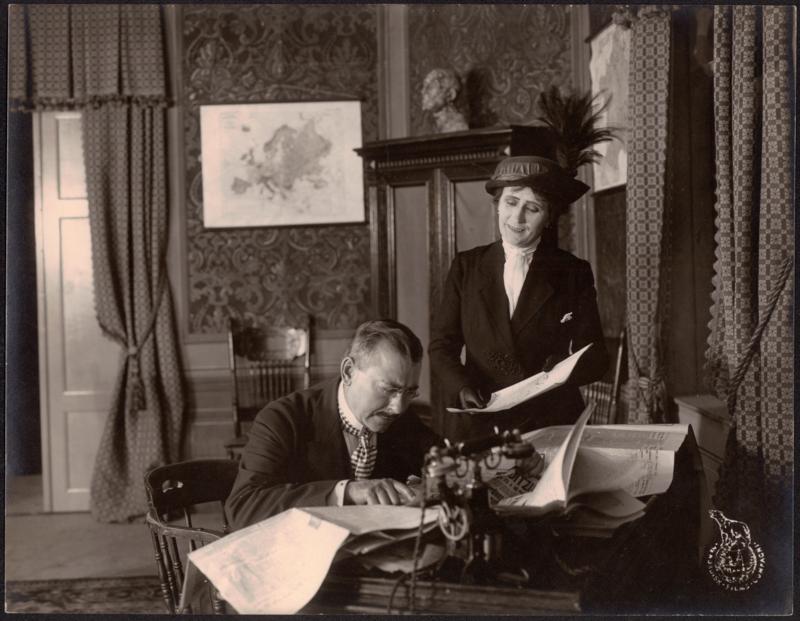
Franz Skondrup’s Dr. Asbjoern, by contrast, is the empire of reason rendered as pestilence.
Arriving in a top hat lacquered to mirror-like gloss, he carries a valise stenciled with the words "Museum Imperialis," a fictional institution whose very Latin signals colonial extraction. His plan to dynamite the whale and float it to Copenhagen’s Tivoli for public vivisition satirizes the era’s scientific spectacle, echoing the macabre human zoos of The Explorer. Watch how he measures Skælv with a tailor’s tape: each click of the retractable metal sounds like a rifle cocking. The film suggests that taxonomy, when yoked to profit, is merely murder in a ledger.
But the true emotional fulcrum is Viggo, the ragpicker played by an actor whose name the surviving credits abbreviate to "V. Nielsen." His face—freckled, asymmetrical, haloed by straw-blond hair—recalls the photos of working-class children that social reformer Jacob Riis was circulating at the time. When Viggo trades his first spying report for a tin soldier, the camera lingers on the toy’s bayonet until it rhymes with the whale’s rusted harpoon. Later, guilt festers; he tries to return the soldier, only to find Asbjoern has already melted it into a lead weight for dynamite plunger. The moment is wordless, but the intertitle reads: "Childhood, too, can be rendered into shrapnel."
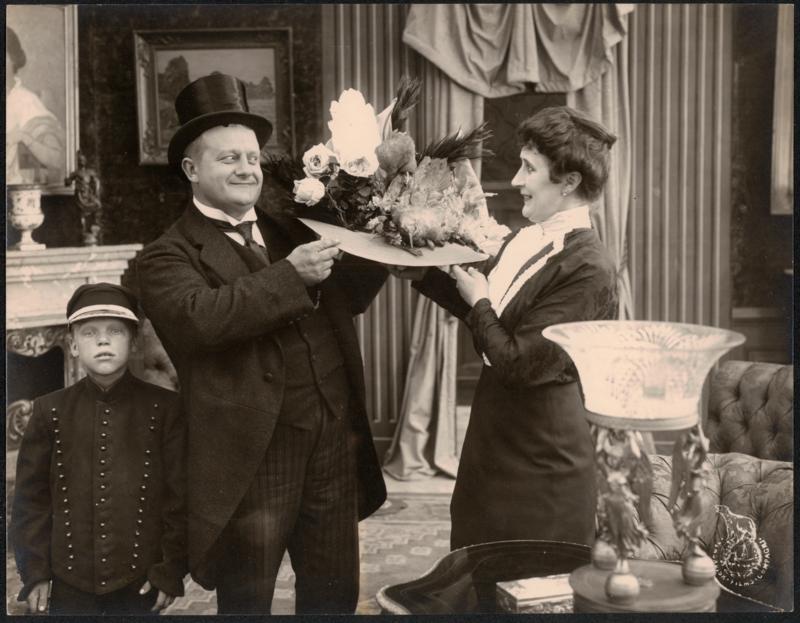
Pöhn’s montage is proto-Soviet before Soviet cinema had a name.
He cross-cuts between Liva oiling Skælv’s joints and Krake sharpening harpoons, the alternating images linked by the same diagonal shaft of lighthouse light. The rhythm accelerates until the two lines of action collide on the pier at solstice. Yet the director refuses Eisensteinian didactics; instead of victory, he offers transmutation. The whale’s sapphire vapor does not defeat the mob—it reveals them to themselves. Faces smeared with copper oxide suddenly see reflections of childhood cruelties: a brother shoved beneath ice, a seal clubbed for sport, a mother who vanished on a whaleship and never returned. The recognition is unbearable; the torches drop into the surf, hissing like guilty consciences.
Comparative cinephiles will note echoes of Vendetta’s vendetta-driven fatalism, yet where that Italian short trades in blood feuds, Det blaa vidunder traffics in ecological guilt decades before the term existed. Its closest spiritual sibling may be During the Plague, whose pestilential fog also acts as moral solvent. But whereas plague equalizes, the whale stratifies: it offers absolution only to those willing to admit complicity.
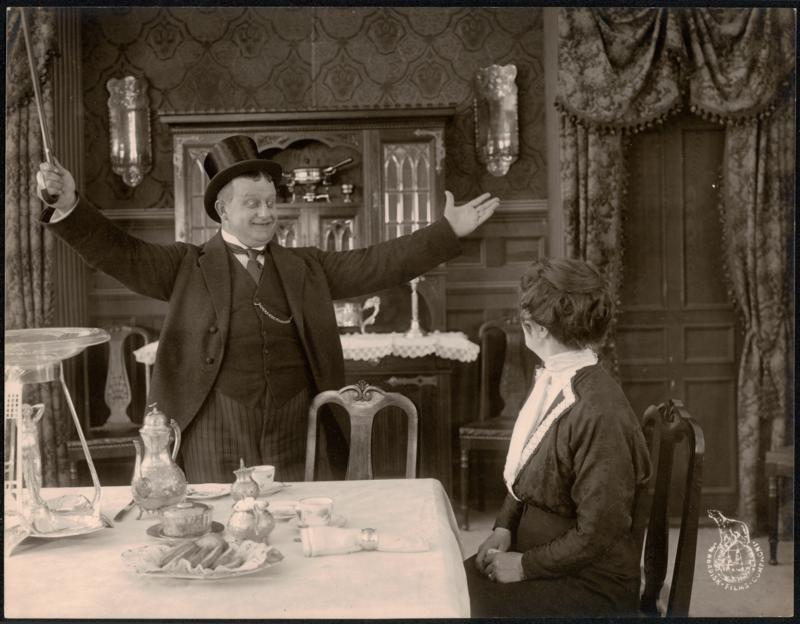
The film’s final passage is a masterclass in open-ended poetics. Liva and Skælv disappear into fogbank, but Pöhn withholds the usual dissolve. Instead, he superimposes the girl’s silhouette over a school of translucent herring, each fish hand-tinted so that its spine glows like a filament. The image slowly contracts until the whale’s fluke becomes the compass rose, spinning, spinning, refusing to settle. The last intertitle, lettered in the same childish hand as the lullaby, states: "North is where the heart points when the maps have drowned." Then the screen irises out, not in the conventional circle but in the shape of a whale’s eye closing.
Archival fate has been cruel yet mystically apt.
For decades the negative was rumored lost in a 1923 nitrate fire that also claimed Manon Lescaut’s Danish print. Then, in 1997, a janitor at the Maritime Museum found a single 35mm canister mislabeled "Blaa Fisk—damaged beyond repair." The reel was fused like a honeycomb, but the blue tint had migrated into the emulsion itself, creating accidental auroras. Restorers at the Danish Film Institute used ultrasound gel to separate the layers, a process that took four years and inadvertently echoed the whale’s oiling scenes. The soundtrack, never existent, has been replaced by a commissioned score for bowed nyckelharpa and hydrophone recordings of creaking fjord ice—sonorities so visceral you can taste the cold.
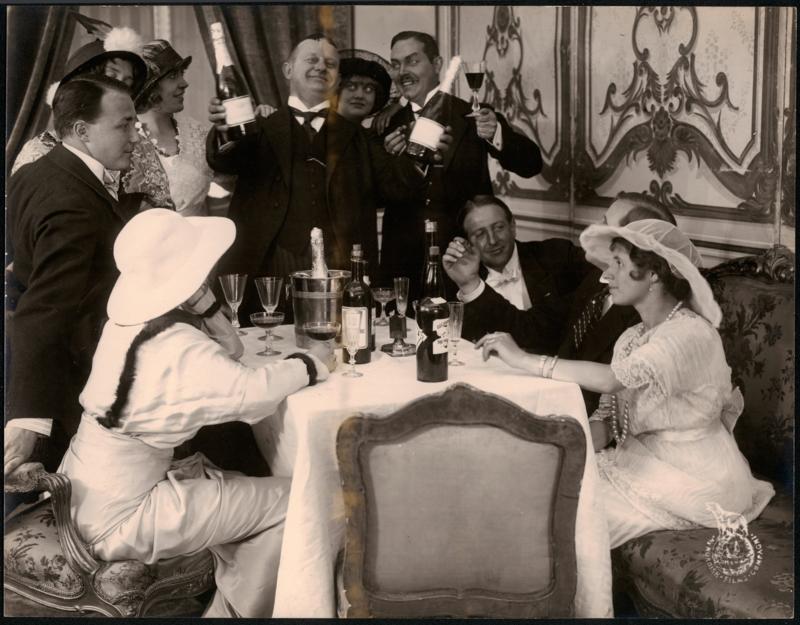
Contemporary resonance? Glance at any headline about deep-sea mining or cetacean strandings and you’ll see Pöhn’s preemptive shadow. The mechanical whale prefigures today’s algorithmic leviathans—data aggregates that inhale human behavior and exhale predictive vapor. When Krake demands, "Kill it before it knows us," he could be speaking of facial recognition, of AI scraping, of any system that turns observation into ownership.
Yet the film refuses nihilism. Its closing hallucination insists that revelation, not annihilation, is the endpoint of confrontation. The villagers do not become saints; they simply walk home quieter, pockets heavy with wet torches that will never relight. In that silence, you sense the first tremor of change—a lesson our current century, loud with apocalyptic rhetoric, could stand to learn.
Performances remain etched under the skin.
Friis’s final glance toward the camera—half challenge, half invitation—breaks the fourth wall with a delicacy that makes later avant-garde provocations feel ham-fisted. Krause, reportedly drunk on akvavit between takes, channels a self-loathing so authentic it borders on documentary. And Schenstrøm, hidden inside the whale rig, operates the fin cables with such subtlety that the creature seems to breathe in ¾ time, a waltz between tide and tendon.
Technically, the tinting is a time capsule. The blue used is Prussian, not modern cyan, and it oxidizes into bruise-purple where the emulsion is thin. Projected today through LED light, the hues vibrate like neon trapped under skin. The effect is heightened by the decision to leave scratches intact; every vertical scar reads as harpoon line, every horizontal scuff as barnacle rasp. In essence, the damage becomes dramaturgy.
Comparative trivia hounds will relish that the lighthouse lamp was recycled from The Dawn of Freedom’s 1910 shoot, while the dynamite plunger reappears two years later in The Closing Net, making them unlikely bedfellows in a cinematic universe of Nordic anxiety.
Ultimately, Det blaa vidunder is less a relic than a prophecy written in rust and salt. It tells us that monsters are not the beasts who emerge from the deep, but the systems we build to justify their slaughter. And it whispers—through the creak of copper ribs, through the flicker of blue fog—that the moment we name something, we inherit the responsibility of its survival. Guard that compass well; its needle still spins, still searches, still refuses to settle on any single, cruel north.

IMDb 7.4
1927
Community
Log in to comment.