Summary
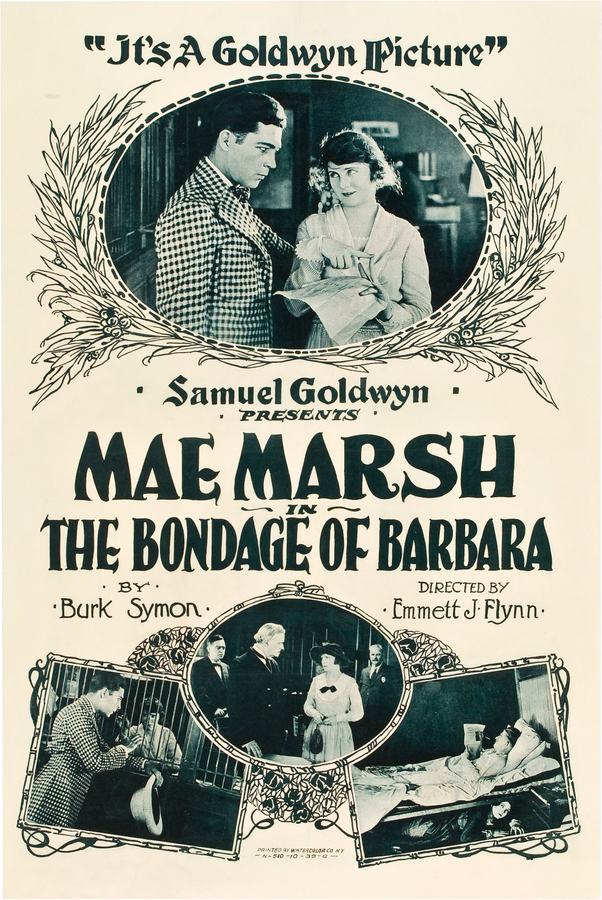
In the somber tapestry of early 20th-century societal rigidities, Burk Symon's "The Bondage of Barbara" unfurls a poignant narrative of a young woman's struggle against the suffocating grip of an avaricious guardian. Barbara, a figure of delicate artistic temperament and burgeoning spirit, finds her aspirations brutally curtailed by Mr. Ainsworth, a relative whose guardianship is a thinly veiled pretense for financial exploitation. Ainsworth, embodied with chilling calculation by Arthur Housman, orchestrates Barbara's betrothal to Reginald Vance (Eddie Sturgis), a man of considerable means but negligible character, purely to salvage his own dwindling fortune. Barbara's heart, however, is irrevocably pledged to Robert Thorne (Matt Moore), an earnest sculptor whose artistic fervor resonates deeply with her own stifled creative soul. The film meticulously charts Barbara's emotional and physical confinement within Ainsworth's opulent yet oppressive estate, a gilded cage where her attempts at self-expression are met with disdain and suppression. A silent, watchful Mae Marsh, perhaps as a long-suffering housekeeper, subtly aids in the gradual unraveling of a dark secret: Ainsworth's fraudulent control over Barbara's true inheritance. As the layers of deceit are peeled back, fueled by Thorne's unwavering devotion and the quiet revelations from within the household, Barbara is propelled towards a climactic confrontation. This ultimate defiance, a courageous rejection of her imposed fate, culminates in a powerful assertion of personal agency, allowing her to shatter the bonds of manipulation and embrace a future defined by her own artistic vision and authentic love, finally liberated from the insidious 'bondage' that had defined her existence.
Review Excerpt
"
Breaking the Chains: A Deep Dive into 'The Bondage of Barbara'
In an era defined by grand gestures and unspoken emotions, Burk Symon's "The Bondage of Barbara" emerges as a searing testament to the human spirit's indomitable quest for freedom. This cinematic artifact, rich with the expressive nuances characteristic of its time, invites contemporary audiences to peer into a past where societal expectations often forged chains more formidable than any physical restraint. It's a ..."