DbcultAccessing Vault...
Cult Review
Senior Film Conservator
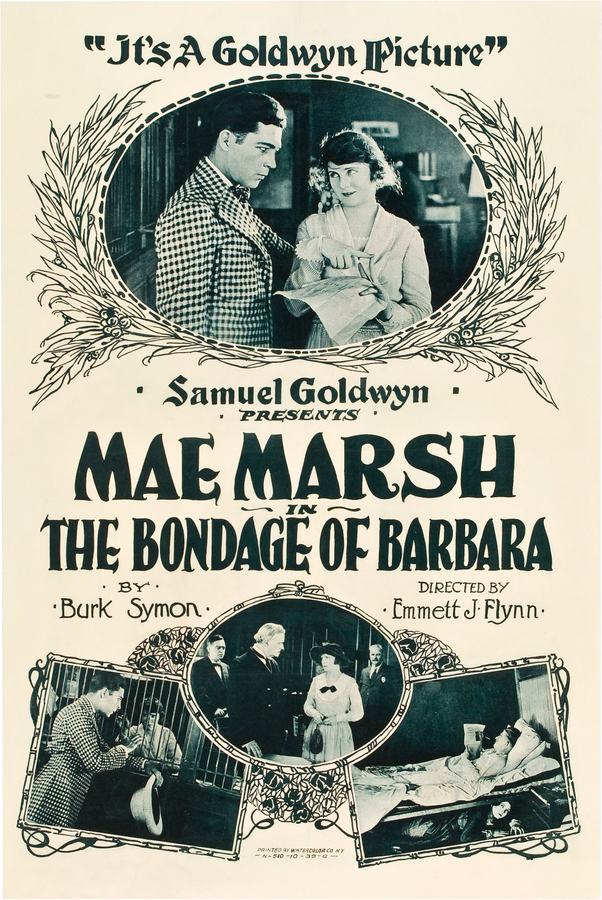
In an era defined by grand gestures and unspoken emotions, Burk Symon's "The Bondage of Barbara" emerges as a searing testament to the human spirit's indomitable quest for freedom. This cinematic artifact, rich with the expressive nuances characteristic of its time, invites contemporary audiences to peer into a past where societal expectations often forged chains more formidable than any physical restraint. It's a film that, despite its silent nature, speaks volumes about autonomy, artistic suppression, and the audacious courage required to reclaim one's destiny. From its opening frames, the picture establishes a mood of quiet desperation, gradually building towards a crescendo of emotional liberation that remains remarkably potent even today.
At the heart of this compelling drama is Barbara, portrayed with an almost ethereal vulnerability and nascent strength by the incomparable Mae Marsh. Marsh, known for her ability to convey profound inner turmoil with a mere flicker of an eyelid, delivers a performance that transcends the limitations of the silent medium. Her Barbara is not merely a damsel in distress; she is a vibrant soul, an aspiring artist whose creative impulses are suffocated by the oppressive atmosphere of her guardian, Mr. Ainsworth. Arthur Housman, as Ainsworth, masterfully crafts a villain who is not overtly monstrous but subtly insidious, his avarice masked by a veneer of patriarchal concern. His performance is a chilling study in quiet manipulation, a stark contrast to the more overt villainy seen in films like Az ördög, where evil often manifests with less psychological subtlety.
The film's exploration of Barbara's "bondage" is multifaceted. It's the literal confinement within Ainsworth's grand, yet emotionally barren, estate. It's the societal expectation that a young woman of her standing should marry for position and wealth, not love or personal fulfillment. Most acutely, it's the suppression of her artistic voice, her spirit caged by an environment that values material gain over creative expression. Symon’s direction, with its keen eye for visual metaphor, frequently employs stark contrasts – the light of Barbara's studio against the gloomy drawing-room, the open fields outside versus the claustrophobic interiors – to underscore this central conflict. These visual cues are as eloquent as any dialogue, painting a vivid picture of a soul yearning to break free. The visual storytelling here, much like the evocative landscapes in Impressioni del Reno, uses its setting to reflect internal states.
Eddie Sturgis, as Reginald Vance, embodies the dissolute suitor with a casual arrogance that makes his character particularly repellent. He is not a mustache-twirling villain but a man utterly devoid of empathy, a product of his privileged, unexamined existence. His interactions with Barbara highlight the vast chasm between their worlds, making her inevitable rebellion all the more satisfying. Conversely, Matt Moore's Robert Thorne is the embodiment of earnest, struggling virtue. His portrayal of the artist, whose passion for his craft is matched only by his devotion to Barbara, provides the audience with a much-needed beacon of hope. Moore brings a quiet dignity to Thorne, his gaze conveying a depth of understanding and resolve that speaks volumes without a single intertitle.
The supporting cast, though given less screen time, contributes significantly to the film's rich texture. Henry Hallam, perhaps as a conniving lawyer or an unwitting accomplice, adds another layer to the web of deceit woven by Ainsworth. Jack McLean, in a role that could range from a bewildered clerk to a concerned neighbor, grounds the more melodramatic elements in a sense of everyday reality. Even in smaller roles, the meticulous casting ensures that each character serves a distinct purpose in propelling the narrative forward, a hallmark of well-crafted silent cinema.
Burk Symon's screenplay, while rooted in familiar melodramatic tropes, elevates them through intelligent pacing and a profound understanding of character psychology. The gradual unveiling of Ainsworth's fraudulent stewardship of Barbara's inheritance is handled with a masterful slow burn, building suspense without resorting to cheap theatrics. This careful construction of narrative, wherein secrets slowly surface to dismantle a carefully constructed illusion, echoes the intricate plotting seen in films like The Painted Lie or The Love Swindle, both of which also explored the devastating consequences of deceit. The film doesn't rush its revelations; instead, it allows the audience to witness Barbara's growing suspicion and Thorne's determined investigation, making the eventual triumph feel earned and deeply cathartic.
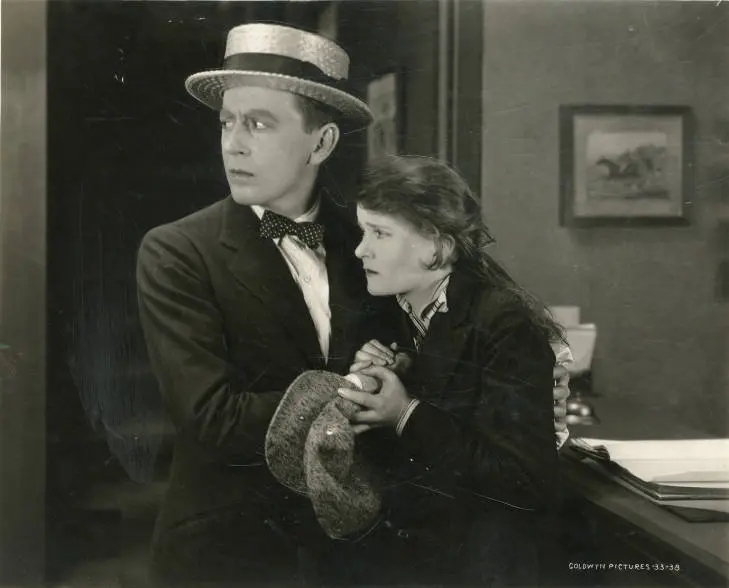
The thematic depth of "The Bondage of Barbara" is particularly striking. It delves into the societal constraints placed upon women, the conflict between duty and desire, and the transformative power of artistic expression. Barbara's struggle is not just for personal happiness, but for the right to define her own identity, to wield her own creative agency. This resonates powerfully with the burgeoning feminist movements of the early 20th century, aligning the film with other narratives of female empowerment, even if subtly presented, such as those that might be implied by titles like The Leopard's Bride or Public Be Damned, which often touched upon societal critiques. The film offers a nuanced perspective on what it means to be truly free, suggesting that liberation is as much an internal state as an external circumstance.
The visual grammar of "The Bondage of Barbara" is remarkably sophisticated for its time. The cinematography, while perhaps uncredited in the surviving records, plays a crucial role in conveying the film's emotional landscape. Close-ups on Marsh's expressive face draw the viewer into Barbara's inner world, allowing us to feel her despair, her fleeting hopes, and her burgeoning resolve. The use of shadow and light is particularly effective, creating an atmosphere that shifts from the oppressive gloom of Ainsworth's influence to the hopeful luminescence surrounding Barbara's moments of artistic creation. These visual choices enhance the narrative without requiring overt exposition, a testament to the power of silent film as a purely visual medium.
The pacing of the film is deliberate, allowing the emotional arcs to develop organically. It avoids the frantic cutting that sometimes characterized other films of the period, instead opting for longer takes that allow the actors to fully inhabit their scenes. This careful rhythm ensures that every glance, every gesture, every subtle shift in posture carries significant weight, building a cumulative emotional impact that is deeply satisfying. The film understands the power of the lingering shot, much like the contemplative visual style found in works such as Das Land der Sehnsucht, where atmosphere and character observation take precedence over rapid plot progression.
"The Bondage of Barbara" stands as a compelling example of silent cinema's enduring capacity to tell complex, emotionally resonant stories. It is a film that champions the individual's right to self-determination against the forces of greed and societal pressure. Mae Marsh's performance alone is worth the price of admission (or the effort of discovery), a masterclass in conveying profound emotion without uttering a single word. Her Barbara is a character who, despite facing overwhelming odds, finds the inner fortitude to break free, inspiring audiences then and now.
Burk Symon, as the writer, crafted a narrative that is both timeless and deeply rooted in the social concerns of its epoch. His ability to weave a tale of personal struggle into a broader commentary on class, power, and female agency showcases a keen understanding of the human condition. While other films of the period might have focused on more straightforward action or romance, Symon's work here delves into the psychological landscape of its protagonist with remarkable depth. This nuanced approach sets it apart from more conventional melodramas, aligning it more closely with character-driven dramas like Who's Who in Society or The Melting Pot, which also explored individual identity within a social framework.
The film's ultimate message of hope and empowerment is delivered with a satisfying blend of dramatic tension and emotional release. Barbara's final act of defiance is not merely a plot resolution but a powerful statement on the necessity of living authentically. It's a reminder that even in the face of overwhelming adversity, the human spirit possesses an innate capacity for resilience and transformation. "The Bondage of Barbara" is more than just a historical curiosity; it is a vibrant, moving piece of art that continues to resonate, demonstrating the timeless power of cinematic storytelling to explore the fundamental human desire for freedom and self-expression. Its enduring relevance lies in its sensitive portrayal of a universal struggle, making it a valuable addition to the pantheon of classic cinema that speaks across generations, much like the lasting impact of films such as For Valour or Until They Get Me, which also explored themes of courage and perseverance.
IMDb 6.4
1930
Community
Log in to comment.