Summary
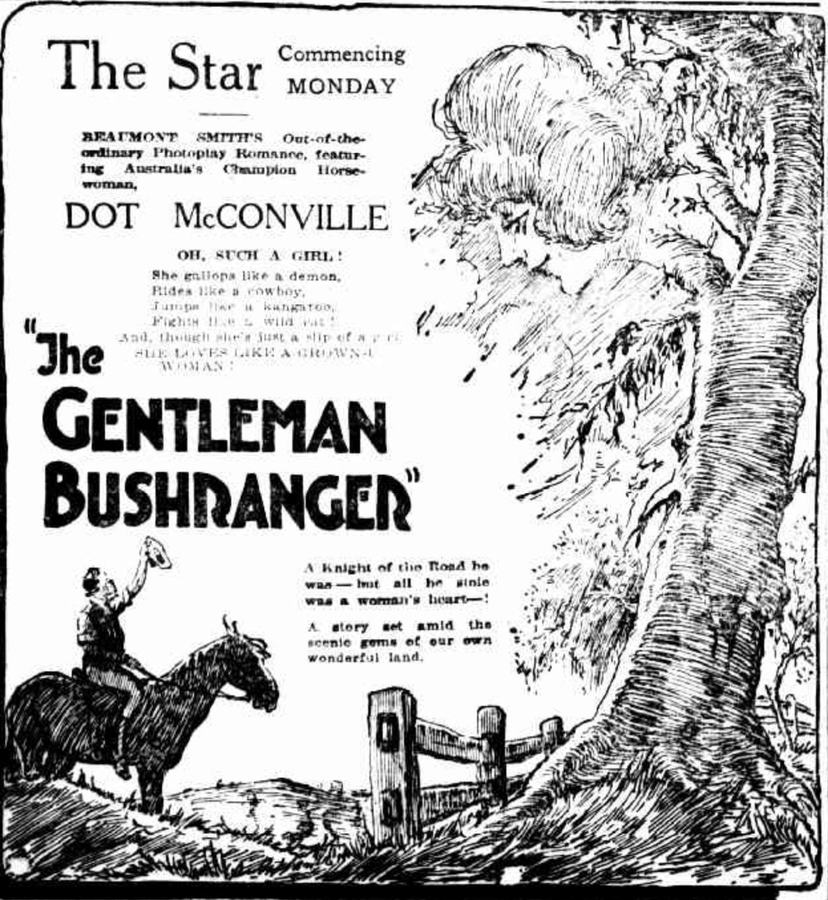
In the scorched ochre hinterlands of colonial New South Wales, where eucalyptus bleeds into the sky like oxidised brass, a silk-waistcoated outlaw—equal parts Rochester and Rob Roy—gallops through myth and merciless sunlight. Tal Ordell’s bushranger, known only as ‘Mr. Sinclair’, is a gentleman by appetite, a brigand by necessity: he filches the gold escort yet doffs his plumed hat to ladies, quoting Byron while reloading twin pistols. Across his leather-saddled trajectory he collides with Ernest T. Hearne’s gaunt, scripture-quoting trooper, Sergeant McSpadden, a man whose collar is starched as stiff as his conscience, and with Dot McConville’s Moira, a tavern songbird whose lavender gown hides opal-stolen secrets beneath its bustle. Beaumont Smith’s script weaves a fever-dream of flaring oil-lamps, rum-soaked barn floors, and night skies stitched with Southern Cross silver; the camera lingers on a blood-broidered handkerchief drifting onto dusty ground, or on a child’s marble rolling between coffins after a shoot-out that feels like Judgement Day staged in a shearing shed. Treachery arrives in the perfumed person of John Cosgrove’s station owner, Blackett, a land baron who would sell his own mother for a hectare and a racehorse, setting traplines of law around Sinclair’s Robin-Hood gallantry. The final reel stages a dusk-lit showdown atop a crimson cliff: cicadas scream, a battered volume of Shelley flutters like a dying bird, and the bushranger’s choice—between the noose and the woman who betrayed him—becomes a bruised sonnet to freedom. When the dust settles, the film leaves only hoofbeats echoing inside the ribcage of the viewer, a ghostly reminder that every legend is paid for in someone’s blood.
Review Excerpt
"
If you thought Australia’s silent era only gave us kangaroos and melodrama, The Gentleman Bushranger arrives like a sulphur-crested cockatoo screeching through a cathedral—vivid, vulgar, and divinely unignorable.
If Ministerpresidenten taught us that power corrupts via parliamentary corridors, here corruption gallops on horseback, trampling petticoats and constitutions alike. Director Beaumont Smith, ever the carnivalesque ringmaster, fuses the swagger of The Great Gamble with the moral verti..."