DbcultAccessing Vault...
Cult Review
Senior Film Conservator
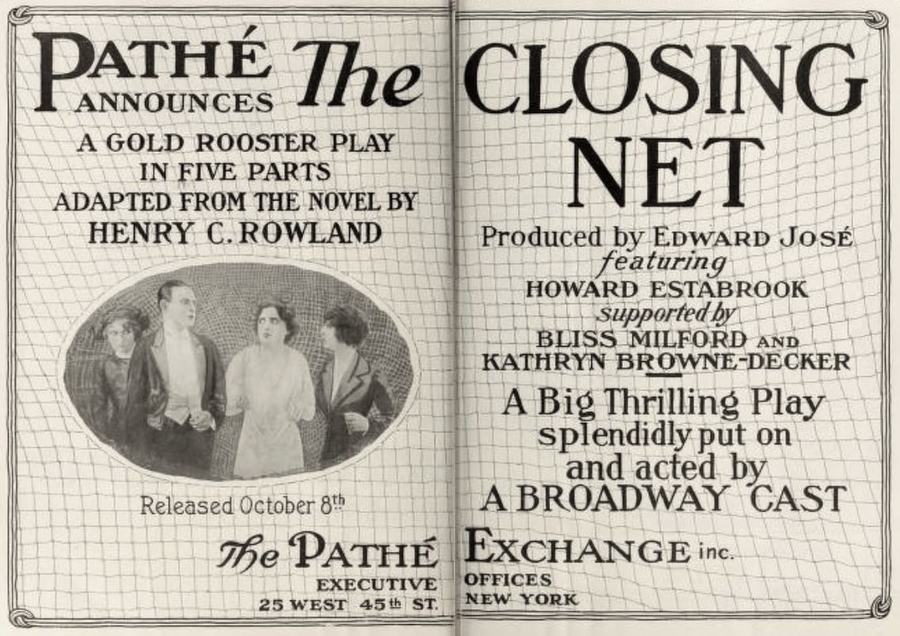
Ah, the silent era! A time when narratives unfurled with a grand, almost operatic sweep, where emotions were writ large across expressive faces, and the very air thrummed with unspoken drama. Among the myriad cinematic offerings of 1915, 'The Closing Net' emerges as a particularly compelling artifact, a forgotten gem that, upon rediscovery, reveals layers of psychological complexity and thrilling narrative twists. Directed with a keen eye for suspense and human frailty, this film, penned by the collaborative talents of George B. Seitz and Henry C. Rowland, isn't just a crime drama; it's a profound exploration of identity, the corrosive nature of ambition, and the unexpected avenues of redemption. It demands a re-evaluation, not merely as a historical curiosity, but as a potent piece of storytelling that resonates even today.
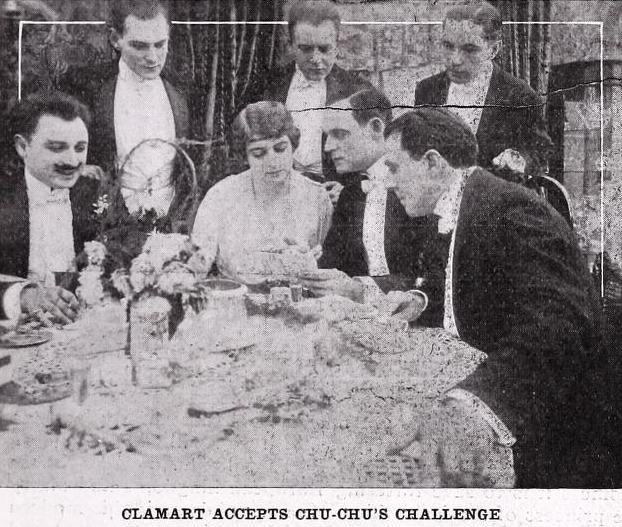
At its heart, 'The Closing Net' introduces us to Frank Clamart, a figure etched with the pathos of illegitimacy and abandonment. His wealthy merchant father's rejection casts him into the unforgiving streets of Paris, a fertile ground for the seeds of disillusionment to take root. He finds a perverse sense of belonging within a notorious gang of 'society crooks,' a collective led by the enigmatic Chu-Chu and the captivating Leontine Petrovsky. Leontine, a figure of dangerous allure, serves as both Frank's sometime-lover and an object of his burgeoning, intense affection. This dynamic forms the initial crucible of Frank's moral quandary: is he merely a pawn in their criminal enterprise, or can he forge his own destiny, even if it means proving his mettle through illicit means? This question propels him towards a fateful decision, a grand larceny designed to impress Leontine and solidify his standing within the gang. The audacity of his attempt is met with a swift, brutal consequence – a gunshot from the homeowner, a stark reminder of the perils of his chosen path. Yet, this violent encounter, far from ending his story, merely begins its most astonishing chapter.
The immediate aftermath is a stroke of narrative brilliance, a twist that elevates the film beyond a mere cops-and-robbers tale. As Leontine flees, leaving Frank wounded and vulnerable, the homeowner's wife tends to him, only to discover a birthmark on his wrist – an unmistakable familial signifier. In a moment of breathtaking revelation, Frank is identified not as a common thief, but as her husband's long-lost half-brother. This sudden, almost miraculous integration into a world of respectability and comfort is a powerful turning point. Frank, nursed back to health, pledges to abandon his life of crime, a promise of redemption hanging precariously in the balance. This shift from the shadowy underbelly of Parisian crime to the gilded cage of bourgeois life is handled with an intriguing blend of melodrama and genuine emotional weight, a testament to the era's storytelling prowess. It's a narrative device that, while perhaps seeming convenient to modern eyes, was incredibly potent in its time, speaking to themes of fate, blood ties, and the inherent goodness that could, theoretically, be found even in the most wayward soul.
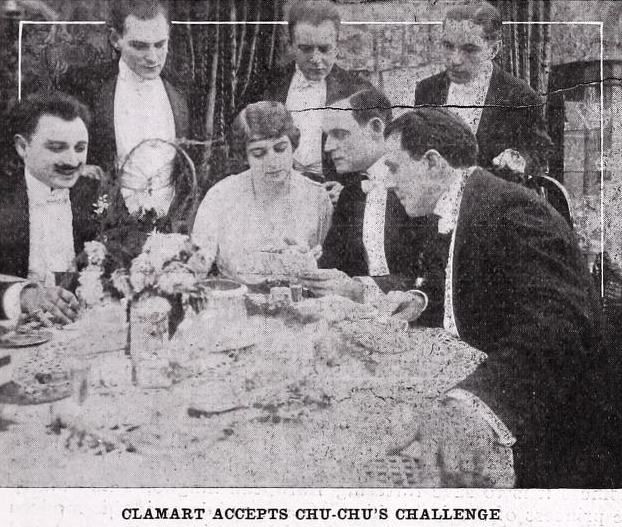
However, the past, as is often the case in such dramatic narratives, refuses to remain buried. Chu-Chu, consumed by a venomous cocktail of jealousy and possessiveness – perhaps over Leontine, perhaps over Frank's escape from their shared world – orchestrates a brazen break-in, stealing the family jewels and, in doing so, framing Frank. This act of calculated malice casts Frank back into the shadow of suspicion, threatening to unravel his fragile new life. The film masterfully builds tension here, as Frank, desperate to clear his name and protect his newfound family, must re-engage with the very world he vowed to leave behind. His journey to trick Chu-Chu and retrieve the gems is not just a quest for stolen goods; it is a desperate fight for his reputation, his freedom, and his soul. Eric Wayne, in the role of Frank Clamart, conveys this internal struggle with remarkable subtlety for the silent screen, using his physicality and expressions to paint a portrait of a man caught between two worlds. One might draw a parallel to the tormented souls in films like 'The Student of Prague', where characters wrestle with their darker selves or external forces that threaten to consume them. The psychological depth, though conveyed without dialogue, is palpable.
The climax of this intricate dance of betrayal and revenge is a spectacle of escalating stakes. Chu-Chu, relentless in his vendetta, attempts yet another robbery, leading to a direct confrontation with Frank. The ensuing struggle is fraught with danger, culminating in Frank taking another bullet, this time in the shoulder. But rather than incapacitate him, this wound ignites a fierce, primal resolve. What follows is a thrilling pursuit, a taxi chase through the bustling, shadowy streets that, even in its early cinematic form, possesses an exhilarating kinetic energy. The chase culminates in a breathtaking scene at a cliff's edge, a classic trope that finds potent expression here. Frank, with a grim determination, forces Chu-Chu's vehicle over the precipice, a definitive, violent severing of ties with his criminal past. Yet, the film offers a final, unexpected twist of fate and romance. Frank departs not alone, but with the taxi driver, a woman who, with a single, decisive shot, ensures Chu-Chu's demise. This final act, delivered by an unexpected hand, solidifies Frank's break and ushers him into a future defined by a new, unconventional love. It's a bold narrative choice, leaving the audience to ponder the moral implications of such a violent resolution, yet undeniably satisfying in its dramatic finality.
The success of 'The Closing Net' lies not only in its intricate plot but also in the compelling performances of its cast. Eric Wayne, as Frank Clamart, anchors the film with a nuanced portrayal of a man torn between his origins and his aspirations. His expressive eyes and gestures convey a rich inner life, making Frank's transformation believable, even within the heightened reality of silent cinema. The audience witnesses his descent into crime, his initial infatuation, his shock at the family revelation, and his eventual hardened resolve, all without a single spoken word. It's a masterful exercise in non-verbal communication, a skill that defined the great actors of the era.
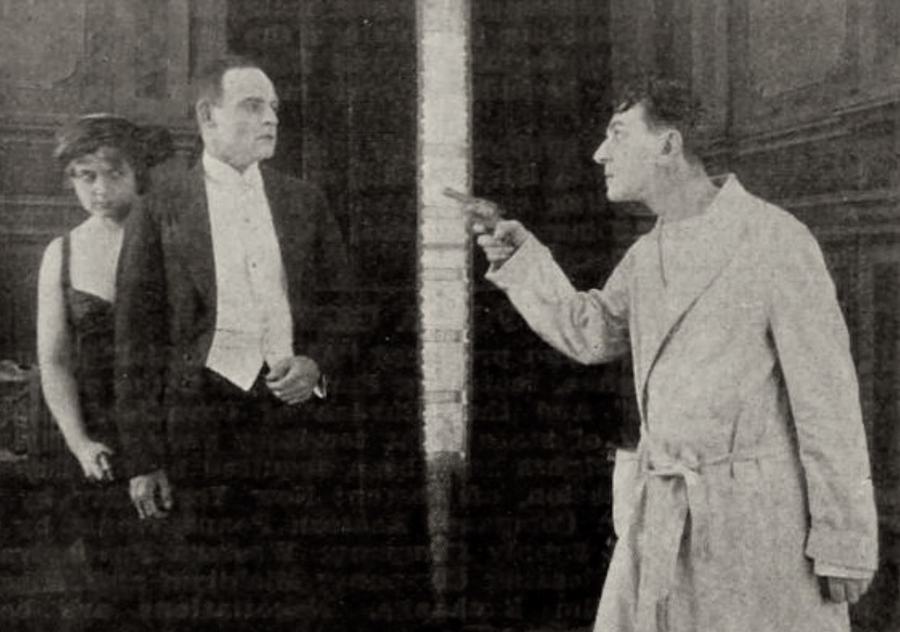
Madlaine Traverse, likely in the role of Leontine, brings a captivating intensity to the screen. Her character is not merely a femme fatale; she embodies the dangerous allure and moral ambiguity of the underworld, a force that both attracts and repels Frank. Her presence adds a layer of romantic tension and moral complexity that enriches the narrative. Bliss Milford and Kathryn Browne-Decker, likely playing the compassionate sister-in-law and perhaps the taxi driver respectively, provide vital emotional anchors, representing the possibility of a different, more virtuous life for Frank. Their quiet strength and kindness offer a stark contrast to the brutal world Frank initially inhabits, highlighting the choices he must make. Frederick Macklyn and Arthur Albro, presumably as the wealthy merchant and the vengeful Chu-Chu, provide formidable antagonists, their performances driving much of the film's conflict and suspense. Howard Estabrook, a prominent figure of the time, also contributes to this ensemble, though without specific character details, one can only surmise his impactful presence.
The direction, presumably by George B. Seitz (though the original information lists him as a writer), along with the writing by Seitz and Henry C. Rowland, showcases a sophisticated understanding of cinematic storytelling for its time. The pacing is deliberate, allowing moments of emotional impact to breathe, yet capable of accelerating into thrilling sequences of action and suspense. The use of intertitles is judicious, providing necessary exposition without overwhelming the visual narrative. The cinematography, while constrained by the technology of the era, would have employed dramatic lighting and framing to emphasize key moments and character emotions, a common technique that made films like 'Votsareniye doma Romanovykh' or 'The Carpet from Bagdad' so visually compelling. The film's ability to maintain suspense and engage the audience for its duration speaks volumes about the skill behind the camera and pen.
Beyond its surface as a crime thriller, 'The Closing Net' delves into profound themes that resonate across cinematic history. The central theme of redemption is paramount. Frank's journey from a life of crime to a desperate attempt at respectability, constantly pulled back by the tendrils of his past, is a classic narrative arc. It explores whether a person can truly escape their origins and whether society is willing to forgive past transgressions. This struggle for moral absolution is a timeless human condition, seen in countless narratives from Greek tragedies to modern dramas. The unexpected discovery of his familial ties introduces the theme of fate versus free will, suggesting that perhaps some destinies are preordained, even if one tries to defy them. This intriguing blend of determinism and individual choice elevates the film beyond simple genre fare.
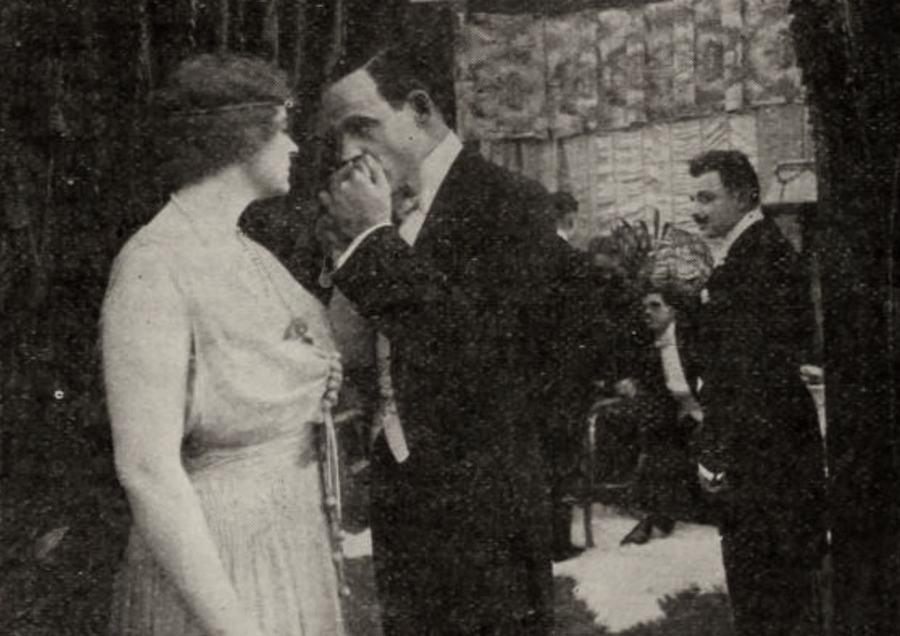
The film also touches upon the corrupting influence of societal neglect and the power of love and forgiveness. Frank's initial path is a direct consequence of his abandonment, highlighting the social critiques often subtly woven into early cinema. His sister-in-law's unconditional acceptance and the taxi driver's eventual loyalty offer a counterpoint to the bitterness and betrayal he experiences from Chu-Chu and even Leontine. This exploration of human relationships, both destructive and redemptive, gives the film a rich emotional texture. It's a complex tapestry of loyalty and perfidy, not unlike the intricate moral dilemmas presented in 'The Victory of Virtue' or the stark choices faced in 'As Ye Sow', though perhaps with a darker, more ambiguous resolution.
Furthermore, 'The Closing Net' serves as an excellent example of the thrilling narrative potential of early cinema. It demonstrates how filmmakers, even without sound, could craft gripping tales that held audiences captive. The film's ability to juggle multiple plot points – the initial crime, the familial revelation, the betrayal, the pursuit, and the ultimate resolution – speaks to a sophisticated understanding of dramatic structure. It's a testament to the enduring power of visual storytelling, proving that compelling characters and a tightly woven plot can transcend technological limitations. Its legacy, though perhaps not as widely celebrated as some of its contemporaries, lies in its ability to deliver a satisfying, emotionally resonant, and genuinely thrilling experience.
The ultimate resolution of 'The Closing Net' is particularly intriguing. Frank's final act of forcing Chu-Chu over the cliff, followed by the taxi driver's fatal shot, blurs the lines between justice and personal vengeance. Is Frank truly redeemed, or has he merely traded one form of violence for another, albeit in defense of his new life? The film leaves this question hanging, allowing the audience to ponder the moral ambiguities of its conclusion. This open-ended ethical contemplation is a hallmark of more complex storytelling, even in an era often characterized by clear-cut heroes and villains. It suggests a world where 'good' and 'evil' are not always distinctly separate, but often intertwined in the messy reality of human actions. This nuanced approach to morality is something we see in other films of the period that grappled with difficult choices, such as 'The Great Mistake', where consequences often extend beyond simple retribution.
The introduction of the taxi driver as Frank's new love interest, and her active role in the climactic demise of Chu-Chu, is also noteworthy. It signifies a complete break from his past with Leontine and the criminal underworld. This new relationship, forged in the heat of a life-or-death struggle, represents a fresh start, a different kind of companionship built on shared danger and a mutual desire for a future free from Chu-Chu's shadow. It's a departure from the more conventional romantic pairings often seen, hinting at a progressive sensibility in its portrayal of a woman capable of decisive, even violent, action. This could be seen as an early iteration of the strong female characters that would become more prominent in later cinema, offering a contrast to more passive roles. The final image of Frank and his new love driving off, leaving the wreckage of his past behind, is a powerful visual metaphor for rebirth and the relentless march forward of life.
In conclusion, 'The Closing Net' is far more than a mere historical curiosity from the nascent years of cinema. It is a robust, engaging thriller that cleverly intertwines themes of identity, family, betrayal, and redemption. The film's intricate plot, driven by compelling character motivations and punctuated by dramatic reversals, holds up remarkably well. The performances, particularly Eric Wayne's, convey a depth of emotion that transcends the lack of spoken dialogue, drawing the audience into Frank's tumultuous world. Writers George B. Seitz and Henry C. Rowland crafted a narrative that is both thrilling and thought-provoking, demonstrating a sophisticated understanding of dramatic tension and character development. It serves as a potent reminder of the ingenuity and artistry that flourished during the silent era, proving that profound storytelling does not require elaborate special effects or booming soundtracks, but rather a keen understanding of the human condition and the power of visual narrative.
For enthusiasts of silent film, or anyone with an appreciation for classic storytelling, 'The Closing Net' is a compelling watch that offers both thrilling entertainment and rich thematic depth. It is a testament to the fact that some narratives are truly timeless, their power undiminished by the passage of a century. It reminds us that the foundational elements of compelling cinema – compelling characters, unexpected twists, and an exploration of moral ambiguities – were firmly in place even in the medium's earliest days. Seek it out; you might just discover a new appreciation for the silent masters who laid the groundwork for all that followed. Its intricate plot and moral complexities position it alongside other enduring dramas of the period, inviting comparison with narratives that explored the human spirit's resilience and capacity for change, much like the profound journeys depicted in films such as 'The Beloved Adventurer' or the societal commentary found in 'Coral'. This film, with its potent mix of crime, family drama, and a surprising romantic twist, truly encapsulates the dynamic storytelling possibilities of its era.
IMDb 5.6
1933
Community
Log in to comment.