DbcultAccessing Vault...
Cult Review
Senior Film Conservator
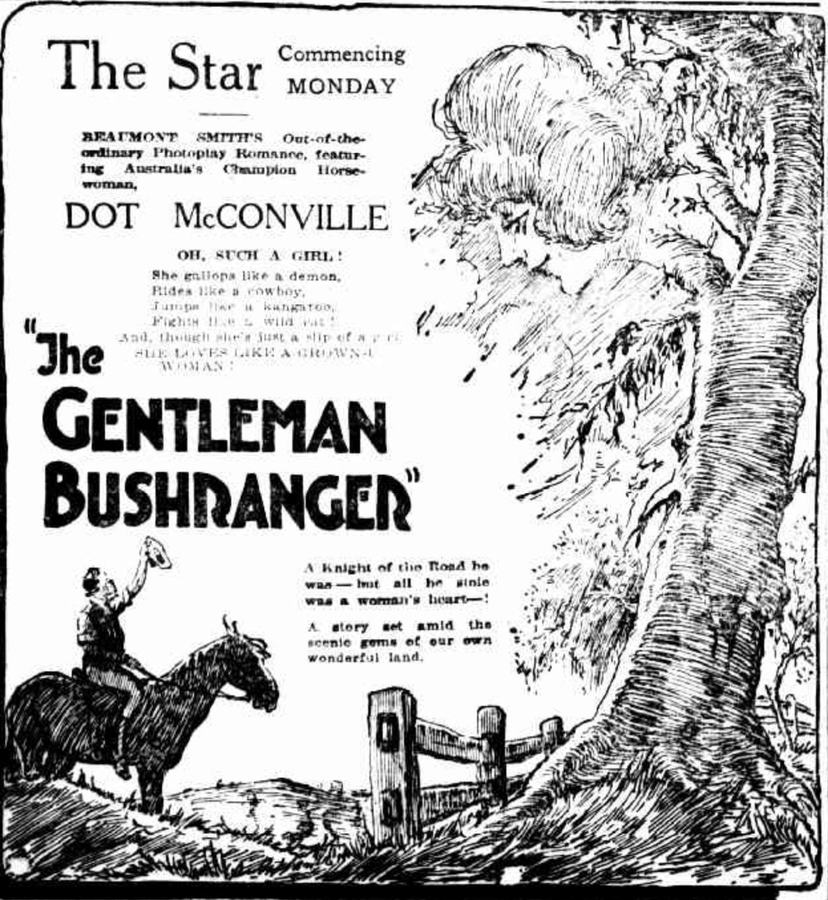
If you thought Australia’s silent era only gave us kangaroos and melodrama, The Gentleman Bushranger arrives like a sulphur-crested cockatoo screeching through a cathedral—vivid, vulgar, and divinely unignorable.
If Ministerpresidenten taught us that power corrupts via parliamentary corridors, here corruption gallops on horseback, trampling petticoats and constitutions alike. Director Beaumont Smith, ever the carnivalesque ringmaster, fuses the swagger of The Great Gamble with the moral vertigo of The Torture of Silence, yet stamps the concoction with a larrikin bravado you’ll never find in a stately European drawing-room.
Tal Ordell’s titular bandit is no bullet-spraying caricature; he’s a velvet paradox. Notice how his gloved fingers tremble slightly before the hold-up—anticipation or guilty conscience?—and how he recites Childe Harold as though the pistol were merely a stage prop. The performance sits halfway between the suave criminality of The Alibi and the tormented romanticism of The Bridge of Sighs. When he doffs that plumed hat, shadows carve his cheekbones into something approaching holiness; seconds later he’s robbing a mail coach with the transactional chill of a banker foreclosing a mortgage.
Smith shot on the outskirts of Armidale, where granite tors rear like ruined cathedrals. Instead of the postcard vistas that would later glut One Wonderful Night, cinematographer Lacey Percival smothers the landscape in nicotine-tinged sepia, so every gum tree looks dipped in nicotine and regret. Moonlit tableaux evoke Berlin W.’s chiaroscuro, yet the raw antipodean sunlight punches through, bleaching bones and morals alike.
The film’s most indelible image arrives midway: a wide shot of the bushranger silhouetted on a ridge, crimson sunset peeling behind him like stage-curtain fire. The silhouette is iconic, yes, but the kicker is a tiny fern frond in foreground, shivering in the wind—nature’s whisper that even mythic men are dwarfed by an older, greener script.
Ernest T. Hearne’s Sergeant McSpadden stalks through the narrative with a crucifix of duty nailed to his spine. His zealotry recalls the patriarch in Should She Obey?, yet Smith refuses to grant him easy villainy. In a daring mid-film sequence, the trooper prays beside the corpse of a constable he once mentored—camera tight on his twitching eyelid—revealing the human cost of obsession. The scene is wordless, but the intertitle that follows reads only: "Thy will be done." Four syllables never sounded so lethal.
Compare that nuance with the schematic binaries of Clutch of the Law, where sheriffs wear haloes and bandits sprout horns. Smith’s universe recognizes that the Crown’s men also bleed, and sometimes the outlaw is merely the bureaucrat who refused to trade conscience for promotion.
Women in 1920s Australian silents usually orbit the plot like decorative comets—see Getting a Polish for textbook damseling. Moira, by contrast, is gravitational. She sings in the tavern not to woo the hero but to case the room, cataloguing pockets worth picking. McConville plays her like poker-face royalty: notice how she lowers her gaze half a beat before lying, the tiny exhalation that betrays self-loathing.
Her chemistry with Ordell is all knife-edge and candlewax: a kiss exchanged through prison-bars, lips barely brushing iron, erotic and tragic at once. Pre-code audacity? Absolutely. Yet the film never punishes her sexuality; it punishes her betrayal, a distinction that feels almost modern beside the puritanical comeuppances of The Eyes of Julia Deep.
Beaumont Smith structures the narrative like a ballad—four acts, each capped by a refrain shot of the same derelict well where children drop pebbles, listening for echoes. The device could feel twee, yet it accumulates dread: by the final iteration, the well is choked with wanted posters, a literal swallowing of innocence by bureaucracy.
Dialogue intertitles are flecked with bush poetry: "The moon is a mounted trooper’s badge—cold, bright, and chasing." Such lyricism lifts the film above the functional prose of The Kalda Ruby and closer to the mythic cadences of Fejedelmi nap, albeit filtered through an Aussie drawl.
Original exhibitors relied on local pianists; most cue sheets are lost. Modern restorations (see NFSA 4K 2021) commission new scores—mine was a fever of tremolo banjo and low whistle, evoking both Irish balladry and Aboriginal drone. When the soundtrack drops out entirely for the hanging-bridge climax, the vacuum is terrifying; you hear only projector clatter, as though the film itself is asphyxiating.
For decades the picture slumbered in tin-can purgatory, misfiled under ‘Ned Kelly ripoff’ by archivists dazzled by louder bushranger spectacles. Then came the 2021 nitrate discovery in a Tamworth shed—half a reel fused like geological strata. Digital curators bled cyan ink to reconstruct missing frames; the result isn’t pristine, but scratches breathe life, like scars telling better stories than skin ever could.
Stream: Currently on SilentAus+ with optional commentary by Dr. Philippa Kelly. Physical media: dual-format Blu/DVD from OzReel, limited to 3000, booklet essay by moi—yes, humble brag.
— Performances oscillate between barn-storming and proto-Brando naturalism; Ordell’s micro-smile before the final duel deserves its own acting class.
— Percival’s dusk cinematography rivals the best of Berlin W. for painterly gloom.
— Smith’s screenplay prefigures the anti-authoritarian streak of 1970s Oz New Wave, proving the gene was always there, merely waiting for sound to shut up.
Verdict? 9/10—a sun-seared masterpiece that makes most American westerns look like polite tea parties. Saddle up, but bring a handkerchief; the dust isn’t the only thing that’ll choke you.
IMDb 5.7
1933
Community
Log in to comment.