Summary
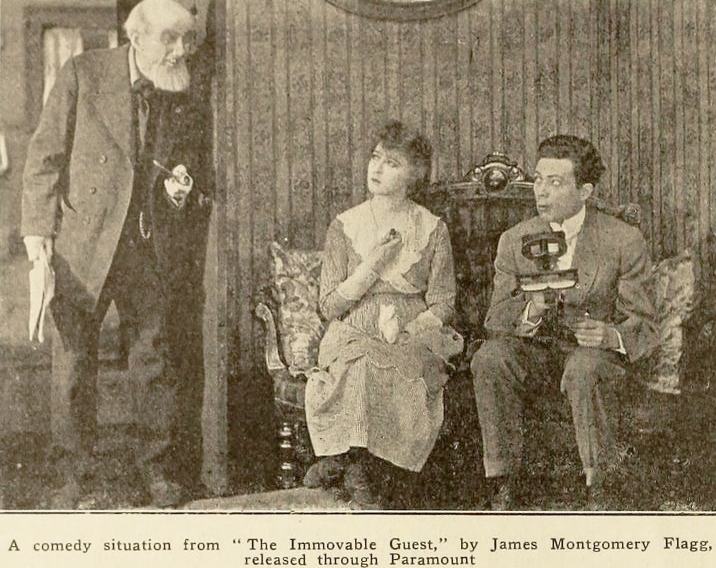
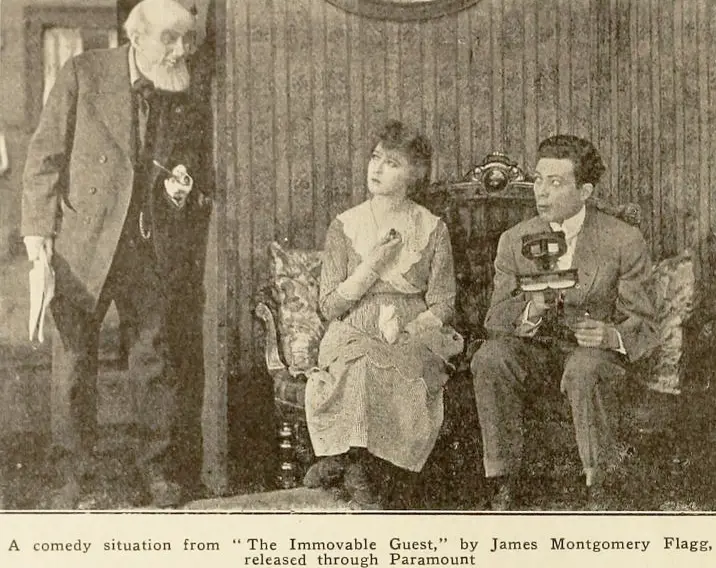
In an era when societal decorum was both an art form and a fragile construct, "The Immovable Guest" unfurls a meticulously choreographed domestic farce, a silent ballet of escalating discomfort. The narrative centers on the seemingly innocuous arrival of Mr. Phileas Foggins, portrayed with an exquisite blend of guileless charm and infuriating inertia by Arthur Housman, into the meticulously ordered household of the perpetually flustered Mrs. Arabella Finch (Flora Finch) and her mild-mannered, long-suffering husband, Mr. Thaddeus Finch (Joseph Burke). What begins as a brief, polite visit rapidly calcifies into an indefinite occupation, a subtle yet relentless siege on their domestic tranquility. Foggins, a master of passive resistance, effortlessly deflects every polite hint, every not-so-subtle suggestion of departure, his presence becoming a physical manifestation of their anxieties. The film exquisitely captures the Finches' spiraling desperation—their increasingly frantic, yet always civil, attempts to dislodge their entrenched lodger. Their daughter, the spirited Clara (Claire Whitney), initially amused, soon finds her own romantic prospects complicated by the ever-present, ever-observing Foggins, whose very existence seems to cast a pall over the household's aspirations. It’s a profound, albeit comedic, exploration of the boundaries of hospitality, the tyranny of politeness, and the psychological toll of an unwelcome presence, revealing the brittle façade of Edwardian social graces cracking under the weight of an utterly unyielding inconvenience.
Review Excerpt
"
Stepping back into the flickering shadows of early cinema, one often encounters narratives that, despite their age, resonate with an uncanny contemporary relevance. 'The Immovable Guest', a 1917 silent film, is precisely such a discovery—a meticulously crafted domestic comedy that transcends its historical context to offer a timeless commentary on human nature, social etiquette, and the profound discomfort of an unwelcome presence. Though the plot, as presented, is a blank canvas, ..."