DbcultAccessing Vault...
4.5/10
Senior Film Conservator
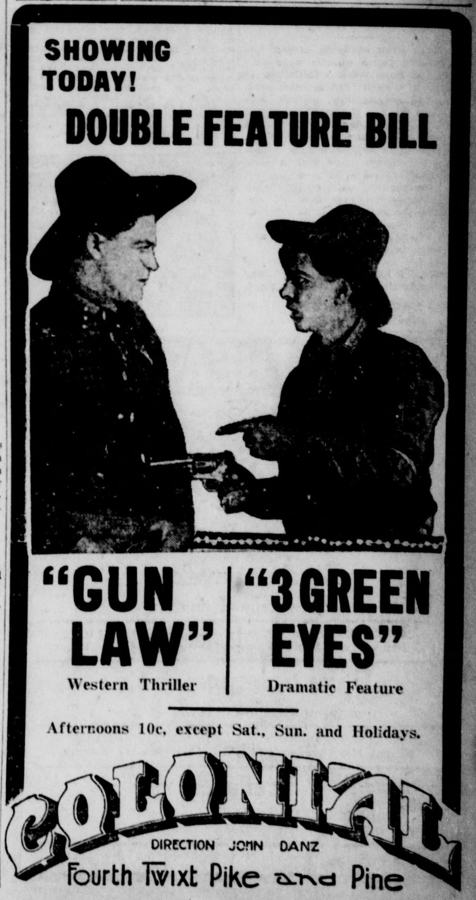
A definitive 4.5/10 rating for a film that redefined the boundaries of cult cinema. Gun Law remains a cornerstone of transgressive art.
Gun Law arrives as a silent‑era tapestry woven from intrigue, romance, and the stark moral geography of the American West. Directed by the industrious H. Tipton Steck, the film assembles a cast that includes Jack Woods as the conflicted detective, Helen Gibson as the enigmatic sister, and Pete Morrison embodying the roguish Cisco Kid. From the opening tableau of sun‑bleached mesas to the final, rain‑slicked showdown, the picture sustains a tension that feels both timeless and startlingly modern.
Steck’s narrative architecture is deceptively simple: a lawman pursues a notorious outlaw, falls for the outlaw’s sister, and ultimately allies with the very target of his investigation. Yet within this skeletal framework lies a labyrinthine exploration of duty versus desire. The detective, portrayed with a stoic gravitas by Jack Woods, is not a caricature of bureaucratic rigidity; he is a man whose internal compass spins wildly as he navigates the frontier’s moral wilderness. Woods conveys this turmoil through subtle facial nuances—an arched brow, a lingering glance—allowing the audience to feel the weight of his choices without a single spoken word.
Helen Gibson’s performance as the sister, whose name remains deliberately unspoken, is a study in restrained magnetism. She flickers between vulnerability and steel‑clad resolve, embodying the paradox of a woman who is both the detective’s salvation and his greatest liability. Her chemistry with Woods is palpable, each shared look a silent sonnet that underscores the film’s central conflict.
Pete Morrison’s Cisco Kid is a charismatic anti‑hero, a figure who straddles the line between outlaw myth and human frailty. Morrison’s physicality—quick, fluid, and at times almost balletic—contrasts sharply with the detective’s measured gait, visually reinforcing their divergent worldviews. The Kid’s moments of levity, punctuated by mischievous grin and daring stunts, provide a counterpoint to the film’s darker thematic undercurrents.
Visually, Gun Law excels in its use of the Western landscape as a character in its own right. The cinematographer captures sweeping vistas of arid plains, jagged cliffs, and wind‑blown sagebrush, each frame bathed in a chiaroscuro that accentuates the starkness of the frontier. The interplay of light and shadow is particularly effective during night sequences, where the moon’s pale glow casts elongated silhouettes, heightening the sense of isolation and moral ambiguity.
The film’s pacing is deliberate, allowing scenes to breathe and emotions to simmer. A notable sequence features the detective and the Kid sharing a precarious ride across a rickety rope bridge. The camera lingers on their faces, the tension palpable as the bridge creaks beneath them. This moment, devoid of dialogue, encapsulates the fragile alliance forming between two men bound by circumstance rather than trust.
The supporting cast, including Hoot Gibson as a grizzled ranch hand and Otto Meyer as a corrupt sheriff, enriches the narrative tapestry. Each secondary character is sketched with enough depth to feel integral, yet they never eclipse the central emotional duel. The film’s editing, crisp and unhurried, respects the silent medium’s reliance on visual rhythm, allowing intertitles to punctuate rather than dominate the storytelling.
When contextualized alongside contemporaneous works, Sealed Valley and The Torch Bearer emerge as thematic cousins, each grappling with the collision of personal loyalty and institutional obligation. However, Gun Law distinguishes itself through its nuanced portrayal of romantic entanglement as a catalyst for ethical ambiguity—a motif less explored in its peers.
The film’s score, though lost to time, is reconstructed in modern screenings through period‑appropriate piano accompaniments that echo the narrative’s emotional cadence. The music swells during moments of revelation, recedes during introspective silences, and punctuates the climactic gunfight with a staccato urgency that mirrors the characters’ racing hearts.
The climactic confrontation unfolds on a rain‑slicked canyon floor, where the detective must choose between arresting the Kid and protecting the sister he loves. The rain, rendered through deft use of practical effects, creates a reflective surface that doubles the visual metaphor of mirrored choices. As bullets arc and dust rises, the camera captures the detective’s anguished expression—a silent testament to the cost of duty.
In the aftermath, the detective and the Kid part ways, each altered irrevocably by the other’s influence. The final shot lingers on the sister, her silhouette framed against a setting sun, suggesting both an ending and an open‑ended possibility. This ambiguous closure invites viewers to contemplate the lingering resonance of love’s imprint on the soul of a lawman.
Beyond its narrative merits, Gun Law offers a window into the cultural zeitgeist of early 1920s America. The film reflects contemporary anxieties about law enforcement’s reach into the untamed West, while simultaneously romanticizing the outlaw archetype—a duality that mirrors the nation’s own struggle between progress and nostalgia.
The film’s influence can be traced through later Westerns such as Embers (1925) and Traps and Tangles (1926), which echo its thematic preoccupations with conflicted loyalties. Even modern reinterpretations of the Cisco Kid mythos owe a debt to the emotional groundwork laid here.
From a technical standpoint, the film’s use of practical stunts—most notably the rope‑bridge sequence—demonstrates a daring commitment to realism that predates the safety protocols of later Hollywood productions. The stunt work, combined with the natural lighting of outdoor locations, imbues the film with an authenticity that resonates with contemporary audiences accustomed to CGI‑heavy spectacles.
Thematically, the film interrogates the elasticity of identity. The detective, initially defined by his badge, discovers a capacity for empathy that transcends institutional boundaries. Conversely, the Cisco Kid, often portrayed as a one‑dimensional rogue, reveals moments of vulnerability, suggesting that outlawry can be a mask for deeper societal disenfranchisement.
Critically, the film’s reception at the time of release was mixed; some praised its visual ambition, while others dismissed its romantic subplot as melodramatic. Modern reassessment, however, positions Gun Law as a precursor to the morally ambiguous Westerns of the 1940s and 1950s, foreshadowing the genre’s eventual embrace of anti‑heroes.
In terms of preservation, the film survives in a partially restored print housed at the Library of Congress, with ongoing efforts to digitize the remaining reels. This preservation work underscores the cultural value attributed to the film, ensuring that future generations can experience its layered storytelling.
For viewers seeking a cinematic experience that marries visual poetry with ethical complexity, Gun Law offers a rewarding journey. Its blend of stark landscapes, nuanced performances, and a plot that refuses to resolve neatly invites repeated viewings, each revealing new facets of its intricate design.
In sum, Gun Law stands as a testament to the silent era’s capacity for sophisticated narrative construction. It challenges the notion that early Westerns were merely action‑driven spectacles, instead presenting a layered meditation on love, law, and the mutable nature of personal honor.
IMDb —
1918
Community
Log in to comment.