Summary
From the desolate frontier, where the raw violence of a raid rends a family asunder, emerges the harrowing odyssey of Mary and Joe Thompson. Left utterly bereft, their nascent lives irrevocably altered by the brutal demise of their parents, Joe, barely more than a child himself, shepherds his infant sister Mary through the wilderness. Providence, in its capricious wisdom, guides them to the unlikely sanctuary of Bill Jenkins, a gruff yet benevolent prospector whose isolated cabin becomes their surrogate home, a fragile bulwark against the untamed world.
Years unfurl, yet the psychological scars of their origins fester in Joe. As Jenkins ascends to the mantle of sheriff, a stark irony unfolds: his adopted son succumbs to the allure of banditry, his moral compass fractured by unseen forces. An audacious stagecoach heist leaves Joe gravely wounded, forcing a desperate confession to a horrified Mary. Bound by an unbreakable, albeit fraught, familial devotion, Mary agrees to aid his flight eastward, but only after he relinquishes his ill-gotten gains—a futile gesture of atonement that will nonetheless precipitate catastrophic consequences.
Their escape is short-lived. The abandoned loot and tell-tale bloodstains ensnare Jenkins, falsely implicating him in Joe’s brazen crime. A swift-moving posse, fueled by righteous indignation, nearly lynches the sheriff before an engine tender's timely testimony redirects their fury. Jenkins, a man now driven by a profound sense of betrayal and duty, embarks on a relentless pursuit, culminating in Joe’s apprehension in a remote hotel where Mary, in a desperate gambit to deflect suspicion, had registered them as husband and wife—a detail that will later become a devastating weapon against her.
With Joe incarcerated, Mary seeks a new life in the urban sprawl of the East, finding solace and purpose in the laboratories of an innovative young inventor whom she eventually marries. Their prosperity blossoms, built upon the success of his groundbreaking creations, yet the past, a relentless specter, refuses to be laid to rest. Joe, a phantom of his former self, absconds from prison, vanishing into the societal ether. Simultaneously, Mary's husband succumbs to the siren call of a duplicitous cabaret singer, a woman whose shadowed past intertwines ominously with their own.
Mary's anguished plea for her husband's reformation is overheard by the concealed paramour, who, seizing the opportunity for malevolent leverage, reveals Mary's perceived "marriage" to a criminal—a distorted truth born from that desperate hotel registration. The husband, blinded by rage and prejudice, initiates swift divorce proceedings, clutching the incriminating hotel ledger as irrefutable proof, deaf to Mary's fervent protestations.
In a city gripped by the elusive exploits of a master burglar, Mary, in an act of desperate ingenuity, dons masculine attire, intending to retrieve the damning evidence from her husband's attorney's office. A twist of fate, however, orchestrates a nocturnal rendezvous within the very same dwelling, as the notorious "second story man"—none other than the escaped Joe—also seeks entry. Their shadowed encounter culminates in Joe's horrified recognition of his sister just as a watchful detective, observing Mary's furtive entry, discharges his weapon, wounding her.
The cacophony draws the attorney and Mary's husband, who discover the tableau of their wounded loved one and the notorious criminal. In a raw, unvarnished confession, Mary recounts her harrowing tale, corroborated by Joe's own courageous admission of his criminal past and subsequent escape. The truth, finally unveiled, shatters the edifice of deception and doubt. A profound reconciliation ensues, cemented by Mary's husband’s influence, which discreetly shields Joe from further legal repercussions, affording him a genuine path to reformation. This saga, a testament to enduring loyalty amidst profound moral ambiguity, paints a stark portrait of justice's circuitous and often cruel path.
Synopsis
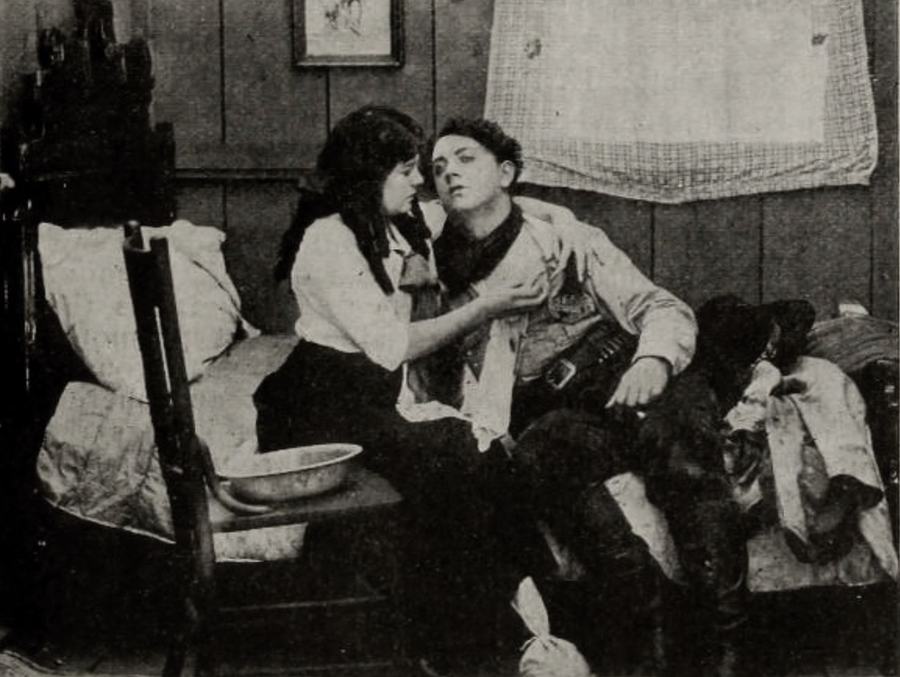
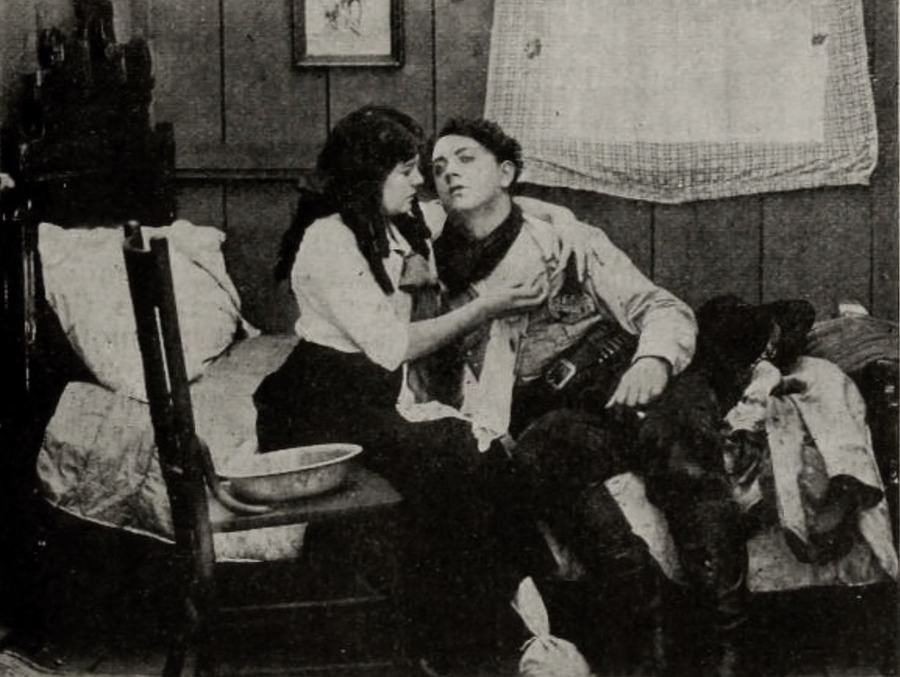
En route to the west, Mary and Joe Thompson are left orphans through the death of their parents during an Indian raid on their wagon train. Joe manages to escape with Mary in his arms and they eventually reach a little western mining town, where Bill Jenkins, a prospector, finds them and takes them into his home as his children. About the time Joe reaches manhood, Jenkins is mad sheriff. Joe has developed vicious traits, and has been making a practice of highway robbery. Unknown to Jenkins or to his sister, he one day holds up a stage. After it has passed him, the messenger dismounts from the box and starts back to see if he can capture the bandit. A gunfight follows in which Joe is seriously wounded. Joe makes his escape and arrives home weak from loss of blood. Mary demands an explanation of his condition and he confesses his crime. He tells her that he will surely be captured and urges her to go east with him. She agrees on the condition that he leave his plunder there to be found later and restored to its owners. He reluctantly agrees. They go to the railroad station where an engine tender sees them aboard the train. In the meantime, a the stage has arrived and the news of the robbery is spread. The citizens organize a posse to try and capture the bandit. Jenkins, the sheriff, goes to the house, where he finds the blood stains and the money which Joe left in his flight. Just then the posse enters. When they see the unmistakable evidence of robbery, they accuse Jenkins of being the guilty one, and are about to lunch him when the engine tender comes upon the scene and tells of having seen Joe and Mary leave town. Jenkins boards a light engine and starts in pursuit of Joe and Mary. At a town not far down the track, Joe, too weak to travel further, leaves the train with Mary, and they go to a hotel. Jenkins hears of this and trails them there with the posse. To avoid suspicion, Mary registers for Joe, showing them as man and wife. They are caught, and Joe surrenders. Mary goes on east where she secures employment in the laboratories of a young inventor. The later marries him and still later he succeeds in selling an invention which leaves them independently wealthy. Joe, in the meantime, has escaped from prison and no one has been able to locate him. Mary's husband meets and becomes infatuated with a cabaret singer, the same woman who was in the western town at the time of Joe's capture. Mary learns of her husband's infidelity and goes to him to plead for his reformation. Upon her entrance into the room, the singer who has been there with the husband, hides herself in an adjoining closet where she sees and hears all that takes place. After Mary's departure, she tells the husband about the episode in the west and that Mary is married to a criminal. The husband immediately starts divorce proceedings. He will not listen to Mary's side of the story. He sends for and receives the register which he holds as evidence of Mary's previous marriage. Joe is nowhere to be found, so Mary cannot get his testimony regarding the affair. About this time the city is thrown into a furor by the news that a second story man is working there, and always eluding the police. This gives Mary an idea. She decides to enter the office of her husband's attorney and steal the evidence contained in the register. She puts on man's clothing and effects an entrance. At the same time, the second story worker enters the same house from another window. They encounter each other in the dark and Joe flashes a light in her face before shooting. He recognizes his sister and is making an explanation when a detective who has seen Mary enter the house, comes into the room. The detective fires at Mary in the dark and wounds her. The noise brings in the lawyer and Mary's husband, who is in conference with him in another part of the house. Mary, wounded, insists upon telling her story. They listen, and when she has finished, Joe comes forward and confesses himself the escaped criminal and corroborates all she has said. In the face of this, Mary's innocence is not to be doubted and a reconciliation follows. Through the power and influence of Mary's husband, Joe's path in it all is kept from the police, and he reforms.
Review Excerpt
"
"The Stain in the Blood": A Melodrama That Bleeds Beyond the Screen
There are films that merely tell a story, and then there are those that etch themselves into the very fabric of cinematic memory, not just for their narrative prowess but for the sheer audacity of their emotional landscape. Robert Dillon's "The Stain in the Blood" (1916), a veritable relic from the silent era's golden age, is precisely such a film. It's a sprawling, tumultuous saga that, despite its age, stil..."