DbcultAccessing Vault...
Cult Review
Senior Film Conservator
There are films that merely tell a story, and then there are those that etch themselves into the very fabric of cinematic memory, not just for their narrative prowess but for the sheer audacity of their emotional landscape. Robert Dillon's "The Stain in the Blood" (1916), a veritable relic from the silent era's golden age, is precisely such a film. It's a sprawling, tumultuous saga that, despite its age, still pulsates with a raw, undeniable vitality. Forget your modern blockbusters for a moment and immerse yourself in a world where moral ambiguities are painted with broad, dramatic strokes, where loyalty is tested at every turn, and where the past, like a tenacious shadow, relentlessly pursues its protagonists. This isn't just a movie; it's an experience, a journey into the heart of human resilience and frailty.
From its opening frames, "The Stain in the Blood" plunges us into a crucible of frontier hardship. The Thompson family, en route to the mythic West, becomes an unfortunate casualty of an Indian raid. This isn't merely a plot device; it's the genesis of all subsequent drama, a primal wound that shapes the destinies of young Mary and Joe. Orphaned and utterly bereft, Joe's heroic escape with his infant sister in his arms is a moment of stark, almost biblical poignancy. Their eventual discovery by Bill Jenkins, a gruff but ultimately benevolent prospector, offers a brief respite, a flicker of hope in an otherwise brutal existence. Jenkins, portrayed with a commendable blend of stoicism and paternal warmth by Murdock MacQuarrie, becomes their unlikely guardian, weaving them into the fabric of his solitary life.
But peace, as this narrative relentlessly reminds us, is often fleeting. As Joe (Norbert A. Myles) matures into manhood, the psychological scars of his past manifest in a deeply troubling manner. He develops "vicious traits," a euphemism for a descent into criminality that feels both inevitable and tragic. It's a compelling exploration of nature versus nurture, questioning whether the trauma of his early life predisposed him to a life of transgression, or if some inherent flaw lay dormant, waiting for the opportune moment to emerge. The irony is palpable: Jenkins, their erstwhile savior, has become the town sheriff, a figure of law and order unknowingly harboring a burgeoning outlaw. This duality creates an exquisite dramatic tension, a ticking time bomb beneath the surface of their seemingly tranquil lives.
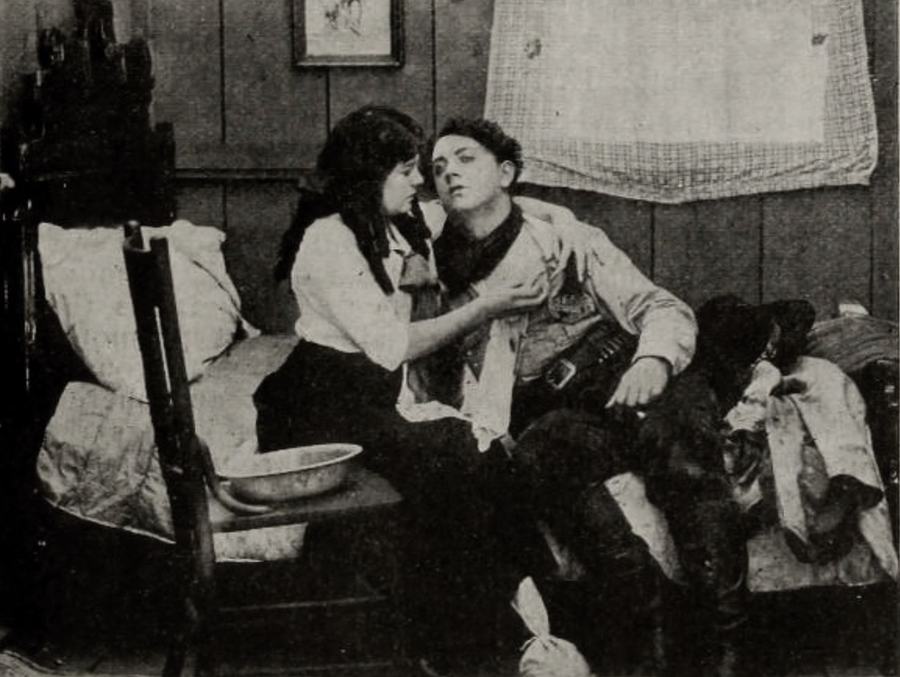
The narrative accelerates with Joe's audacious stagecoach robbery, a sequence fraught with the kind of kinetic energy that belies the film's silent origins. A gunfight ensues, leaving Joe gravely wounded—a visceral reminder of the violent consequences of his chosen path. His subsequent return home, weak and bleeding, forces a desperate confession to Mary (Edythe Sterling). Sterling, in a performance of remarkable depth for the era, imbues Mary with a potent mix of shock, despair, and an unshakeable fraternal loyalty. Her demand that Joe abandon his ill-gotten gains as a precondition for her aid in his escape speaks volumes about her moral compass, a beacon of integrity in a world increasingly shadowed by Joe's transgressions. This moment, more than any other, solidifies Mary's role as the film's moral anchor, a character whose unwavering devotion will drive much of the ensuing narrative.
The immediate aftermath of Joe's crime is a masterclass in narrative dominoes. The discovery of the abandoned loot and the tell-tale bloodstains at Jenkins' home casts a pall of suspicion over the sheriff himself. The townsfolk, quick to judgment, morph into an angry mob, poised to exact frontier justice. It's a powerful indictment of mob mentality, a theme that resonates even today. The timely intervention of the engine tender, however, redirects their fury, setting Jenkins on a relentless pursuit of his adopted children. This chase, punctuated by the clatter of a light engine against the vast Western landscape, is a testament to the visceral power of early cinema to convey urgency and desperation.
The capture of Joe and Mary in a remote hotel is a pivotal moment, not just for its immediate dramatic impact, but for the seeds it sows for future conflict. Mary's desperate act of registering them as man and wife, a futile attempt to deflect suspicion, will return to haunt her with devastating consequences. It's a narrative device that feels both classic and brilliantly cruel, showcasing Robert Dillon's skill as a storyteller. This kind of dramatic irony, where an act of love and protection becomes a weapon, is a hallmark of compelling melodrama. One might draw parallels here to films like Sentenced for Life, where a character's attempt to protect another inadvertently ensnares them in a web of legal peril, or even The Dead Secret, which similarly explores how concealed truths can unravel lives years later.
With Joe incarcerated, Mary embarks on a new life in the East, a stark geographical and emotional contrast to the untamed West. Her journey into the burgeoning world of scientific innovation, working in the laboratories of a young inventor (Millard K. Wilson), offers a compelling glimpse into the evolving societal roles for women in the early 20th century. Her subsequent marriage to him, and their eventual prosperity through his inventions, paints a picture of hard-won success and domestic bliss. Edythe Sterling's portrayal of Mary's transformation from frontier survivor to sophisticated urbanite is nuanced, hinting at the strength and adaptability beneath her seemingly fragile exterior. This period of relative tranquility, however, is merely the calm before the storm.
The re-emergence of Joe, now an escaped convict, casts a long, ominous shadow over Mary's newfound happiness. His escape from prison, leaving no trace, is a constant, unspoken threat. But the true catalyst for renewed turmoil comes not from Joe directly, but from the insidious influence of a cabaret singer (Dorothy Nash), a figure of alluring danger who ensnares Mary's husband. Nash’s performance, though perhaps limited by the tropes of the "vamp" archetype of the era, effectively conveys a predatory cunning that sets the stage for betrayal. The chilling revelation that this very woman was present in the western town during Joe's initial capture adds a layer of intricate, almost karmic, connection, demonstrating Dillon’s penchant for weaving seemingly disparate plot threads into a tightly wound tapestry of fate.
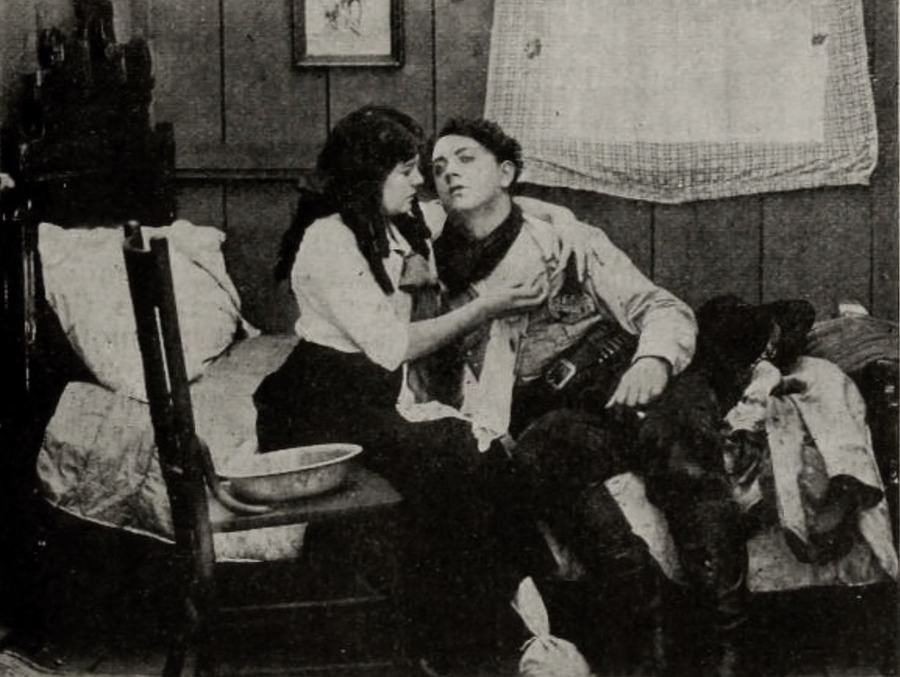
Mary's desperate plea for her husband's reformation, overheard by the hidden singer, is a moment of excruciating vulnerability. The subsequent weaponization of Mary's past—the distorted truth of her "marriage" to Joe in that remote hotel—is a gut-wrenching betrayal. The husband, blinded by infatuation and prejudice, refuses to hear Mary's side, clinging instead to the incriminating hotel register as irrefutable proof. This narrative thread, exploring themes of reputation, societal judgment, and the fragility of trust, echoes the moral quandaries found in films like Nearly a Lady or Her Sister's Rival, where women's pasts are often scrutinized and weaponized against them in a patriarchal society. The film brilliantly portrays how easily a half-truth, presented with malicious intent, can shatter a life.
The arrival of the elusive "second story man" in the city is a clever narrative flourish, setting the stage for the film's astonishing climax. Mary, driven to desperation, conceives a daring plan: to retrieve the damning register from her husband's attorney's office. Her decision to don men's clothing for this nocturnal escapade is not just a practical disguise; it's a symbolic act of defiance, a shedding of conventional female roles in pursuit of justice. This bold move positions Mary as an active agent in her own destiny, rather than a passive victim of circumstance.
The climactic scene, unfolding in the darkened attorney's office, is a masterstroke of suspense and dramatic irony. The simultaneous entry of Mary and the mysterious "second story man" (who, by now, the astute viewer will have suspected to be Joe) creates an almost unbearable tension. The moment Joe flashes a light, recognizing his sister before a shot rings out from an unseen detective, is pure cinematic genius. It’s a collision of past and present, crime and loyalty, all culminating in a single, gut-wrenching instant. The ensuing chaos, with Mary wounded and the lawyer and her husband rushing in, is a maelstrom of emotion and revelation.
Mary's insistence on telling her full story, even while wounded, underscores her unwavering courage and determination. Her narrative, raw and unvarnished, lays bare the intricate web of circumstances that led to her present plight. And then, in a moment of profound sacrifice and redemption, Joe steps forward. His confession, corroborating Mary's every word, is the emotional linchpin of the entire film. It’s a powerful act of brotherly love, an atonement for his past transgressions, and the ultimate vindication of Mary's innocence. This scene, more than any other, highlights the film's central thematic preoccupation: the enduring strength of familial bonds in the face of overwhelming adversity. It’s a moment that could easily be compared to the intense personal revelations and sacrifices seen in films like Judith of the Cumberlands or A Boy and the Law, where characters confront their moral failings for the sake of loved ones.
The reconciliation that follows, facilitated by Mary's husband’s newfound understanding and influence, is deeply satisfying, if perhaps a touch idealistic. The discreet shielding of Joe from further legal repercussions, allowing him a path to reform, speaks to a belief in second chances, a hopeful note in an otherwise fraught narrative. This resolution offers a powerful message: even the deepest stains on a life can be cleansed through truth, forgiveness, and unwavering loyalty.
"The Stain in the Blood" is a testament to the power of silent cinema to convey complex emotions and intricate plots without a single spoken word. The performances, particularly from Edythe Sterling and Norbert A. Myles, are remarkably nuanced, relying on expressive physicality and subtle facial gestures to communicate their characters' inner turmoil and triumphs. Robert Dillon's screenplay, for all its melodrama, is meticulously constructed, weaving together disparate elements into a cohesive and emotionally resonant whole. The film’s pacing, while perhaps leisurely by modern standards, allows for a deep immersion into its dramatic world, letting the emotional beats truly land.
Visually, the film utilizes the stark contrasts of light and shadow, characteristic of early cinema, to great effect. The desolate Western landscapes give way to the bustling, yet equally treacherous, urban environments of the East, creating a vivid backdrop against which the human drama unfolds. While the technical sophistication may seem quaint today, the narrative ambition and emotional sincerity are anything but.
In an era dominated by rapid technological advancements in filmmaking, "The Stain in the Blood" reminds us that the core elements of compelling storytelling—character, conflict, and consequence—remain timeless. It's a poignant exploration of how familial bonds can both burden and redeem, how societal judgment can cripple, and how, ultimately, truth and love can overcome even the most insidious betrayals. This film is more than just a historical curiosity; it's a vibrant, emotionally charged experience that deserves to be rediscovered and appreciated for its enduring power. It leaves an indelible mark, not a stain, but a testament to the enduring human spirit.
IMDb —
1931
Community
Log in to comment.