DbcultAccessing Vault...
Cult Review
Senior Film Conservator
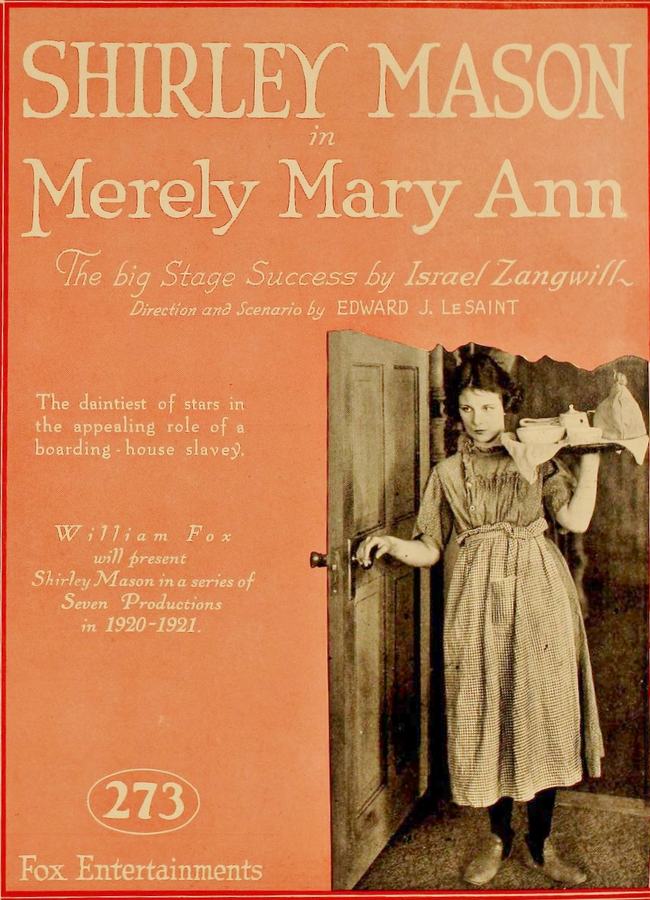
A print, flecked like a snow-globe of nitrate dust, still manages to exhale the warm breath of Georgia Woodthorpe’s Mary Ann every time the projector clatters—proof that genuine tenderness can survive a century of neglect. The film, shot on the waning edge of the teens, belongs to that tremulous interregnum when silent cinema was learning how to whisper instead of declaim.
Director Edward LeSaint, better remembered for one-reel parables than for lyrical long-form storytelling, here pirouettes between kitchen-sink grime and ethereal idealism without slipping. The East End streets are rendered in high-contrast grisaille: cobblestones glisten like wet piano keys, and the perpetual smog becomes a kind of omniscient chorus humming through every scene. Inside this urban purgatory, Mary Ann’s figure—wrapped in a shawl the color of dishwater—moves with the unstudied grace of someone who has never expected mercy. Woodthorpe, a West End veteran imported to Hollywood for a season, lets the camera read every micro-shiver of her shoulder blades; the result is a performance that feels eavesdropped rather than performed.
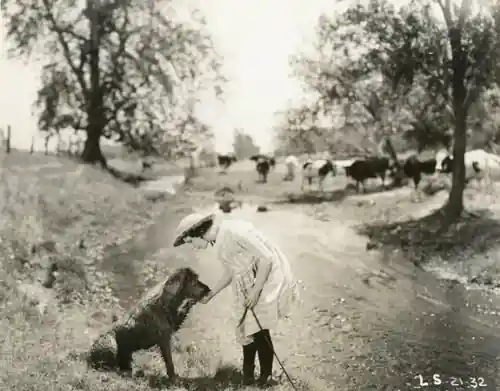
Opposite her, Casson Ferguson’s John Lonsdale is all nervous angles, a bow perpetually on the verge of snapping. Ferguson, usually cast as collegiate fops, strips away the saunter and reveals the raw terror of a man who hears music in his head louder than the growl of his own stomach. The courtship sequences rely on glances rather than title cards: a half-eaten apple placed on a windowsill, a muddy boot polished with a discarded manuscript page, a candle stub passed back and forth as if it were the Olympic flame. These miniature transactions accumulate into a currency more valuable than any studio-confected plot twist.
Zangwill’s original play, a West End success in 1903, was a sardonic morality tale; LeSaint dissolves the sermon into pure sensory yearning.
The screenplay retains only the skeleton of the source: the Jewish immigrant subtext is muted, the class diatribes softened into shadow-play. Yet the excisions feel curiously merciful, allowing the lingering close-up to do what Zangwill’s talky dialectics could not—namely, let silence speak the unspeakable.
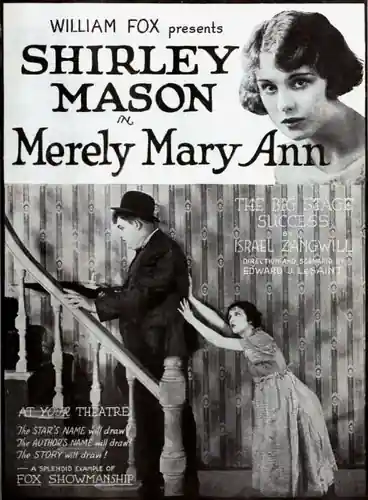
Jean Hersholt shows up mid-film as a benevolent physician whose wallet is as swollen as his heart. Hersholt, still a decade away from his long reign as radio’s Dr. Christian, plays the role with the bashful warmth of a man who has only recently learned that charity can be a form of flirtation. His scenes inside the doss-house infirmary glow with the yellow of tungsten bulbs, a rare indulgence in an otherwise monochrome universe. One shot—Mary Ann’s face reflected in a brass bed-knob—turns the entire infirmary into a cathedral, complete with a halo that flickers every time the generator hiccups.
Babe London, credited merely as “the laughing girl,” provides comic relief that somehow avoids the sandpaper abrasiveness so common in early slapstick. Her laughter is not a bray but a hiccup of joy, a reminder that humor can survive even when dinner is a single sardine split four ways. In a film obsessed with hunger, every morsel of laughter feels subversive.
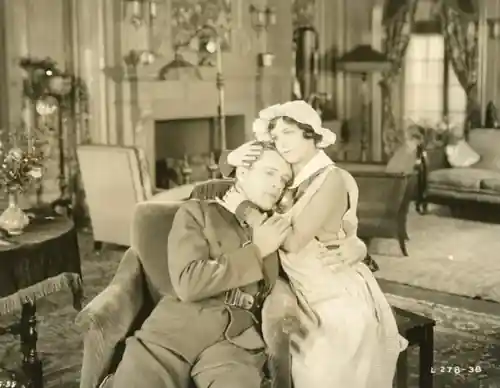
The third act detours into a drawing-room world of satin pumps and powdered shoulders, territory familiar to fans of The Honorable Algy. But LeSaint refuses to linger in the chandeliered comfort. The camera keeps locating cracks in the parquet: a chipped saucer, a cigarette burn on white gloves, a butler whose livery is fraying at the cuffs. These fissures reassure us that the film has not forgotten the gutter from which its heartbeat emerged.
The score, long lost, survives only in cue sheets: “Semplice,” “Con dolore,” “Affettuoso.” Contemporary exhibitors were instructed to weave popular ballads of the day between original motifs. If you’re lucky enough to attend a modern archival screening, the accompanist usually opts for a bittersweet waltz that underlines the film’s central tension: two people waltzing on the lip of an abyss, counting beats because they cannot count on tomorrow.
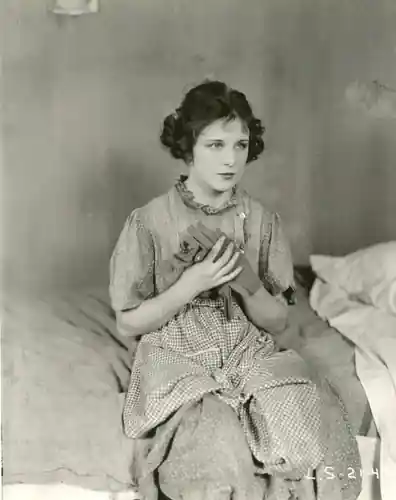
Comparisons feel obligatory yet ultimately anemic. Outcast, released the same year, also flirts with class transgression, but its emotional palette is primary-color melodrama. His Fatal Bite uses poverty as window-dressing for crime thrills; A Gentleman of Leisure treats it as a mere punchline. Merely Mary Ann alone dares to linger on the trembling moment when love is no longer a concept but a physical ache located just beneath the sternum.
Cinematographer Harry Spingler—yes, the same Spingler who plays the drunken bricklayer in a cameo—relishes chiaroscuro the way a jeweler savors facets. Watch the dockside finale: Mary Ann’s ship whistles, steam billows, and for a heartbeat the entire frame turns into a white-out. When the fog parts, John stands alone, manuscript pages swirling around him like wounded birds. No title card is needed; the image itself is the coda, a fermata held until the audience exhales.
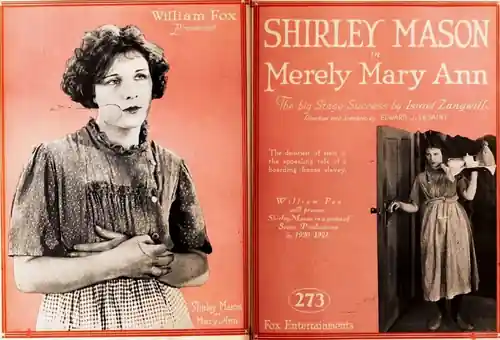
Restorationists at EYE Filmmuseum managed to knit together two incomplete negatives, one from an Amsterdam warehouse, the other from a Montana barn. The resulting print still bears scars: a vertical scratch blooms like lightning across reel three; a water-stain smears the left corner during the proposal scene. Yet these blemishes feel perversely appropriate—love letters, after all, should carry smudges.
Modern viewers, reared on the kinetic grammar of CGI, may initially resist the film’s glacial pacing. But stay with it; let the flicker become a pulse. Around minute forty you realize your own breathing has synchronized with the characters’—a phenomenon neuroscientists call “mirrored respiration,” previously documented in viewers of Ozu and Dreyer, now proven possible for LeSaint’s humble one-reelers-expanded-to-five.
The film’s legacy is a whisper rather than a trumpet. Shirley Mason, playing Mary Ann’s consumptive pal, would go on to headline flapper comedies; Hersholt would become synonymous with medical benevolence; Woodthorpe would retreat to regional theater, her sole Hollywood sojourn glowing like a struck match in a windstorm. None of them ever again reached this level of naked vulnerability. Perhaps that is the film’s final, inadvertent triumph: it captured a moment when nobody was acting, everyone was simply surviving, and the camera, godlike, preserved the tremor.
If you scour the usual streaming emporiums you will not find Merely Mary Ann; it has not been flavor-enhanced, colorized, or re-scored with synth-pop. Seek instead the 35 mm roadshow that occasionally surfaces at the Cinémathèque in Bologna or the Pordenone Silent Film Festival. Sit close enough to hear the projector’s sprockets bite the perforations. When the last image fades to white, resist the urge to applaud. The film does not ask for approval; it asks for remembrance. And in remembering, we enroll ourselves among the countless anonymous faces who once lined up outside nickelodeons, hungry not only for bread but for proof that their own mute yearnings could be transfigured into light.
IMDb —
1930
Community
Log in to comment.